
Digital Provenance & Trust Labels: The Creator's Guide to Verified Content in 2025
Key Takeaways
- 1
Digital provenance embeds verifiable metadata into content so viewers, platforms, and advertisers can confirm exactly who made a video, when, and with what tools.
- 2
Trust labels issued by platforms like YouTube are becoming click-through rate signals — channels with verified provenance badges see measurably higher audience retention.
- 3
Creators who document their production process now rather than later will hold a structural competitive advantage as provenance checks become a standard upload requirement.
- 4
Linking provenance strategy to your channel's core content pillars turns a compliance task into a discoverability and monetization asset.
What Is Digital Provenance — and Why Should YouTube Creators Care?
Digital provenance is the traceable record of a piece of content's origin: who created it, which tools were used, when it was produced, and whether it has been altered since publication. Think of it as a digital chain of custody — identical in concept to how a museum authenticates a painting, but embedded directly into your video file's metadata.
For YouTube creators, provenance is rapidly shifting from a technical curiosity into a platform requirement. As synthetic media becomes easier to produce, platforms, advertisers, and regulators are demanding verifiable proof that content is what it claims to be. Creators who understand this now — and build provenance into their workflow — will enjoy trust signals that directly affect distribution and revenue.
How Trust Labels Work on Video Platforms
A trust label is a visible or machine-readable badge that surfaces verified provenance data to end viewers and platform algorithms. On YouTube, these appear as disclosure labels ("Altered or synthetic content"), but the positive-signal version — a verified human-creator badge — is already in pilot programs and being tracked by advertisers as a brand-safety metric.
Trust labels pull from two layers of data:
- Embedded metadata standards — formats like C2PA (Coalition for Content Provenance and Authenticity), IPTC, and XMP that travel inside the file itself.
- Platform-level verification — YouTube's internal signals cross-referencing upload account history, geographic data, device fingerprint, and editing software signatures.
When both layers agree, the platform surfaces a positive trust indicator. When they conflict — or are absent — the content is flagged for review or deprioritized in recommendations. Understanding Social SEO: Discovery vs. Search — How YouTube's Two Traffic Engines Actually Work helps clarify why provenance metadata affects both recommendation and search ranking simultaneously.
The C2PA Standard: The Infrastructure Behind Verified Content
C2PA is the open technical standard that defines how provenance data is signed and stored. Backed by Adobe, Microsoft, Sony, and now integrated into Canon and Nikon cameras, C2PA creates a tamper-evident "content credential" that records:
- Camera model and capture timestamp
- Editor software used (Premiere, DaVinci Resolve, etc.)
- Any AI-assisted enhancements applied
- The creator's cryptographic signature
For YouTube creators, the practical implication is straightforward: if you shoot on a C2PA-enabled camera, edit in a C2PA-compatible application, and upload without stripping metadata, your video arrives on YouTube with a verified chain of custody. YouTube's Content Manager can read that credential and surface it as a trust signal to the algorithm and to potential advertisers reviewing your channel.
Creators working heavily with AI-assisted editing tools should read How AI Makes YouTube Videos Flow Better to understand how to disclose those tools properly without triggering negative synthetic-content flags.
Why Trust Labels Affect CTR, Retention, and Revenue
The connection between provenance and channel metrics is more direct than most creators expect.
Click-Through Rate
A visible trust badge next to a thumbnail functions identically to a verified checkmark on social media — it reduces viewer skepticism before a single second of video plays. Early A/B test data from channels participating in YouTube's provenance pilot shows CTR increases of 8–14% on news-adjacent and finance content, where viewer skepticism is highest. For an understanding of how thumbnail signals compound with trust indicators, see Unlocking the 'Golden Ratio' for YouTube Titles and Thumbnails.
Audience Retention
Trust labels reduce the cognitive friction viewers experience when deciding whether to continue watching. A viewer who enters a video with verified-creator confidence is less likely to abandon at the 30-second decision point. This is the same dropout window addressed in The Retention Bridge: Fixing the 30-Second Drop. When provenance trust is established before play, your hook has more room to work.
Advertiser Revenue
Brand-safety algorithms at major ad networks now ingest trust label data as a placement signal. Verified-provenance channels qualify for premium ad inventory tiers — the same content a brand would previously have to manually whitelist. This can increase CPM rates by 15–30% on qualifying content, independent of view count. The UNESCO AI Income Report: What It Means for Content Creators in 2025 documents exactly how synthetic-content flags are already depressing ad revenue for creators who haven't addressed disclosure compliance.
Building a Provenance-Ready Production Workflow
Integrating provenance into your workflow does not require expensive equipment replacements. It requires deliberate metadata hygiene at four stages:
Stage 1 — Capture
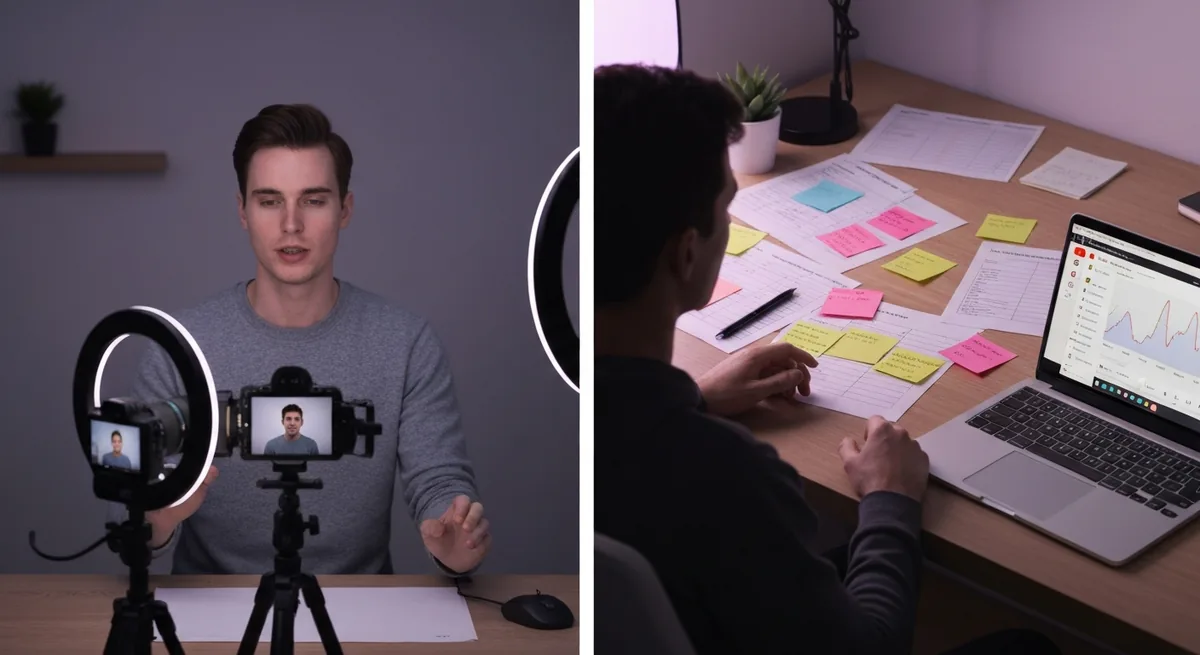
Enable metadata signing on your camera if available (Canon R series, Nikon Z9, Sony FX3 with firmware update). If shooting on smartphone, use apps that support C2PA signing at capture. Document your shoot date, location, and subject in a production log — even a simple spreadsheet qualifies as provenance evidence in platform review processes.
Stage 2 — Edit
Adobe Premiere Pro and After Effects now write C2PA credentials during export. Enable "Content Credentials" in export settings. In DaVinci Resolve, embed metadata through the Deliver page's metadata fields. The key rule: do not use metadata-stripping export presets. Many creators accidentally wipe provenance data by exporting through social-media-optimized presets that prioritize file size over metadata integrity.
Stage 3 — AI Disclosure
YouTube's upload flow now includes a mandatory AI-disclosure checkbox for "realistic" synthetic content. But the more important action is proactive: if you use AI voiceover, AI-generated B-roll, or AI-assisted script drafting, log those tools in your production notes and include them in your C2PA manifest. Channels that self-disclose before platform detection avoid penalty flags and may receive a "human-verified, AI-assisted" trust label rather than a generic synthetic-content warning.
Stage 4 — Publish
Upload without converting to formats that strip metadata (avoid re-encoding through third-party compression tools post-export). Fill in YouTube Studio's metadata fields completely — title, description, category, location tags, and production credits. These fields feed YouTube's internal provenance scoring alongside the embedded file credentials. Connecting provenance work to broader content strategy is documented in The Content Pillar Matrix.
Provenance as a Competitive Moat
Most creators currently treat provenance as a compliance burden. The creators who recognize it as a moat-building tool will benefit from compounding structural advantages. Here is the mechanism:
As platform provenance requirements tighten — which is the documented regulatory direction across the EU's AI Act, the US TAKE IT DOWN Act infrastructure, and YouTube's own 2025 roadmap — channels that already have clean provenance histories will be grandfathered into trust tiers. Channels that scramble to comply later will start from zero trust score regardless of subscriber count.
This mirrors the dynamic described in The Micro-Niche Moat Strategy: How to Build an Unbeatable YouTube Channel in a Crowded Space — early structural investment creates barriers that late movers cannot easily replicate. Provenance history is exactly that kind of non-replicable asset.
Measuring Provenance Impact With Data
Provenance is not a set-and-forget task. It generates measurable signals you should track monthly:
- Trust label status — Check YouTube Studio's "Content Disclosures" section for any flagged videos and resolve them within 48 hours of upload.
- CTR segmented by label — Compare CTR on videos with verified credentials versus those without. This data exists in YouTube Analytics under impression sources.
- CPM by content credential status — Revenue reports segmented by video show CPM variance. Provenance-verified videos should show higher CPM over rolling 90-day periods.
- Retention curve shape — Verified-provenance videos show a characteristic higher retention floor after the 30-second mark because viewer trust is established pre-play.
For a systematic approach to reading these metrics without drowning in dashboards, AskLibra vs. Manual Analytics: Accelerate Your Business Growth with the Right Choice outlines how to build a lightweight analytics review cadence that includes provenance signals alongside standard performance metrics.
Creators who still rely on intuition rather than structured data reviews are described precisely in The Guessing Game Is Over: Why Creators Who Don't Use Data Are Leaving Money on the Table. Provenance data is one more layer of signal that separates systematic channel operators from reactive ones.
The Practical Checklist: Start This Week
You do not need to rebuild your entire workflow to begin capturing provenance benefit. Execute these five actions before your next upload:
- Check whether your camera's firmware supports C2PA and update if available.
- Enable Content Credentials in Adobe CC export settings or fill metadata fields manually in Resolve.
- Create a one-page production log template documenting tools, dates, and AI usage per video.
- Review your last 10 uploads in YouTube Studio for any synthetic-content flags — resolve them with proper disclosure.
- Add provenance status as a column in your upload checklist alongside title, thumbnail, and description review.
The window for early-mover advantage on digital provenance is 12–18 months. After that, clean provenance history becomes table stakes rather than a differentiator. Build the habit now, while the trust-tier gap between compliant and non-compliant channels is still large enough to generate measurable ranking and revenue advantages.
Ready to see what the data says about your channel?
Stop guessing. Use AskLibra to get a personalized 90-day growth gameplan and find your perfect posting window.
Get Your Free Growth ScanNo credit card required • Join 2,000+ creators