
What is Generative Search Optimization (GSO) and why should creators care?
Key Takeaways
- 1
GSO (Generative Search Optimization) is the practice of structuring your content so that AI-powered answer engines like Google's AI Overviews, ChatGPT Search, and Perplexity cite and surface your material — it is a layer on top of traditional SEO, not a replacement for it.
- 2
Creators who write clear definitions, use direct question-and-answer formats, and build topical authority across a content cluster are far more likely to be quoted by generative engines than those who rely on keyword stuffing alone.
- 3
YouTube creators are uniquely positioned to win at GSO because video transcripts, chapters, and description text all feed into the structured data that generative engines scrape and cite.
- 4
Tracking which of your videos or articles get referenced by AI search tools requires a new measurement habit — standard YouTube Analytics will not show you this traffic source, making third-party analytics platforms essential.
The Search Landscape Just Changed — Again
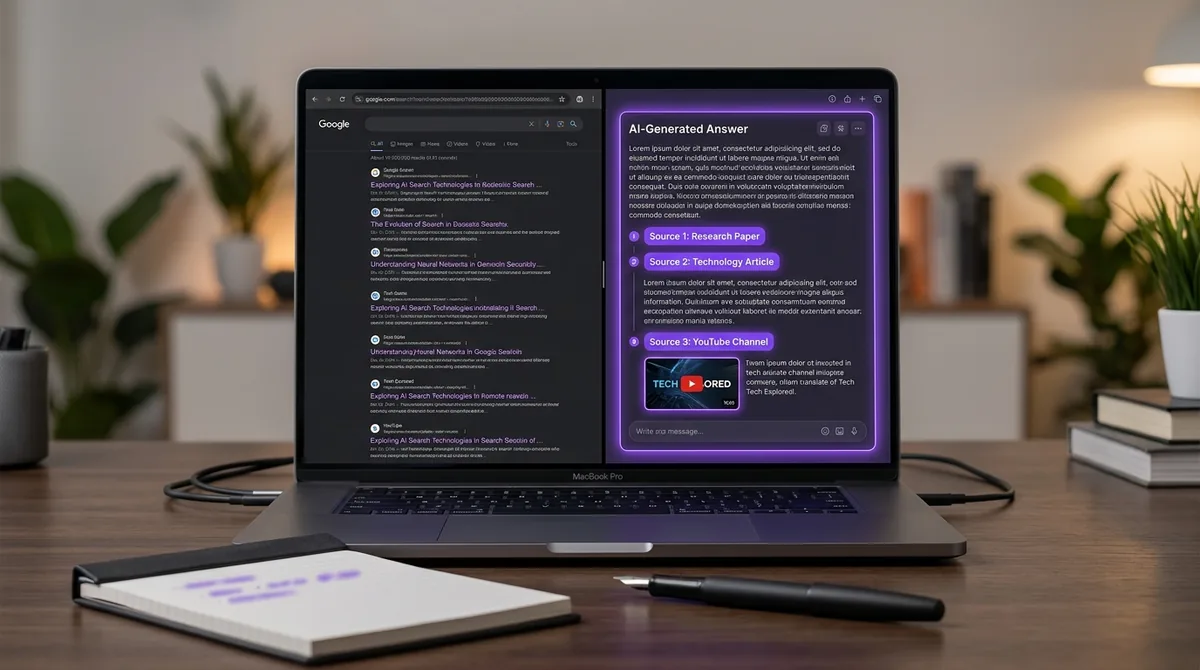
If you've been using google to search for something, a topic or a simple how to, you would notice that the top is now an AI Overview. Before it was blue links. Not today. Instead of your website, it is now citations by AI and then you can choose to switch to AI mode to continue your search. Now "how do I beat that", you think.
For over a decade, creators optimized for one thing: ranking in the ten blue links of a traditional search engine results page. You picked a keyword, built a page or video around it, earned backlinks, and waited for Google to send traffic your way. That model is not dead, but it now shares the stage with something fundamentally different.
Generative Search Optimization — commonly abbreviated as GSO — is the practice of structuring your content so that AI-powered answer engines quote, cite, or surface your material directly inside their generated responses. When a viewer asks Google's AI Overviews "how do I grow my YouTube channel," or types a question into Perplexity or ChatGPT Search, those tools do not simply list links. They synthesize an answer and attribute it to specific sources. GSO is the discipline of becoming one of those sources.
This is not a niche technical concern for marketers. It is a structural shift in how audiences discover content, and creators who understand it now will build durable traffic channels that others will scramble to replicate in two years.
How Generative Engines Decide What to Cite
Understanding GSO starts with understanding how large language model (LLM) — a type of AI trained on massive text datasets to predict and generate human-like answers — based search tools select their sources. These engines do not simply pull the highest-ranking URL. They prioritize content that is:
Direct and definitional. Content that clearly defines a term or directly answers a question in the first two sentences is far easier for a generative engine to extract and quote accurately.
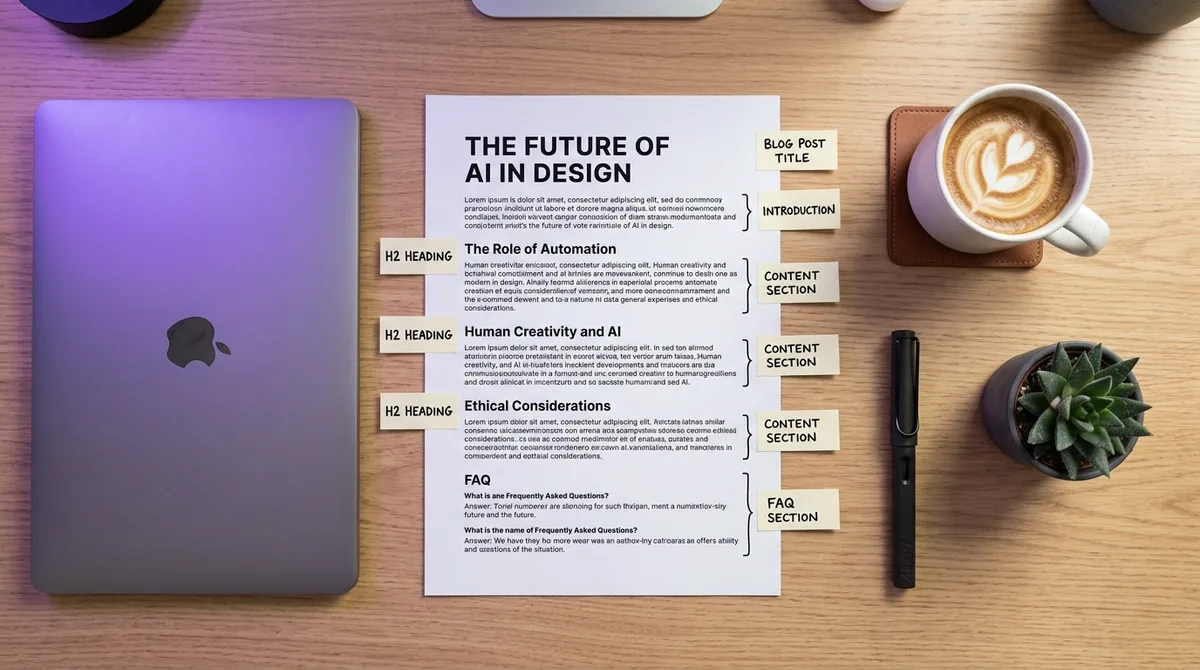
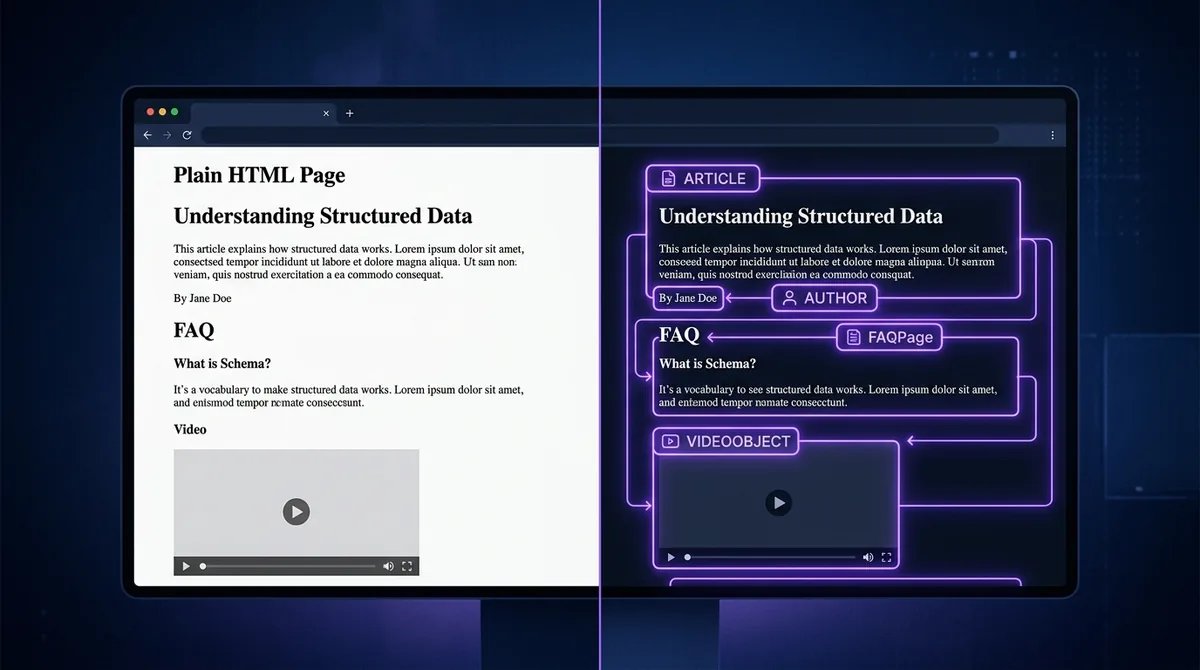
Structured with headers and hierarchy. H2 and H3 headings act as semantic signposts. An engine scanning for "what is hook rate" will extract the paragraph directly beneath a heading that says exactly that.
Authoritative within a topic cluster. A channel or website that has published ten interlinked pieces on YouTube analytics carries more weight than a single isolated article, even if that article is longer. This concept of building Topic Clustering and Content Neighborhoods is now doubly important — it signals authority to both traditional search crawlers and generative engines simultaneously.
Trustworthy and attributed. Citing real data, named platforms, and verifiable statistics makes your content easier for an AI engine to treat as a credible source rather than opinion.
Why YouTube Creators Have a Hidden GSO Advantage
Most GSO conversations happen in the context of blog posts and landing pages. Creators are rarely mentioned, which is a mistake — because YouTube creators hold structural advantages that text-only publishers do not.
Transcripts are crawlable text. Every word spoken in a YouTube video exists as a transcript. When those transcripts are accurate and match what viewers search for, generative engines can extract specific answers spoken on camera and attribute them to your channel or its companion website.
Video chapters create semantic structure. A chapter titled "What is CTR?" followed by a chapter titled "How to improve your CTR in 30 days" gives a generative engine the same hierarchical signal as an H2/H3 pair on a web page. Creators who use chapters strategically are unknowingly doing GSO already.
Description text anchors topical authority. A well-written video description that mirrors the language of a searcher's question — without keyword stuffing — tells both YouTube's algorithm and external crawlers exactly what problem your video solves. Understanding what is YouTube CTR and why it controls your channel's growth is the traditional SEO side of this; GSO adds the layer of asking whether your description is also structured for extraction by an AI answer engine.
GSO vs. SEO: What Changes and What Stays the Same
A common misconception is that GSO replaces SEO. It does not. Think of them as two filters the same piece of content must pass through.
What stays the same: Research into what questions your audience actually asks. Writing content that genuinely answers those questions. Building a consistent publishing cadence so that crawlers revisit your pages and channels regularly. The discipline documented in the 20-30 video data feedback loop applies directly here — consistent output creates the content surface area that both search algorithms and generative engines need to establish your authority.
What changes: The goal of a title shifts slightly. Traditional SEO titles are written to earn a click. GSO titles are written to be quoted. "5 ways to improve retention" is a click-bait title. "What is audience retention on YouTube and how do you improve it?" is a GSO-optimized title — it is the exact phrasing a generative engine would use to introduce an answer. Similarly, your opening paragraph now serves double duty: it must hook a human reader and deliver a clean, extractable definition for an AI engine. Pattern interrupt hooks that work for human viewers and definitional openers that work for generative engines are not mutually exclusive — skilled creators learn to combine both.
The Metrics Problem: Measuring GSO Traffic
Here is where many creators stall: standard YouTube Analytics and Google Search Console do not have a native "cited by AI engine" traffic source. Perplexity referrals sometimes appear as direct traffic. ChatGPT Search referrals are inconsistently tagged. This creates a measurement blind spot that traditional analytics dashboards were never designed to handle.
The practical response is a two-part habit. First, manually query the AI engines your audience uses at least once a month. Type in the core questions your content answers and check whether your channel, website, or social profiles appear in the citations. Second, track referral traffic from domains associated with AI search tools — perplexity.ai, openai.com, and bing.com (which powers several AI tools) — as separate segments in whatever analytics platform you use. Tools built for the current content landscape, like those covered in Creator Tools You Cannot Ignore in 2026, are beginning to surface these signals more explicitly.
For creators serious about predictive content strategy, predictive social analytics tools that track topic momentum across the web give an early signal about which questions are gaining search volume before they become competitive — on both traditional and generative search platforms.
Practical GSO Checklist for Creators
Apply these five habits to every piece of content you publish, whether it is a YouTube video, a companion blog post, or a pinned community post:
Define your core term in the first 50 words. Every piece of content should open with a clear, quotable definition of its central concept.
Use exact question phrases as headings. "What is hook rate?" is a better H3 than "Understanding hook rate." Generative engines match questions to headings verbatim. Speaking of which — hook rate is the percentage of viewers who continue watching past the first 30 seconds of your video, a key metric for understanding whether your opening retains attention. If you want to go deeper on that metric specifically, why your YouTube hook rate is killing your reach breaks down the mechanics in full.
Include one cited statistic per major claim. Based on AskLibra data from 4 connected channels and 511 videos analyzed, longform content achieves an average engagement rate of 0.0226 — more than double the platform-wide average — which supports the argument that depth and structure, both hallmarks of GSO-optimized content, correlate with stronger viewer signals.
Interlink related content explicitly. A generative engine building a topical answer will chain through your linked content. The more coherent your internal link structure, the more of your material ends up in its context window.
Publish a companion text asset for every major video. A transcript-based article, a detailed description, or a linked blog post gives generative engines a text surface to cite even when they cannot extract clean quotes from video metadata alone.
The Broader Shift: From Clicks to Citations
The mental model that served creators for years — publish content, earn clicks, monetize attention — is expanding. Citations in AI-generated answers drive brand recognition, referral traffic, and authority signals even when no click occurs. A viewer who sees your channel name cited three times in an AI Overview is primed to search for you directly. This is sometimes called "zero-click authority" — influence that accumulates without a trackable pageview.
This connects to a deeper strategic point explored in The Death of the Viral Hack: sustainable creator growth has always come from building genuine topical authority, not from gaming a single distribution algorithm. GSO is simply the newest proof of that principle. The creators who built deep, well-structured content libraries are already winning on generative search — they just may not know it yet.
For B2B creators and brand channels, the GSO opportunity is especially acute. Generative engines are frequently used for research and vendor discovery. A brand channel that publishes structured, definitional content — as explored in Humanizing B2B Brands in 2026 — is far more likely to be cited in a buying-stage AI query than one that only publishes product demos.
Frequently Asked Questions
Is GSO just SEO with a new name?
No — GSO and SEO share foundational principles like topical authority and structured content, but they optimize for different outcomes. SEO targets a ranked link on a results page; GSO targets a direct citation or quote inside a generated answer. You need both strategies running in parallel, not one replacing the other.
Do I need a website to benefit from GSO, or can my YouTube channel alone rank in AI answers?
Your YouTube channel can earn GSO citations through transcripts, chapters, and descriptions, but a companion website or blog dramatically increases your citation surface area. Text assets are easier for generative engines to extract and quote precisely than video metadata alone, so creators who publish both formats have a compounding advantage.
Which AI search tools should I prioritize when optimizing for GSO?
Google's AI Overviews have the largest reach because they appear directly in standard Google searches, making them the highest-priority target for most creators. Perplexity and ChatGPT Search are growing fast among research-oriented audiences, so creators in educational or professional niches should monitor those platforms specifically.
How do I know if my content is already being cited by generative engines?
The most direct method is to manually query the questions your content answers inside Google AI Overviews, Perplexity, and ChatGPT Search and check for your channel or website in the citations. You can also monitor referral traffic from AI-associated domains in your analytics dashboard as a secondary signal.
Does publishing short-form content hurt my GSO performance?
Short-form videos and posts rarely provide enough structured text for a generative engine to cite, but they can support GSO indirectly by driving viewers to your longer, more structured content. Think of short-form as a discovery layer that funnels viewers into the deeper content that actually earns citations — a strategy covered in detail in Short-Form Learning: The Creator's Guide to Teaching in 60 Seconds or Less.
Ready to see what the data says about your channel?
Stop guessing. Use AskLibra to get a personalized 90-day growth gameplan and find your perfect posting window.
No credit card required • Join 2,000+ creators