
Why Did My YouTube Video Underperform?
Key Takeaways
- 1
Low CTR means your packaging failed before anyone watched a single second
- 2
Early audience drop-off in the retention graph signals a broken hook or misleading promise
- 3
Weak session time and low re-watch signals tell YouTube to stop recommending the video
The Three Places a YouTube Video Can Fail
When a video underperforms, creators often blame the topic or the algorithm. The real answer is almost always more specific. A video fails at one of three stages: the discovery stage (no one clicked), the hook stage (people clicked but left immediately), or the distribution stage (YouTube saw the data and stopped pushing it). Knowing which stage broke down tells you exactly what to fix.
Stage 1: Did Your Packaging Fail?
Click-Through Rate, or CTR, is the percentage of people who saw your thumbnail and title and chose to click. If your CTR is below 2%, your packaging is the problem, not the video itself. The content inside may be excellent, but no one is giving it a chance.
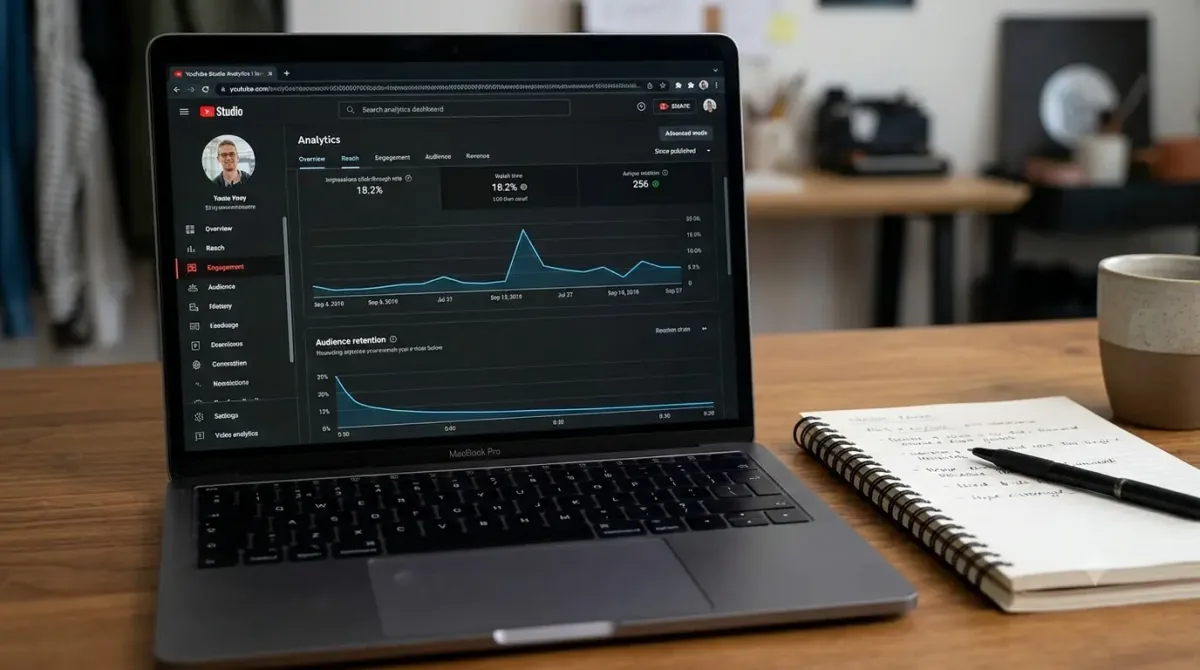
Check your CTR in YouTube Studio under Reach > Impressions click-through rate. If it dropped significantly compared to your channel average, your thumbnail or title didn't compete in the feed. To learn how to write titles that earn clicks, see How to Write a YouTube Video Title That Gets Clicked.
Packaging Failure Checklist
Does your thumbnail communicate a clear, specific benefit in under two seconds?
Does your title create curiosity without being vague?
Does the title match what a viewer would actually search for?
Is there a visible contrast between your thumbnail and competing videos in the same topic?
Did you test the thumbnail at mobile size, where most viewers will see it?
Stage 2: Did Your Hook Fail?
If your CTR is healthy but watch time is low, the hook is the problem. The hook is everything that happens in the first 30 to 60 seconds. Viewers clicked because the packaging promised something. If the opening doesn't deliver on that promise quickly, they leave.
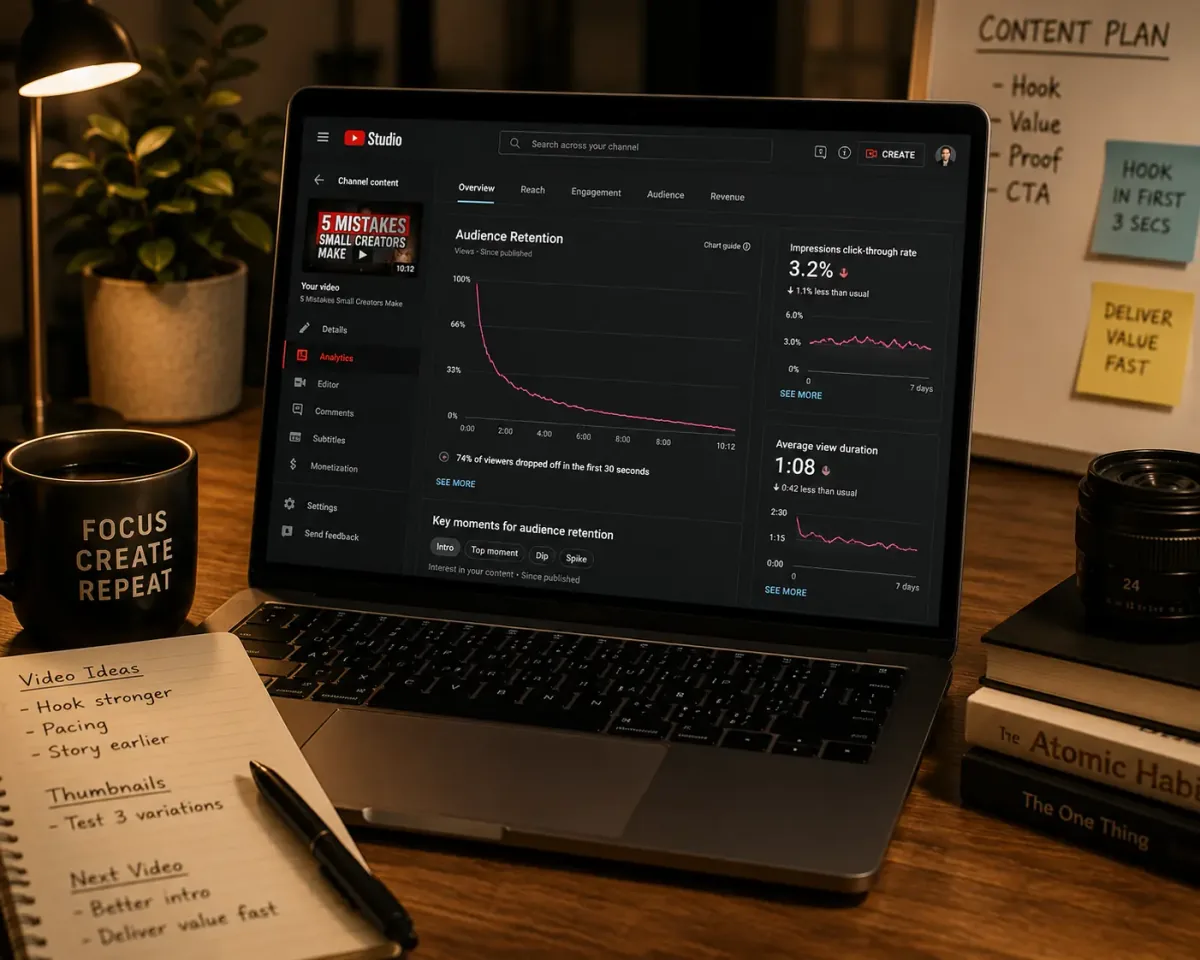
Open your Audience Retention graph in YouTube Studio. A steep drop in the first 30 seconds is a broken hook. A gradual slope is normal and expected. A cliff is not. The video may have started with too much context, a slow intro, or a generic opener that felt like every other video on the topic.
For a detailed breakdown of how to keep viewers watching past that critical early window, read How to Boost Your YouTube Video Retention Rates: An In-Depth Guide.
Hook Failure Checklist
Did the first sentence immediately deliver on the title's promise?
Did you start with context, backstory, or a long intro rather than the payoff?
Was there a visible hook in the first five seconds, visual or verbal?
Did you include a subscribe prompt or channel intro before earning viewer attention?
Does the opening feel slow compared to videos already ranking on the same topic?
Stage 3: Did Distribution Stall?
YouTube decides whether to keep distributing a video based on how viewers behave after watching. The two signals that matter most are Average View Duration (how much of the video people watch on average) and viewer satisfaction signals such as likes, comments, and shares. If viewers drop off early and don't engage, the algorithm reads that as a poor match and reduces distribution.
This is directly connected to VSAT, Viewer Satisfaction as a metric. To understand exactly what YouTube is measuring when it decides whether to promote a video, see VSAT: The Only Metric That Matters for YouTube. You should also review 3 YouTube Metrics That Actually Matter to make sure you're reading the right numbers in the first place.
Distribution Failure Checklist
Is your Average View Duration below 40% of total video length?
Did engagement (likes, comments) drop significantly below your channel average?
Were there major drop-off points mid-video that suggest pacing or topic drift?
Did the video generate re-watches on any segment, or was it a one-and-done view?
Did you check whether the video was being surfaced in Browse Features or only in Search?
Was the Topic Itself the Problem?
Sometimes a video underperforms not because of execution, but because the topic had limited demand or was a poor match for your existing audience. If a new topic attracts viewers who don't stay to watch your other videos, YouTube interprets that as low channel relevance and restricts future reach.
Before blaming execution, check whether similar videos from other channels also have low view counts on the same topic. If they do, the demand wasn't there. If they're performing well, the gap is in your packaging or content execution. The How Viewer Emotion Shapes What YouTube Promotes article explains how topic-audience fit affects algorithmic distribution beyond just watch time.
A Decision Framework: Which Problem Do You Actually Have?
Use this sequence to diagnose the failure before deciding what to fix:
Step 1: Check CTR. If it is below 2%, start with packaging. Retest the thumbnail and title before touching anything else.
Step 2: Check the first 30 seconds of the retention graph. If there is a steep drop, the hook needs to be rebuilt on the next video.
Step 3: Check Average View Duration as a percentage. Below 40% signals content pacing or topic drift issues mid-video.
Step 4: Check engagement rate relative to your channel baseline. Low engagement after a reasonable view duration means the video didn't earn a reaction.
Step 5: Check traffic sources. If impressions are low rather than CTR, YouTube stopped surfacing the video entirely, which usually means the first 48 hours of data were too weak.
What to Do Next
Diagnosing a single underperforming video is useful. Building a system to diagnose your channel over time is what actually changes your trajectory. Use How to Use Data to See What Your YouTube Channel Needs to run a proper channel audit, not just a post-mortem on one video.
If the issue is that you're not sure which topics are likely to perform before you film, How to Use AI to Generate YouTube Video Ideas That Actually Match Your Audience gives you a method for validating ideas before you invest production time. And if you're deciding what to prioritize next after a bad video, What Should I Post Next on YouTube? walks through how to make that call with data rather than guesswork.
One underperforming video is not a channel problem. It's a data point. The goal is to read it accurately and apply it to the next upload.
Frequently Asked Questions
How long should I wait before deciding a video has underperformed?
Most of a video's algorithmic momentum is decided within the first 48 to 72 hours. If impressions and CTR are both low after three days and the video is not ranking in search, it is safe to analyze it as underperforming. Some search-optimized videos grow slowly over weeks, so check your traffic sources before concluding.
Can I fix an underperforming video after it's already published?
You can update the thumbnail and title at any time, and YouTube will re-test the new packaging with a fresh set of impressions. This sometimes recovers a video that failed at the discovery stage. You cannot edit the video content itself without re-uploading, so hook and retention problems require a new video to fix.
Does posting time affect whether a video underperforms?
Posting time influences the initial audience size that sees the video in its first few hours, which affects early engagement signals. Posting when your audience is most active gives the algorithm better data to work with. Consistently poor timing can contribute to weak early distribution even when the content itself is strong.
If my video underperforms, does it hurt my whole channel?
One underperforming video rarely harms a channel permanently. However, a pattern of low retention and low engagement across multiple videos signals to YouTube that the channel is a poor match for the audiences it is reaching. Fix the pattern, not just the individual video.
What is a normal CTR for a YouTube video?
YouTube states that most channels see CTR between 2% and 10%, with the majority falling between 2% and 5%. A CTR below 2% typically means the thumbnail or title failed to compete in the feed for your specific topic. A CTR above 10% is strong but only meaningful if watch time is also healthy.
Ready to see what the data says about your channel?
Stop guessing. Use AskLibra to get a personalized 90-day growth gameplan and find your perfect posting window.