

How to Use AI to Generate YouTube Video Ideas That Actually Match Your Audience
Key Takeaways
- 1
AI tools generate better video ideas when you feed them your own channel data — watch time, retention drops, and top-performing formats — rather than generic prompts.
- 2
Matching ideas to your audience means checking whether a proposed topic aligns with your existing viewer demographics, past click-through rates, and the content formats your channel has already proven work.
- 3
A structured prompt framework (niche + audience pain point + proven format) dramatically narrows AI output from broad suggestions to channel-specific concepts.
- 4
Use a 90-day content performance review to filter AI-generated ideas against real viewer behavior before committing to a production schedule.
Why Most AI-Generated Video Ideas Miss the Mark
Ask any AI chatbot for "YouTube video ideas" and you will get a list. It will be long, it will look reasonable, and it will be almost entirely useless for your specific channel. The problem is not the tool — it is the input. Generic prompts produce generic output. If you do not tell an AI anything about your audience, your niche, or what has already worked for your channel, it has no choice but to guess based on the broadest possible interpretation of your topic.
This is the core mistake creators make: treating idea generation as a brainstorm task rather than a data task. Generating ideas that actually match your audience requires combining the pattern-recognition speed of AI with the specific behavioral signals your channel has already collected. When you do that, the gap between "interesting idea" and "idea my audience will watch" closes significantly.
Start With Your Own Channel Data, Not a Blank Prompt
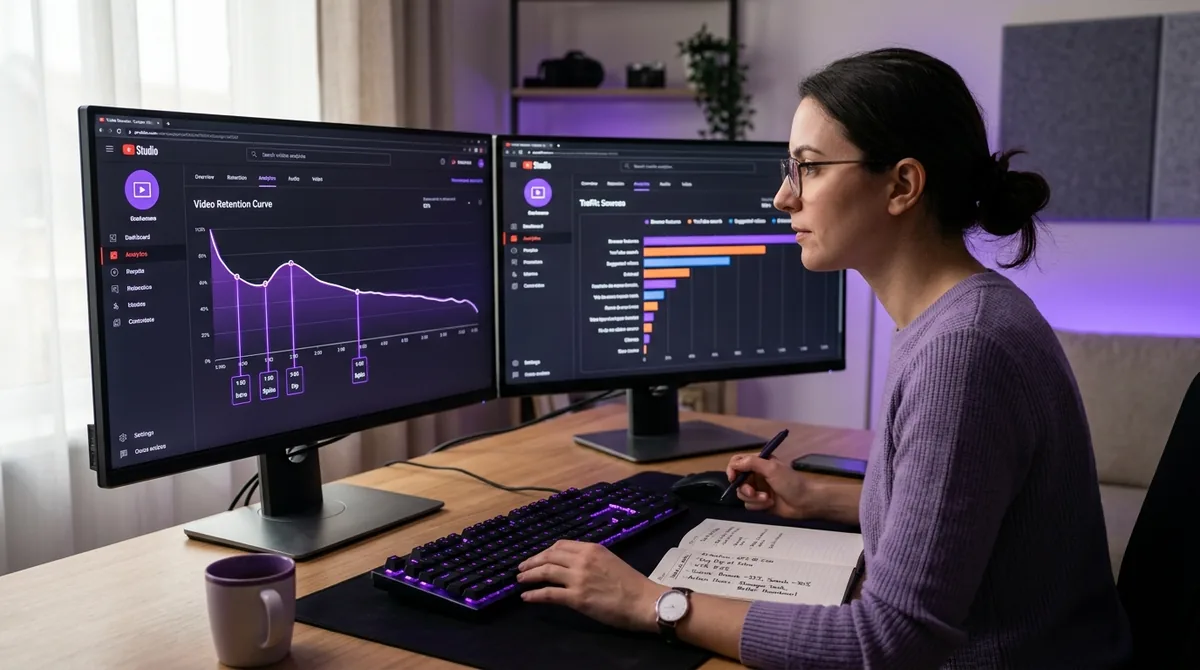
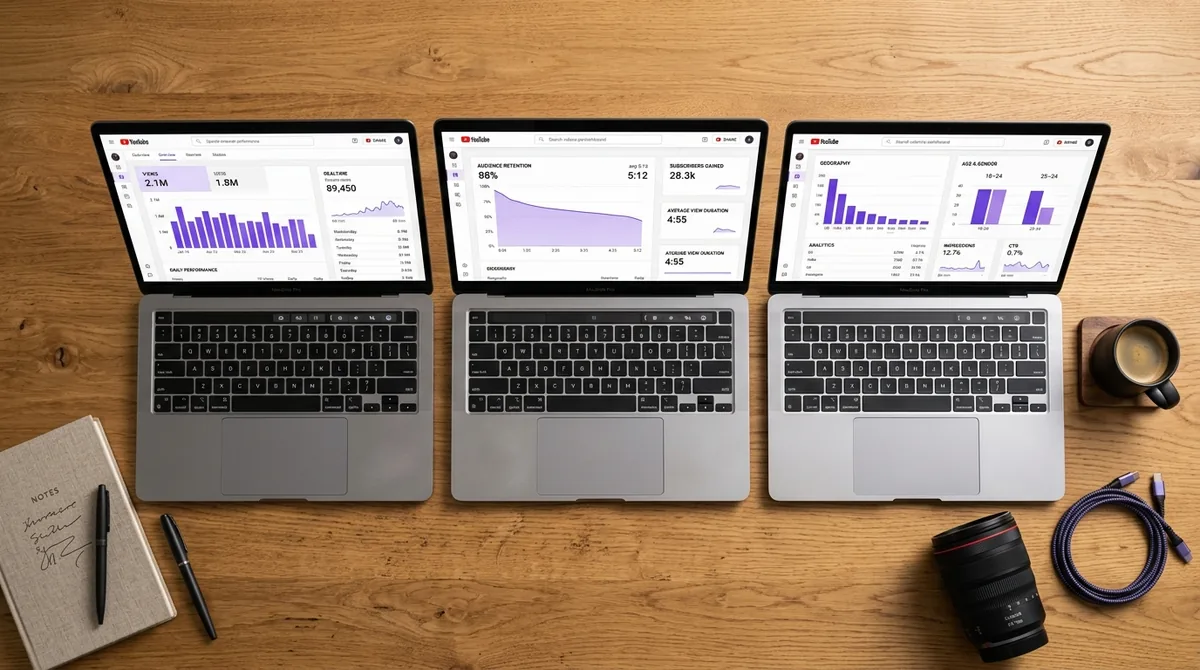
Before you open any AI tool, pull three data points from your YouTube Studio analytics: your top five videos by average view duration, your top five by CTR (click-through rate — the percentage of people who saw your thumbnail and clicked on it), and your most common drop-off timestamps in your retention curves. These three signals tell you what your audience already rewards.
A video with high CTR but low retention means your titles and thumbnails are working, but the content is not delivering on the promise. A video with low CTR but high retention means your existing viewers love it once they start watching, but new viewers are not being drawn in. Understanding that difference before you brief an AI tool means you can ask it to solve the right problem. For a deeper look at what those retention numbers actually indicate, YouTube Audience Retention: What the Numbers Actually Mean breaks down each curve shape and what it signals about content structure.
Similarly, understanding where your clicks come from — whether viewers found you by actively searching or whether YouTube surfaced your video on their homepage — shapes which ideas are worth pursuing. Browse vs Search Traffic on YouTube: What's the Difference and Which Matters More? explains how to read that split and match your idea strategy to your dominant traffic source.
The Prompt Framework That Produces Usable Ideas
Once you have your data, structure your AI prompt using four components: niche, audience identity, proven format, and the specific gap you want to fill.
A weak prompt looks like this: "Give me YouTube video ideas about personal finance."
A strong prompt looks like this: "I run a YouTube channel about personal finance for first-generation college graduates aged 22–30 in the US. My highest-retention videos are step-by-step explainers under 12 minutes. My audience consistently drops off when I cover investing basics, but stays when I cover budgeting for irregular income. Generate 10 video ideas that address the specific money stress points of someone who earns a variable freelance income and has no financial role models at home."
The second prompt gives the AI a viewer persona, a proven format signal, a content gap, and a psychographic detail. The output will be tighter, more specific, and far more likely to resonate with the people already watching your channel.
Filtering AI Ideas Against Real Audience Behavior
Generating ideas is only half the job. The filter pass is where most creators skip a critical step. Before any AI-generated idea goes into your content calendar, run it through three quick checks:
1. Does this match what my audience has already rewarded? Look at your top performers over the last 90 days. If your best videos are all "how-to" tutorials and the AI suggested a debate-style video, that format mismatch is a risk worth noting. What 90 Days of YouTube Data Actually Reveals About Content Performance explains specifically what patterns emerge over that window and why it is the most reliable sample size for decision-making.
2. Does this topic connect to a real search or browse intent? An idea can be creative and completely undiscoverable. Use your keyword research tools to check whether people are actually looking for this topic, or whether it only makes sense to someone already deep in your content. What is YouTube CTR and why does it control your channel's growth? explains how thumbnail and title decisions at this stage directly affect whether the algorithm pushes your video at all.
3. Can I deliver on the title's promise in the runtime my audience expects? AI tools frequently suggest ambitious topics that would require 45-minute deep dives to do properly. If your audience's attention data shows they drop off after 14 minutes, a great idea executed in the wrong format is still a miss.
Using Platform-Level Data to Sharpen Your Prompts Further
Channel-specific data matters most, but platform-level benchmarks give you calibration. Based on AskLibra data from 4 connected channels and 511 videos analyzed, longform video content averaged an engagement rate of 0.0226 — more than double the rate of short-form content at 0.0109. This suggests that for the channels in this dataset, investing in structured longform ideas (not just quick Shorts concepts) produces meaningfully stronger audience response.
When you bring this kind of benchmark into your AI prompts — for example, specifying "this needs to be a structured longform video, not a quick tip" — the ideas you receive are shaped around formats that have demonstrated performance, not just formats that are easy to produce.
Building a Repeatable Idea System, Not a One-Off Session
The highest-leverage use of AI for video ideation is not a single brainstorm session — it is a repeatable weekly or monthly system. That system should connect idea generation directly to your publishing schedule and performance review cycle.
A practical structure: run a 90-day data review at the start of each month, identify your two or three content gaps or high-retention topic clusters, then run structured AI prompts against each cluster to generate a pool of 15–20 ideas. From that pool, select the four to six that pass your audience filter and assign them to your publishing calendar. How to Use AskLibra's Weekly Gameplan to Plan a Month of Content walks through exactly this kind of structured planning approach.
This loop — data review, prompt, filter, schedule, publish, measure — is what separates creators who use AI as a crutch from creators who use it as a multiplier. If you want to build this into a full content operation rather than an ad hoc process, How to Build a Complete Content System Using AskLibra covers the full architecture.
Where the Hook Lives in Your Idea
A video idea is not complete until it has a hook built into its premise. A hook is the opening moment — typically the first 15 to 30 seconds — that gives a viewer a compelling reason to keep watching. AI tools can help you build the hook directly into the idea stage rather than treating it as a production problem you solve in the edit.
When you prompt an AI for video ideas, add one line: "For each idea, include a one-sentence hook premise that explains why someone would keep watching past the first 20 seconds." This forces the output to include a tension or payoff signal inside the idea itself, not bolted on later. For a full breakdown of hook mechanics, What is a YouTube Hook and How Long Should It Be? covers duration, structure, and what the data says about hook performance across formats.
Titles Are Part of the Idea, Not the Packaging
One of the most useful things AI can do in the idea stage is generate multiple title variations for the same core concept. A strong title is not decoration — it is the first test of whether the idea has a clear, clickable value proposition. Generating five to eight title options per idea forces you to find the angle that is both accurate and compelling, rather than defaulting to the first phrasing that comes to mind. How to Write a YouTube Video Title That Gets Clicked provides a tested framework for evaluating title strength before you commit to filming.
Frequently Asked Questions
Can I just use ChatGPT or do I need a specialized tool?
ChatGPT and similar general-purpose tools can generate strong ideas when given detailed, data-informed prompts. Specialized platforms like AskLibra add value by pulling your actual channel metrics into the ideation process directly, removing the manual step of translating analytics into prompt context. The quality of your input matters more than which tool you use.
How often should I run an AI ideation session?
Once per month is a sustainable cadence for most creators publishing weekly. Run your session after reviewing the previous month's performance data so your prompts reflect what just worked or did not work. Avoid running ideation sessions more frequently than your publishing schedule demands — more ideas rarely solves the bottleneck.
What if the AI keeps suggesting topics my audience has already seen from me?
This is a sign your prompts are too broad. Add specificity about what you have already covered: "Do not suggest beginner-level topics — my audience has been watching for 18 months and already understands the basics." You can also feed the AI a list of your last 20 video titles and ask it to find gaps rather than repeat covered ground.
How do I know if an AI-generated idea is actually original?
Originality in YouTube content comes from angle and execution, not topic. Search the proposed title or topic on YouTube directly. If 50 videos already cover it from the same angle with similar titles, the idea needs a sharper hook or a differentiated point of view. If the topic exists but your specific angle does not, that is a viable gap worth filling.
Does posting time affect which ideas I should prioritize?
Posting time affects distribution, not idea quality — but the two interact. If your audience is most active at a specific hour and you know certain formats perform better during browse-heavy periods versus search-heavy ones, you can align your idea format to the traffic pattern you are targeting. How to Find Your Best Posting Time on YouTube Using Your Own Data covers how to read your own timing signals accurately.
Ready to see what the data says about your channel?
Stop guessing. Use AskLibra to get a personalized 90-day growth gameplan and find your perfect posting window.
No credit card required • Join 2,000+ creators