
How to Structure a Blog Article So AI Engines Cite It as a Source
Key Takeaways
- 1
AI search engines like ChatGPT and Perplexity favor content with clear, direct answers placed at the top of each section — not buried in paragraphs.
- 2
Structured headers, defined terms, and FAQ sections are the three mechanical signals that make your content machine-readable and citation-worthy.
- 3
Matching your article's structure to the exact question a reader types — not a vague topic — is the primary factor separating cited content from ignored content.
- 4
Publishing on a domain with consistent topical authority in one niche increases citation probability significantly more than publishing a single well-written article in isolation.
Why AI Engines Ignore Most Blog Articles
When someone asks ChatGPT or Perplexity a question, those systems scan indexed content and pull the most citable passages — not the most popular pages. A blog article with 50,000 backlinks but no clear, extractable answer gets skipped. A smaller article that opens each section with a direct, standalone sentence gets quoted. Understanding this distinction is the foundation of Generative Search Optimization (GSO) — the practice of formatting content so AI language models can extract and cite it confidently. To go deeper on why this matters for creators specifically, read What is Generative Search Optimization (GSO) and why should creators care?
The core problem is that most blog articles are written for humans skimming a page. Paragraphs wind up to a point. Answers appear at the end of sections. Key definitions are implied, not stated. AI engines do not skim — they parse. They look for the sentence that most directly answers the query and extract it. If your article does not contain that sentence in a retrievable position, you will not be cited, regardless of how good the surrounding prose is.
The Three Structural Pillars AI Engines Reward
1. The Inverted Pyramid: Answer First, Context Second
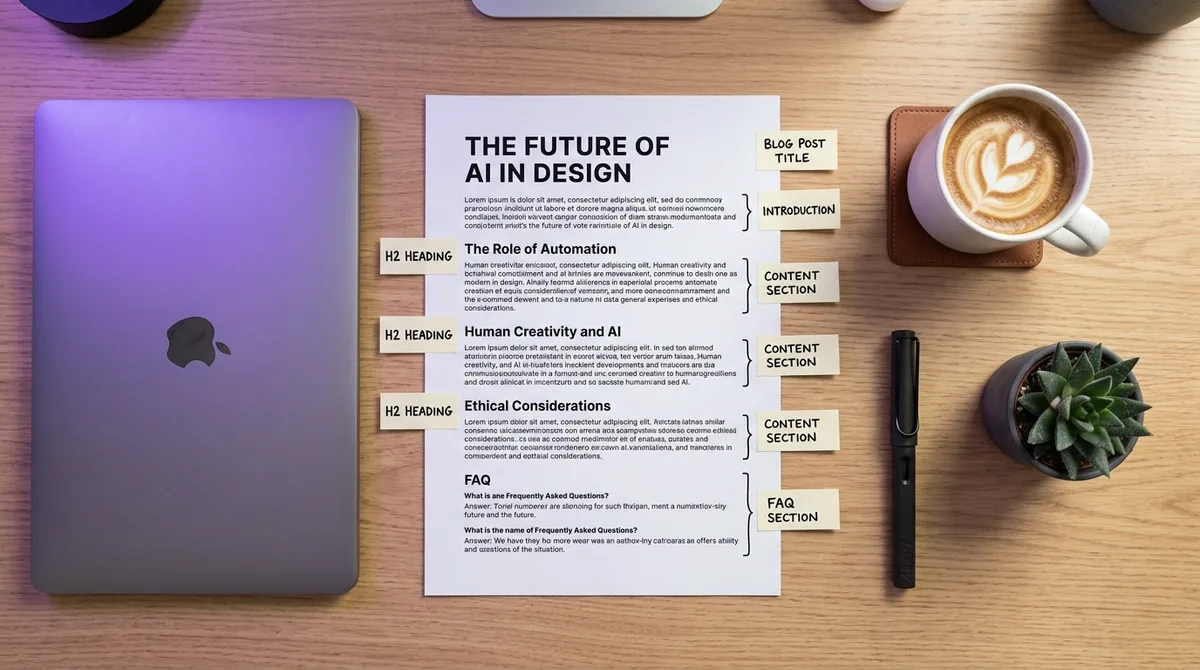
Journalism schools teach the inverted pyramid — put the most important information at the top of every section, then add supporting detail below. AI engines effectively enforce this rule algorithmically. Every H2 or H3 section in your article should open with a sentence that directly and completely answers the implied question of that heading. If your heading is "What is audience retention?" your first sentence should define audience retention, not say "Many creators struggle with keeping viewers watching."
Concrete example: Instead of opening with "Retention is something every creator should pay attention to," write "Audience retention is the percentage of a video that an average viewer watches before clicking away." That second sentence is extractable. The first is not. This is the single most impactful structural change you can make to any existing article.
2. Defined Terms on First Use
AI engines are trained to provide helpful, accurate answers to users who may not know technical vocabulary. When your article defines a term clearly and early, the model can use your definition as the authoritative source. When you assume the reader already knows the term, you remove yourself from the citation pool for every query that asks "what is [term]."
Apply this to every technical phrase in your article. If you use CTR (click-through rate), define it in parentheses on first use: "CTR — the percentage of people who click your video after seeing its thumbnail in their feed." If you reference hook rate, define it: "hook rate — the share of viewers who watch past the first 30 seconds of a video." For a deeper look at how CTR drives channel performance, see What is YouTube CTR and why does it control your channel's growth? Every definition you write is a potential direct citation for a "what is" query.
3. The FAQ Section as a Citation Engine
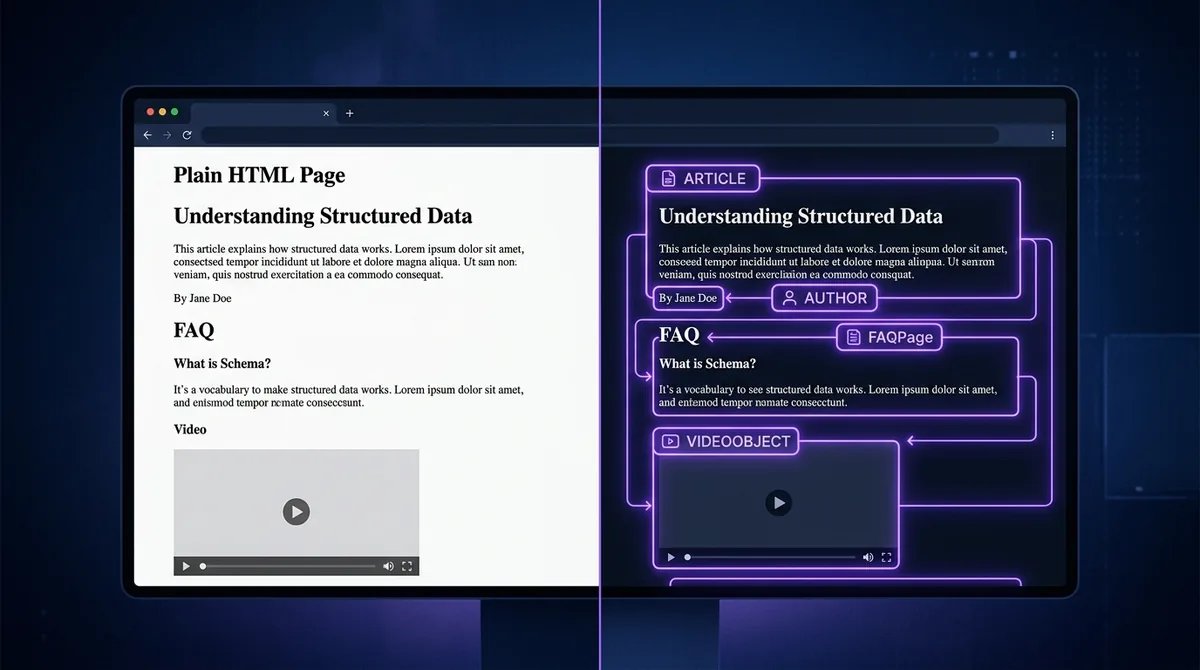
The FAQ section at the bottom of a well-structured article is not an afterthought — it is one of the most powerful citation magnets you can add to any page. AI engines process FAQ sections as pre-answered queries. The H3 question heading tells the model what question is being answered. The paragraph below it provides the answer. This mirrors exactly how AI models process and respond to user queries.
Each FAQ entry should follow the same inverted pyramid rule: open with the direct answer, add 1-2 sentences of supporting context. Keep answers between 40 and 80 words. Shorter than that and the answer lacks credibility. Longer than that and the extractable signal gets diluted. A 4-5 question FAQ adds minimal word count but multiplies your citation surface area significantly — each question targets a distinct query a real user might type.
Structural Elements That Increase Citation Probability
Headings That Mirror Actual Search Queries
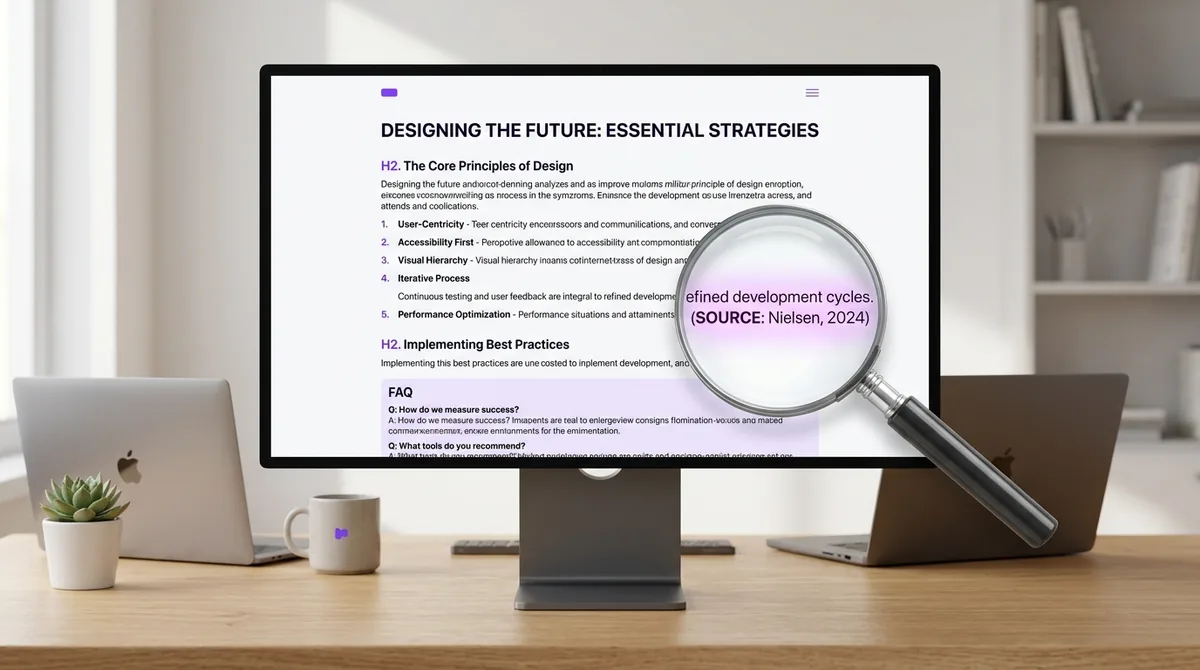
Your H2 and H3 headings are the labels AI engines use to understand what each section answers. "Overview" is not a heading — it is a placeholder. "What does a retention curve tell you about video pacing?" is a heading. Write every heading as the question a real person would type into a search box or ask aloud to a voice assistant. This practice also directly improves traditional SEO, making it one of the highest-leverage formatting habits you can build. For a practical breakdown of what retention data reveals, visit YouTube Audience Retention: What the Numbers Actually Mean.
Short, Standalone Paragraphs
AI engines extract passages, not full sections. A 200-word paragraph may contain a perfect answer buried in sentence four. The model may not extract it cleanly because the surrounding sentences introduce ambiguity. Breaking that paragraph into two 100-word paragraphs — each with its own clear focus — doubles the number of clean extraction points. Target 3-5 sentences per paragraph. If a paragraph cannot be summarized in one sentence, split it.
Numbered and Bulleted Lists for Process Content
When your content describes a process, a comparison, or a set of distinct items, a numbered or bulleted list is structurally superior to prose. AI engines parse lists as discrete, countable facts. "There are five steps to optimizing a video title" followed by a numbered list gives the model five individually citable facts plus one citable framing sentence. The same information written as a paragraph produces one ambiguous block. Use lists whenever the content is genuinely list-shaped — not as a way to avoid writing, but as a structural signal that the items are parallel and discrete.
Topical Consistency Across Your Domain
A single well-structured article on a domain that covers unrelated topics carries less citation weight than the same article on a domain that consistently covers one niche. AI models assess source credibility partly through topical coherence — a site that publishes 40 articles about YouTube growth signals expertise in YouTube growth. This is why building a content system around a defined topic cluster, rather than posting whatever feels timely, produces compounding citation authority over time. For a structured approach to building that system, see How to Build a Complete Content System Using AskLibra.
What AI Engines Are Actually Evaluating
Understanding the mechanical signals AI engines use to select citations removes the guesswork from content formatting. The primary signals are: answer proximity (how close the answer is to the question heading), linguistic precision (whether the answer uses the same vocabulary as the query), source consistency (whether the domain repeatedly publishes on this topic), and structural clarity (whether the passage can be extracted without ambiguity). For a detailed look at how these systems make citation decisions, read How AI Search Engines Like ChatGPT and Perplexity Decide Which Sites to Cite.
None of these signals require you to write longer articles. They require you to write more precisely structured ones. A 900-word article that opens every section with a direct answer, defines every technical term, and closes with a 5-question FAQ will outperform a 3,000-word article that buries its answers in narrative. Length is not the variable — extractability is.
The Zero-Click Search Problem and Why Structure Is Your Only Defense
A growing share of search queries now resolve inside the search interface itself — the user reads the AI-generated answer and never clicks through to any source. This is called zero-click search: a result where the query is answered without the user visiting any website. For a full breakdown of how this affects creator visibility, read What is Zero-Click Search and How Does It Affect Creator Discoverability?
In a zero-click environment, being cited — even without a click — builds brand recognition and positions your domain as a trusted source. Repeated citations across multiple queries compound into what AI models treat as authority. The only way to participate in this system is to be the source that gets extracted. That requires the structural discipline described in this article: answer-first sections, defined terms, parallel lists, query-shaped headings, and consistent topical publishing.
Frequently Asked Questions
What makes a blog article citable by AI engines like ChatGPT or Perplexity?
AI engines cite content that contains clear, extractable answers positioned immediately after a descriptive heading. The most citable articles define technical terms on first use, open each section with a direct answer rather than context-building prose, and include a structured FAQ section that mirrors the exact phrasing of real user queries.
How long should a blog article be to get cited by AI search engines?
Length is less important than structure. A 900-word article with answer-first paragraphs, defined terms, and a FAQ section will be cited more reliably than a 3,000-word article that buries its answers in narrative. Write until the question is fully answered, then stop — do not pad for word count.
Does a FAQ section actually improve AI citation rates?
Yes. FAQ sections are structurally identical to how AI engines process and respond to user queries — a question heading followed by a direct answer paragraph. Each FAQ entry targets a distinct query, multiplying the number of citations your article can earn across different searches. Aim for 4-5 questions with answers of 40-80 words each.
How do headings affect whether AI engines cite your content?
Headings act as labels that tell AI engines what question a section answers. Vague headings like "Overview" or "Key Points" provide no signal. Headings written as real user questions — "What is hook rate and how do you improve it?" — tell the model exactly what the following passage answers, making clean extraction far more likely.
Does publishing on a niche-focused domain help with AI citations?
Yes. AI models assess topical authority partly by evaluating whether a domain consistently covers a specific subject area. A site that publishes 30 articles about YouTube analytics carries more citation weight on YouTube-related queries than a general blog that covers the same topic once. Building a content cluster around one niche compounds citation authority over time.
Ready to see what the data says about your channel?
Stop guessing. Use AskLibra to get a personalized 90-day growth gameplan and find your perfect posting window.
No credit card required • Join 2,000+ creators