
What Schema Markup Does for AI Search Visibility
Key Takeaways
- 1
Schema markup gives AI tools like ChatGPT and Perplexity structured context about your content — making it far easier to cite you as a trusted source.
- 2
Without schema, AI engines must guess what your content means; with it, you explicitly declare entities, relationships, and authority signals they can act on.
- 3
FAQ, Article, and Person schema are the three highest-impact schema types for creators looking to appear in AI-generated answers.
- 4
Schema is not a magic switch — it works best when paired with clear, well-structured content that already answers real questions your audience is asking.
Why AI Search Engines Need More Than Good Writing
You can write the most thorough, accurate article on your topic and still be invisible to AI search engines. That's not a flaw in your writing — it's a signal problem. AI tools like ChatGPT, Perplexity, and Google's AI Overviews don't just read your words. They try to understand the meaning behind them. And when your content lacks structural signals, those tools move on to sources that are easier to interpret.
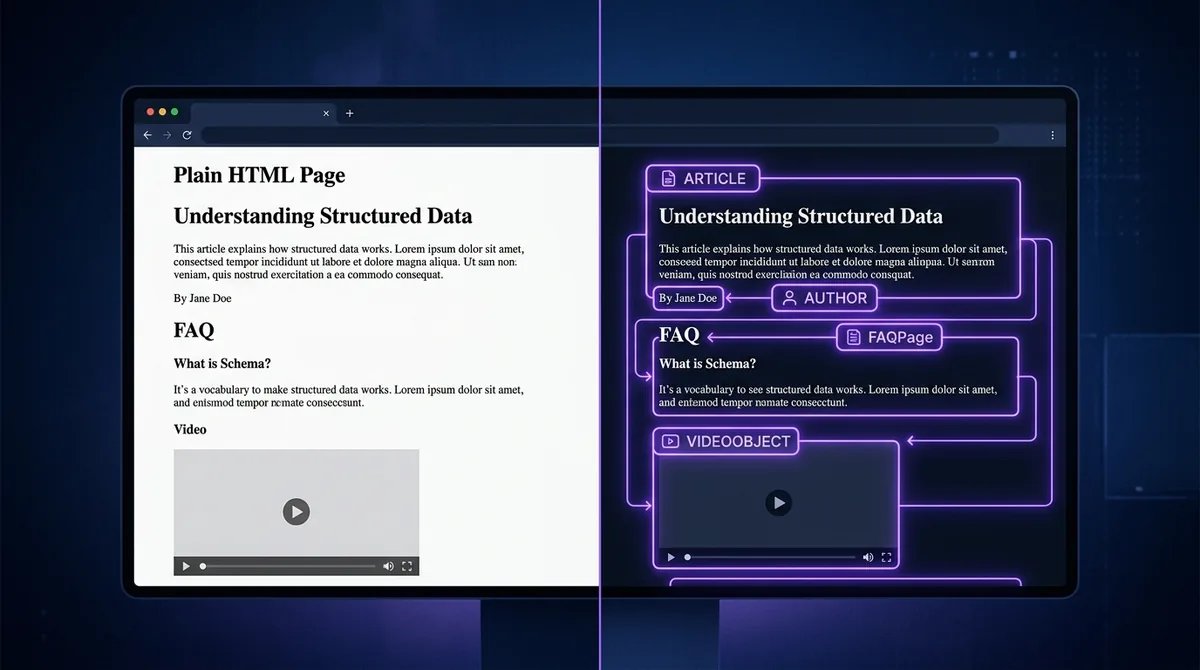
Schema markup is the solution most creators ignore. It's a standardized vocabulary — built on Schema.org — that you embed in your page's HTML to tell search engines and AI tools exactly what your content is, not just what it says. Think of it as a translation layer between your content and the machines trying to make sense of it.
If you want to understand why this matters at a deeper level, the article How AI Search Engines Rank Content — And Why It's Not the Same as Google is required reading before you touch a single line of schema code.
What Schema Markup Actually Is
Schema markup (also called structured data) is a block of code — typically written in JSON-LD format — that you add to the <head> or <body> of your webpage. It uses a shared vocabulary from Schema.org, a project backed by Google, Microsoft, Yahoo, and Yandex, to define what type of content is on your page and what the key elements within it mean.
For example, a basic Article schema tells a machine: "This page is an article. The headline is X. The author is Y. It was published on date Z. The topic is W." Without schema, a machine has to infer all of that from your HTML structure and prose — which introduces ambiguity. With schema, you remove the guesswork entirely.
This matters enormously in the context of Entity vs Keyword: Why GSO Thinks Differently. Traditional SEO optimizes around keywords — strings of text. AI search optimizes around entities — people, organizations, concepts, and their relationships. Schema is the primary mechanism through which you declare your entities explicitly.
The 4 Schema Types That Matter Most for AI Visibility
1. Article Schema
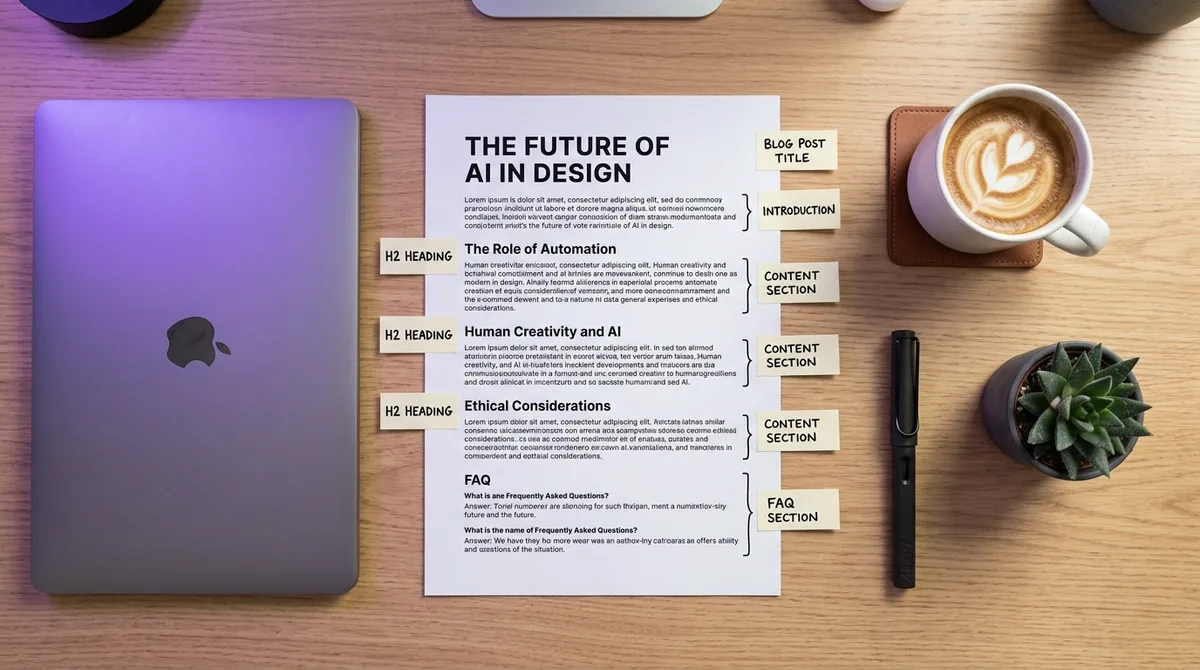
Article schema is the foundation for any content creator. It declares that your page contains an editorial piece of content, and it allows you to specify the headline, author, publication date, image, and publisher. When an AI tool is deciding whether to cite a piece of content, freshness and authorship are key signals. Article schema makes both of those signals machine-readable.
Use NewsArticle for timely content, BlogPosting for opinion or analysis, and the base Article type for evergreen how-to content. The distinction matters — AI engines use these type declarations to decide what kind of answer your content is best suited to provide.
2. FAQ Schema
FAQ schema is arguably the highest-leverage schema type for creators trying to appear in AI-generated answers. When you mark up a list of questions and answers using FAQ schema, you're directly feeding a machine the exact format it uses when generating a response: a question followed by a concise, accurate answer.
This is why the article Structure About & FAQ Pages for AI Search focuses so heavily on this format. An FAQ section without schema is useful for humans. An FAQ section with schema is useful for both humans and the AI tools that are increasingly the first stop for search queries.
3. Person Schema
For creators, Person schema is how you establish yourself as a named, verifiable entity in the knowledge graph that AI tools rely on. It connects your name to your website, your social profiles, your areas of expertise, and any other structured identifiers. This is the schema equivalent of saying: "I exist. I am a real person. Here is what I know and where I publish it."
Without Person schema, an AI tool citing your content may not reliably connect that content to you as an author — which limits your ability to build the kind of cited presence in AI search that compounds over time.
4. HowTo and VideoObject Schema
For YouTube creators and tutorial-style content producers, HowTo schema and VideoObject schema are critical. HowTo schema breaks down a process into machine-readable steps — making your tutorial directly usable by an AI that's answering "how do I..." questions. VideoObject schema tells AI tools that a video exists on your page, what it covers, its duration, and its transcript if available.
A transcript embedded via VideoObject schema is particularly powerful. It gives AI tools direct access to spoken content they might otherwise not be able to index — turning every word you say on camera into citable, structured data.
How Schema Connects to Citations in AI Search
AI tools don't cite randomly. They cite sources that are clear, authoritative, and structurally legible. Schema markup directly improves all three. It makes your content's purpose clear (what type of content is this?), it reinforces authority signals (who wrote this, when, and for what audience?), and it makes your content structurally legible by removing the need for inference.
To understand the full picture of how citations work in AI-generated responses, read What Is a Citation in AI Search — And How Do You Earn One? — it covers the behavioral and content signals that schema alone can't substitute for. Schema is a necessary condition for AI visibility, not a sufficient one.
Pairing schema with content that is written to be quoted is the combination that drives results. The article How to Write Content That AI Tools Actually Quote breaks down exactly what that looks like at the sentence and paragraph level.
Common Schema Mistakes That Kill Your AI Visibility
Marking up content that doesn't exist on the page
Google and AI crawlers are not fooled by schema that describes something your visible page doesn't actually contain. If your FAQ schema lists five questions but only two of them appear as readable text on the page, that's a mismatch that can trigger manual penalties and erode trust signals. Always ensure your schema is a description of visible content, not a replacement for it.
Using outdated schema types
Schema.org evolves. Types that were common practice three years ago may now be deprecated or superseded by more specific types. Always check Schema.org directly for the most current type definitions, and test your markup using Google's Rich Results Test tool before publishing.
Ignoring schema on secondary pages
Most creators apply schema to their blog posts and homepage but forget about their About page, their FAQ page, and their author bio page — often the pages AI tools consult most heavily when evaluating whether to trust a source. A Person schema on your About page and an Organization schema on your site header are quick wins that most creators skip.
Schema as Part of a Larger GSO Strategy
Schema markup is one layer of a broader strategy called Generative Engine Optimization (GSO) — the practice of making your content discoverable and citable by AI-powered search tools rather than just traditional search engines. If you haven't read What is GEO (Generative Engine Optimization) and How is it Different from SEO?, start there to understand where schema fits in the full stack.
Schema tells machines what your content is. Topical authority tells machines what you know. The article Build Topical Authority AI Tools Will Recognize explains how to build the content depth that makes your schema declarations credible. One without the other is a half-measure.
For creators who are already producing content at volume, Why Most Creators Are Invisible to AI Search (And How to Fix It) identifies the structural gaps — including missing schema — that keep even prolific publishers from being cited by AI tools.
Frequently Asked Questions
Does schema markup directly improve my Google rankings?
Schema markup is not a direct ranking factor for traditional Google search, but it enables rich results — enhanced search listings with stars, FAQs, or video thumbnails — that significantly improve click-through rates. More importantly for AI search, it makes your content structurally legible to large language models that power tools like Google's AI Overviews and Perplexity.
What's the easiest schema type to implement first?
FAQ schema is the easiest high-impact starting point. If your article or page already contains a question-and-answer section, you can mark it up in JSON-LD in under 30 minutes. It requires no special tools, and the payoff — appearing in AI-generated answers — is direct and measurable.
Do I need a developer to add schema markup?
Not necessarily. If you use WordPress, plugins like Yoast SEO or Rank Math handle common schema types automatically. For custom or more advanced schema, a basic understanding of JSON-LD and a free validator like Google's Rich Results Test is enough to implement and verify it yourself. Developers are only required for highly customized or site-wide schema architectures.
Will schema markup help my YouTube videos get cited by AI tools?
Yes — specifically VideoObject schema on your video pages or embedded video content. It allows AI crawlers to understand the video's topic, duration, and transcript. Combined with a written transcript on the page itself, VideoObject schema is one of the most effective ways to make spoken content machine-readable and citable.
How do I know if my schema is working?
Use Google's Rich Results Test to validate your markup and confirm it parses correctly. For AI citation tracking, monitor whether your content appears in Perplexity or ChatGPT answers for your target queries over time. Schema is a long-term signal — expect to see compounding results over weeks and months rather than immediate changes.
Ready to see what the data says about your channel?
Stop guessing. Use AskLibra to get a personalized 90-day growth gameplan and find your perfect posting window.
No credit card required • Join 2,000+ creators