

Build Topical Authority AI Tools Will Recognize
Key Takeaways
- 1
Topical authority means covering a subject with enough depth and consistency that AI tools treat you as a reliable, citable source — not just another content creator.
- 2
Publishing a cluster of tightly related content around one core topic signals expertise to both search engines and AI models far more effectively than scattered, broad content.
- 3
Structuring your content with clear definitions, direct answers, and FAQ sections dramatically increases the chance an AI tool will quote or cite your work.
- 4
Creators who combine consistent publishing with entity-based content strategy are the ones showing up in AI-generated answers — and that audience is growing fast.
Why Topical Authority Is the New SEO for AI Search
For years, ranking on Google meant targeting the right keywords and earning backlinks. That still matters — but it's no longer the whole game. A new layer of discovery has emerged: AI-generated search results from tools like ChatGPT, Perplexity, and Google's AI Overviews. These tools don't rank ten blue links. They pick one or two sources they trust and quote them directly.
That changes everything about how you should think about content strategy. The question isn't just "can I rank for this keyword?" — it's "will an AI tool recognize me as an authority on this topic?" To answer yes, you need topical authority: a depth and consistency of coverage on a specific subject that signals genuine expertise to both algorithms and AI models.
If you want to understand the broader shift happening here, What is GEO (Generative Engine Optimization) and How is it Different from SEO? is a strong starting point before diving into the tactical steps below.
What Topical Authority Actually Means
Topical authority is the degree to which a website, channel, or creator is recognized as a credible, comprehensive source on a specific subject. It's built not by writing one exceptional article, but by systematically covering a topic from multiple angles — definitions, how-tos, comparisons, case studies, FAQs — until your content collectively forms the most complete resource on that subject.
Think of it like a textbook versus a blog post. A single blog post answers one question. A textbook covers the entire subject, anticipates follow-up questions, and earns citations from other authors. AI tools are trained to behave like researchers: they pull from sources that look more like textbooks than one-off posts.
This is also why Entity vs Keyword: Why GSO Thinks Differently matters so much. AI models don't just match keywords — they recognize entities (people, brands, concepts) and the relationships between them. Establishing yourself as a named entity in your niche is part of building authority that AI can actually act on.
Step 1: Choose One Core Topic and Go Deep
The single biggest mistake creators make is spreading their content across too many topics. A YouTube channel that posts about productivity, finance, fitness, and travel might have a large library — but it has no topical authority in any of those areas. AI tools see a generalist. Generalists don't get cited.
Start by picking the narrowest topic you can credibly own. Not "marketing" — but "email marketing for Shopify store owners." Not "fitness" — but "strength training for women over 40." The more specific your niche, the faster you can achieve comprehensive coverage, and the more likely an AI tool is to treat you as the go-to source when someone asks a question in that space.
Once you've chosen your core topic, map out every meaningful subtopic, question, and angle a person could want answered about it. This becomes your content cluster — the architectural blueprint for topical authority. For a structured way to approach this, see What Is a Content Pillar Strategy and How Do YouTube Creators Use It?
Step 2: Build a Content Cluster Around One Pillar
A content cluster is a group of interlinked pieces that together cover a topic exhaustively. It typically has:
One pillar page — a comprehensive, authoritative overview of the core topic (1,500–3,000+ words)
Multiple cluster pages — individual pieces that go deep on specific subtopics, each linking back to the pillar
Internal links connecting related cluster pages to each other, not just to the pillar
This structure signals to AI models that your site isn't a single good article — it's a web of interconnected expertise. When an AI tool is trained on or crawls your content, it sees a coherent, well-organized body of knowledge. That's what gets you cited.
For a deeper look at how AI tools decide which sources to pull from, How ChatGPT & Perplexity Pick Trusted Sources breaks down the mechanics in plain terms.
Step 3: Write Content That AI Tools Can Actually Quote
Publishing a lot of content isn't enough. You need to publish content that is structurally easy for AI to extract and quote. That means:
Lead with definitions. When you introduce a concept, define it in one clean sentence. AI tools love pulling these directly as answers.
Use direct, declarative statements. Avoid hedging phrases like "it could be argued" or "some people think." State your expertise clearly.
Answer questions in the first sentence of each section. Don't build up to the answer — AI tools scan for the answer, not the journey to it.
Include data where it genuinely strengthens the point. Original data is especially powerful because it gives AI tools something they can't get anywhere else.
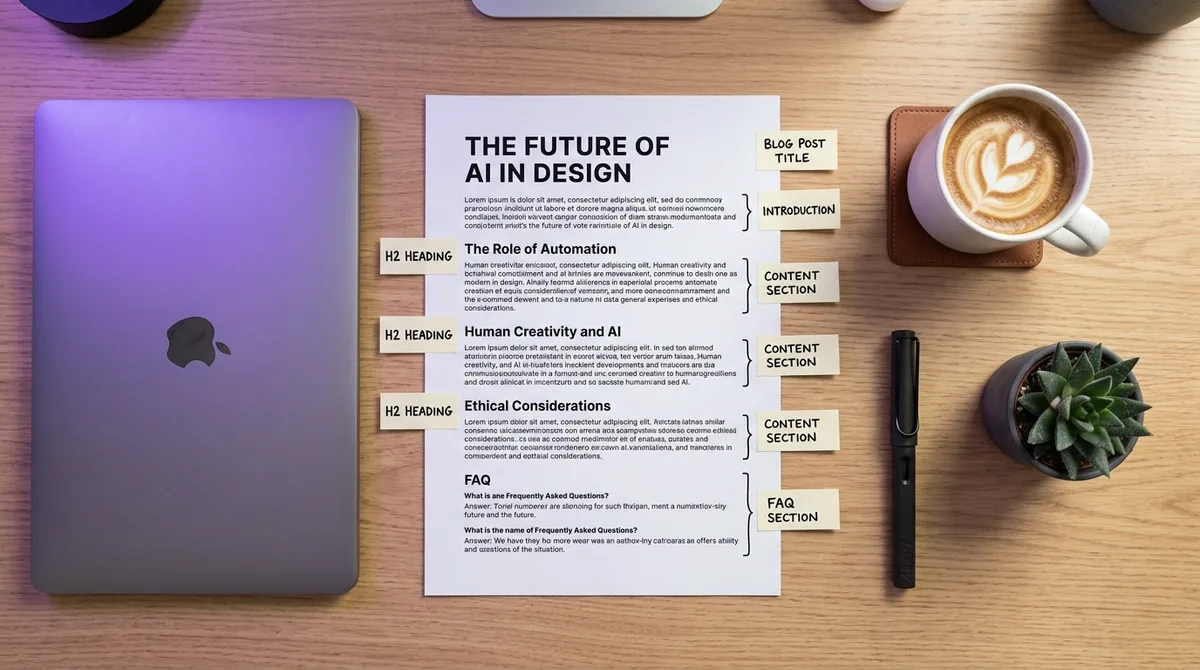
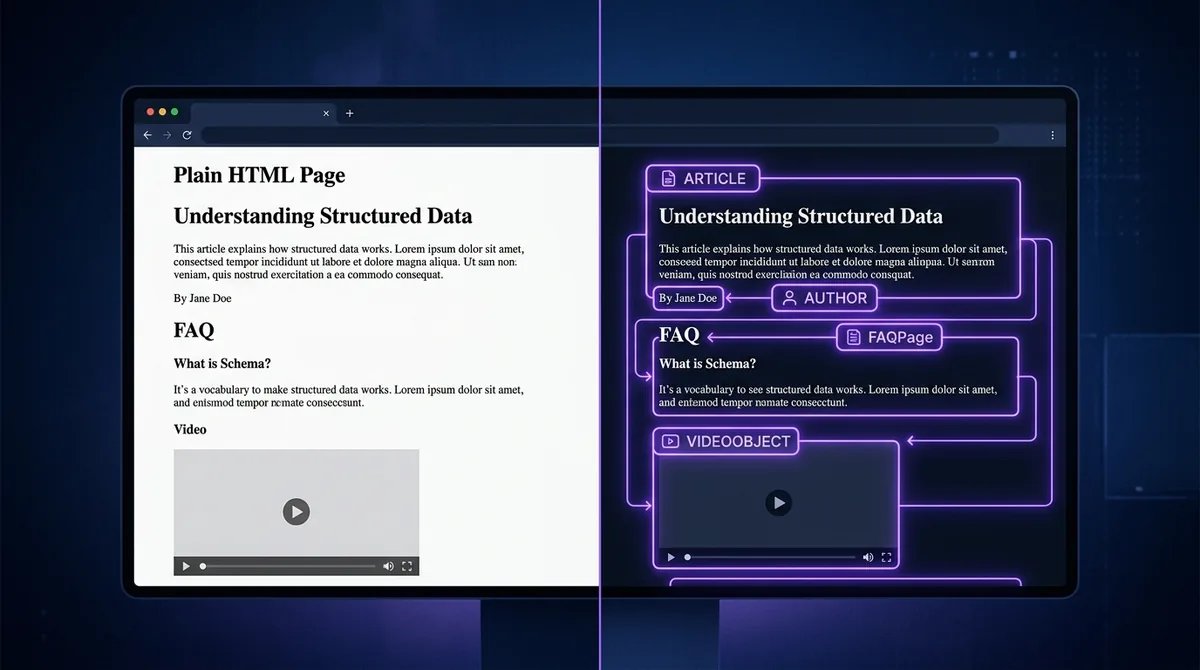
Use structured formatting — H2s, H3s, bullet lists, bold terms — so AI can parse your content hierarchy easily.
This approach is covered in detail in How to Write Content That AI Tools Actually Quote — worth reading alongside this piece.
Step 4: Demonstrate E-E-A-T Signals Across Every Page
E-E-A-T stands for Experience, Expertise, Authoritativeness, and Trustworthiness — a framework Google uses to evaluate content quality, and one that AI models increasingly mirror. For creators, this means making your credentials visible and consistent:
Include an author bio that states your relevant experience explicitly
Link to original work, case studies, or real results you've achieved
Get mentioned or linked to by other credible sources in your niche
Keep your content accurate, up-to-date, and free of factual errors
AI tools are trained to avoid citing sources that look thin, anonymous, or unreliable. Building visible trust signals across your content isn't vanity — it's infrastructure. For a creator-specific breakdown, What E-E-A-T Means for YouTube Creators Trying to Rank in AI Search goes deep on exactly what to do.
Step 5: Earn Citations, Not Just Traffic
Traditional SEO optimizes for clicks. GSO (Generative Search Optimization) optimizes for citations — the moment an AI tool references your content as a source in its answer. Citations drive a fundamentally different kind of authority: one that compounds over time and works even when the user never visits your site directly.
To earn citations, your content needs to be the clearest, most direct answer to a specific question that exists on the web. That means going narrower and deeper than competitors, not broader. One piece that definitively answers "What is the average YouTube hook rate for educational channels?" will earn more AI citations than ten pieces that vaguely cover YouTube growth.
For the full picture on what cited content looks like and how to structure it, see What Cited Content Looks Like in AI Search and What Is a Citation in AI Search — And How Do You Earn One?
Step 6: Stay Consistent — Authority Is Cumulative
Topical authority isn't built in a week. It's built through consistent, focused publishing over months. Every new piece you add to your content cluster strengthens the overall signal. Every internal link you create reinforces the topical map. Every time another site links to your content or an AI tool quotes you, the authority compounds.
This is important for creators to internalize: you're not writing individual articles. You're building a body of work that functions as a recognizable, citable resource. Consistency matters more than volume — two high-quality, well-structured pieces per month on your core topic will outperform ten scattered posts every time.
It's also worth watching for the signs that inconsistency is catching up with you. Data Signals That Predict YouTube Creator Burnout outlines how over-publishing without strategy leads to declining performance — and how to read those signals before they become a problem.
Frequently Asked Questions
How long does it take to build topical authority?
Most creators start seeing measurable signals — increased citations, AI mentions, organic ranking improvements — within three to six months of focused, cluster-based publishing. The timeline depends on niche competitiveness and how consistently you publish. Narrower niches move faster because there are fewer credible sources to compete with.
Do I need a website, or can I build topical authority on YouTube alone?
YouTube channels can build topical authority, but combining a website with your channel dramatically accelerates it. AI tools can crawl and cite written content more easily than video transcripts. Using both gives you more surface area for citations and allows you to build the internal link structures that signal comprehensive topic coverage.
How many pieces of content do I need before AI tools start recognizing me?
There's no fixed number, but a well-structured cluster of 10–15 tightly related pieces covering a specific topic from multiple angles is a strong foundation. What matters more than quantity is coverage depth — does your content collectively answer every important question about your topic better than any other source?
Can small creators compete with large media sites for AI citations?
Yes — and in some cases, small creators have an advantage. Large media sites cover too many topics to achieve deep authority in any one niche. A solo creator who focuses exclusively on one narrow subject and publishes original, specific, well-structured content can absolutely out-rank and out-cite a major publication on that topic.
What's the difference between topical authority and keyword targeting?
Keyword targeting focuses on individual search queries — optimizing one page to rank for one phrase. Topical authority focuses on comprehensive subject coverage — building a body of work that signals expertise across an entire topic area. AI search rewards topical authority far more than keyword matching, because it's trying to identify the most knowledgeable source, not the most optimized page.
Ready to see what the data says about your channel?
Stop guessing. Use AskLibra to get a personalized 90-day growth gameplan and find your perfect posting window.
No credit card required • Join 2,000+ creators