
What Is a Content Pillar Strategy and How Do YouTube Creators Use It?
What Is a Content Pillar Strategy?
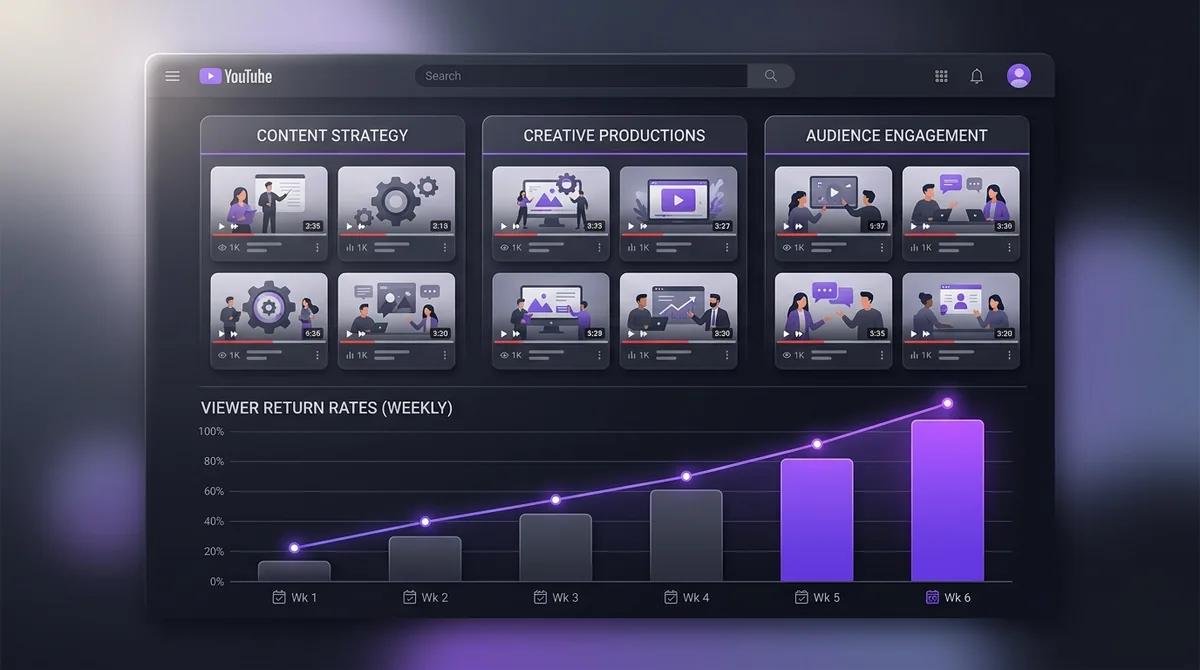
A content pillar strategy is a framework where you organize all your videos around a small number of core topic categories — typically 3 to 5 — called pillars. Every video you publish lives under one of those pillars. The goal is to make your channel feel cohesive to both viewers and to YouTube's recommendation system, so that watching one of your videos naturally leads a viewer to watch another.
Think of each pillar as a load-bearing wall in a building. Remove one and the structure weakens. Add too many and you lose the shape of what you're building. Most creators who struggle with inconsistent growth are unknowingly publishing videos that have no structural relationship to each other — they post a tutorial one week, a vlog the next, then a reaction video, then a product review. To a new viewer, there is no clear reason to subscribe. To YouTube's algorithm, there is no clear audience to recommend the channel to.
A content pillar strategy solves both problems at once.
Why Pillar-Based Channels Grow Differently
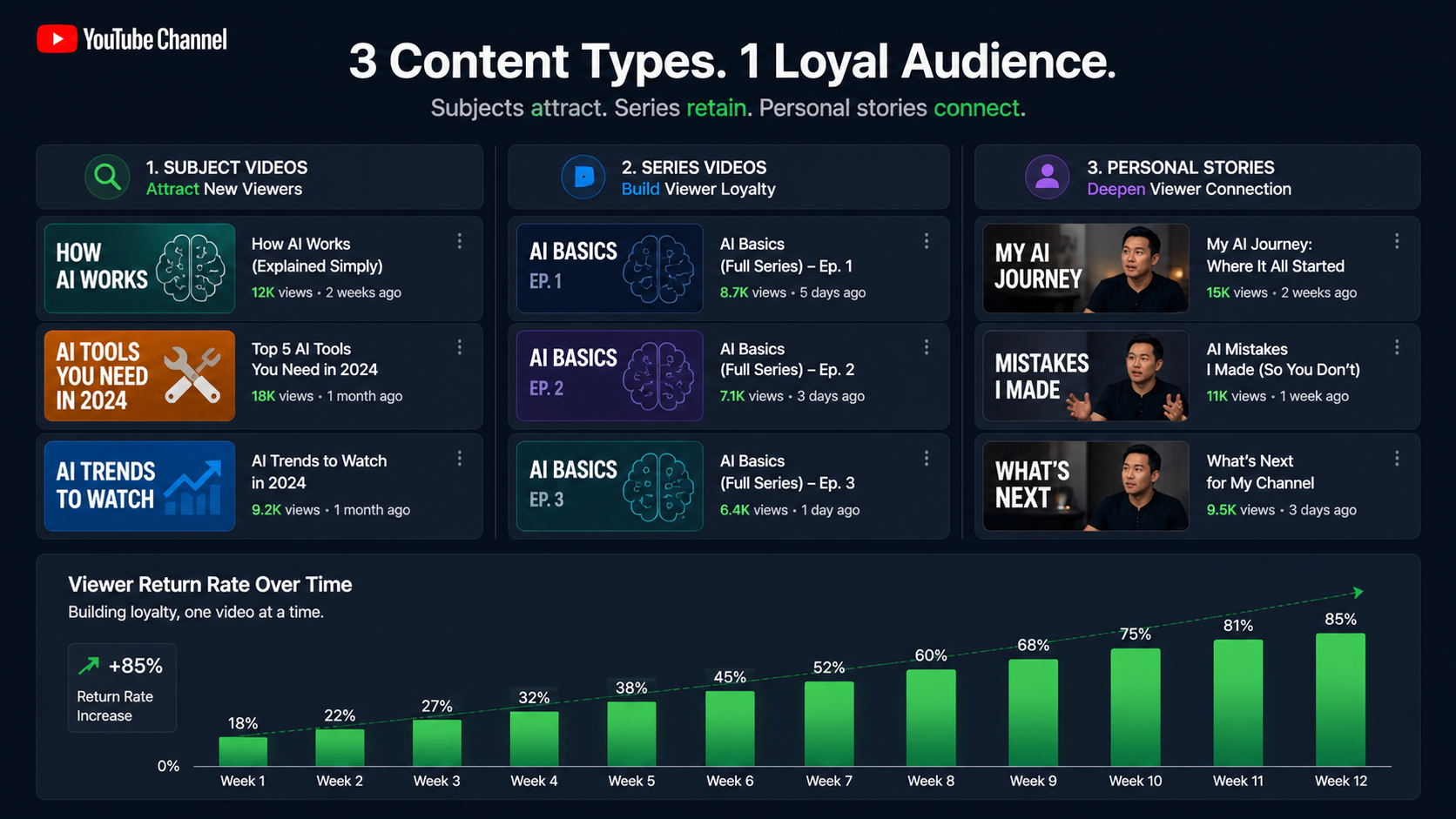
When every video reinforces the same 3 to 5 topic categories, two things happen. First, your back catalog becomes a self-reinforcing web. A viewer who finds Video A about your first pillar is highly likely to watch Video B and Video C about the same pillar — because those videos answer the natural follow-up questions the viewer now has. This increases your session time, which is the total number of minutes a viewer spends on YouTube after watching your video. Session time is one of the strongest signals YouTube uses to decide whether to recommend a channel more broadly.
Second, you become searchable in a way that scattered channels cannot. A channel with 40 videos all connected to 4 pillars builds topical authority — the same principle that makes certain websites dominate Google search results for an entire subject area. YouTube's search and browse systems reward channels that clearly own a niche over channels that dabble in many.
If you want to understand how search traffic versus browse traffic affects your discoverability, the breakdown in Browse vs Search Traffic on YouTube: What's the Difference and Which Matters More? explains exactly which traffic source responds best to this kind of topical depth.
How to Choose Your Content Pillars
The most common mistake creators make when choosing pillars is picking topics they want to cover rather than topics their audience has already proven they will watch. Your analytics contain the answer. Look at three signals:
1. Average View Duration by Topic
Average view duration (also called VSAT, or video satisfaction score) measures how many minutes of a video a typical viewer watches. A video with a high VSAT tells you the audience found the content worth finishing. When multiple videos about the same topic show consistently high VSAT, that topic is a strong pillar candidate.
2. Click-Through Rate by Thumbnail and Title Theme
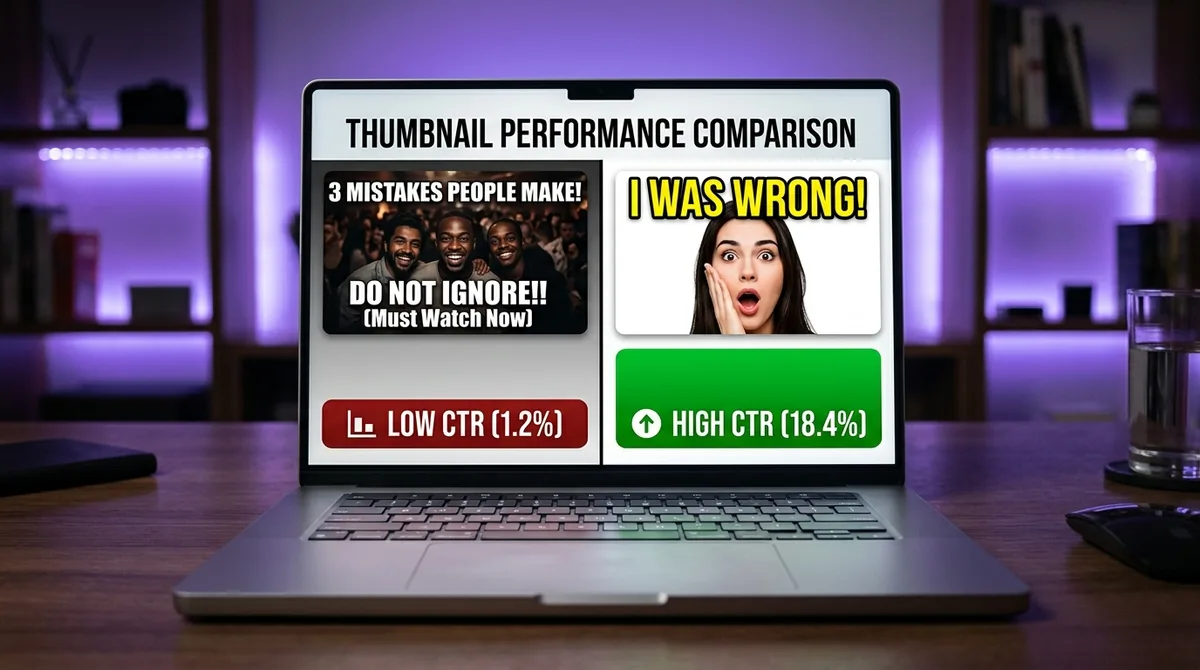
CTR (Click-Through Rate) is the percentage of people who saw your video's thumbnail in their feed and actually clicked on it. If videos about a specific topic consistently earn higher CTR than your channel average, that topic is one your audience recognizes and wants before they even press play. For a deep dive into lifting this number, see How to Improve Your YouTube Thumbnail Click-Through Rate.
3. Subscriber Conversion by Topic
Some topics entertain people who will never subscribe. Other topics attract exactly the viewer who comes back every week. Check which video topics converted the highest percentage of viewers into subscribers. Those topics belong at the center of your pillar strategy.
Once you have identified 3 to 5 topic clusters where VSAT, CTR, and subscriber conversion are all strong, those become your pillars. Everything else either gets retired or repurposed to fit within one of those pillars.
A Practical Example: What Three Pillars Look Like in Practice
Imagine a creator in the personal finance space. Without a pillar strategy, their upload history might look like: a stock market reaction video, a "day in my life" vlog, a credit card review, a meditation video, a budgeting tutorial, and a motivational speech. Six videos, six different audiences.
With a pillar strategy, that same creator defines three pillars: (1) Budgeting and Saving, (2) Investing for Beginners, and (3) Debt Payoff Stories. Now every video fits one category. A viewer who finds the debt payoff pillar immediately sees five more videos on the same topic in the sidebar. They watch three in a row. They subscribe because they know exactly what the channel is about and what they will get next week.
This is not a creative constraint — it is a conversion engine.
How Content Pillars Connect to Your Posting Strategy
Once your pillars are defined, your editorial calendar writes itself. You can rotate through pillars on a predictable cycle, which solves one of the most common creator frustrations: not knowing what to make next. Instead of staring at a blank page, you ask: "It has been two weeks since I published a Pillar 2 video. What is the next logical Pillar 2 video my audience needs?"
This is also where data-driven posting decisions become much easier. When you know which pillar your next video belongs to, you can look at historical performance for that specific topic category and choose the format, length, and posting time that has worked best for it. Tools like How to Use AskLibra's Weekly Gameplan to Plan a Month of Content are built precisely to operationalize this kind of pillar-based scheduling.
And if you have heard the advice to "just post consistently" and found it unhelpful, it is because consistency without strategic direction produces consistently mediocre results. The article Why 'Post Consistently' Is Bad Advice — And What to Do Instead explains what consistent creators who actually grow are doing differently.
Pillar Strategy and Video Format: They Are Not the Same Thing
A critical distinction: your content pillars define what your videos are about. Your video format defines how you present them. A single pillar can and should be served by multiple formats — a long-form tutorial, a Short that teases a concept from the tutorial, a community post asking a question about the topic.
Based on AskLibra data from 4 connected channels and 511 videos analyzed, long-form videos average an engagement rate of 0.0226, while Shorts average 0.0109. This does not mean Shorts are inferior — it means long-form content in these channels is currently driving deeper audience engagement per view. The right answer for your channel depends on which format your specific audience rewards within each pillar. The comparison in YouTube Shorts vs Long-Form: How to Decide What to Post gives you a framework for making that call using your own numbers.
How to Build Your Pillar Content Library Over Time
A common question is: how many videos do I need per pillar before the strategy starts working? There is no universal number, but a practical target is 10 to 15 videos per pillar before you can reliably compare performance across pillars and start optimizing. Below that threshold, sample sizes are too small to trust.
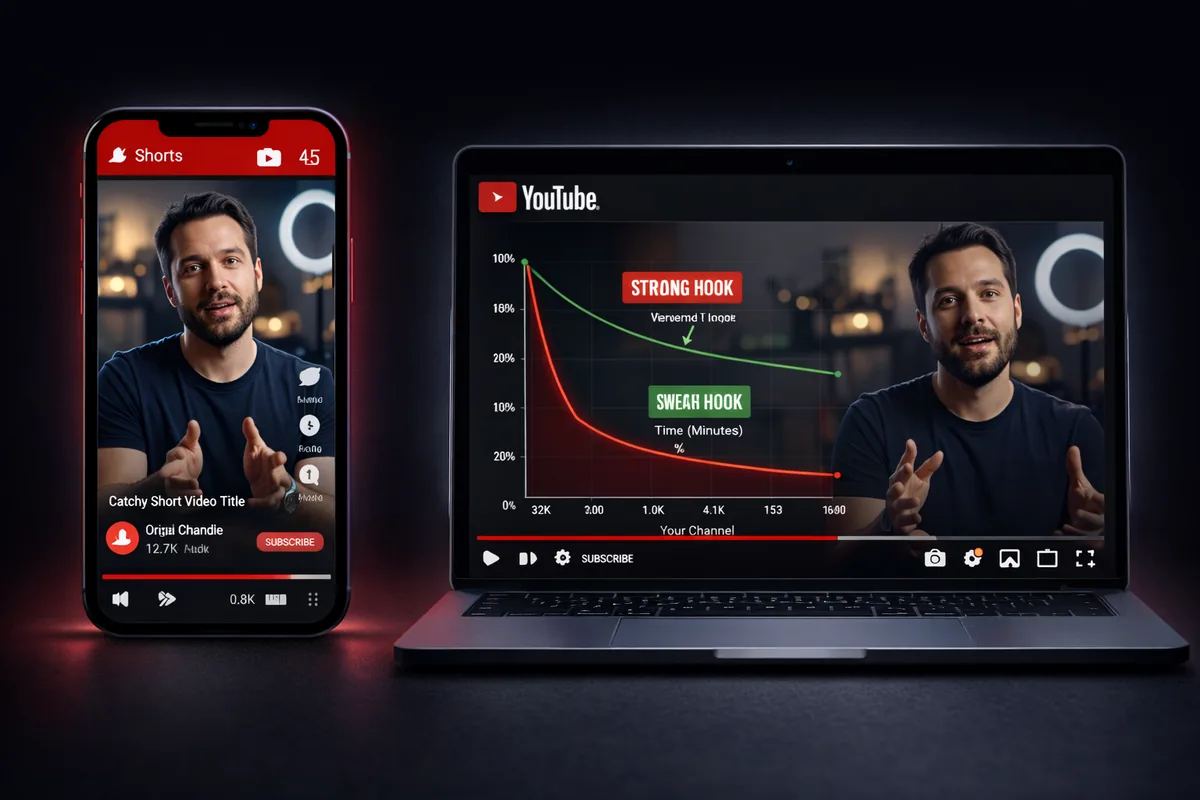
As you build toward that library, pay attention to hook rate — the percentage of viewers who watch past the first 30 seconds of your video. A low hook rate means your opening does not match the expectation your title and thumbnail set. Since each pillar has a distinct audience expectation, hook rate often varies significantly between pillars. Understanding this helps you write better openings for each category. For a full breakdown of how to engineer a strong opening, see What is a YouTube Hook and How Long Should It Be?
You should also audit your existing video library and tag every video by pillar. This exercise alone will reveal whether you have been spreading yourself too thin, doubling down on one pillar at the expense of others, or building a coherent library you did not realize you had. From there, the gaps in each pillar become your next content calendar.
If you want a full system that takes your pillar structure and turns it into a channel-wide content operation, How to Build a Complete Content System Using AskLibra walks through exactly that process.
Frequently Asked Questions
How many content pillars should a YouTube channel have?
Most channels perform best with 3 to 5 pillars. Fewer than 3 can make a channel feel narrow and limit your video ideas over time. More than 5 usually means your audience segments are too different from each other, which confuses both viewers and YouTube's recommendation system. Start with 3 and only add a fourth when you have strong data showing audience overlap between your existing pillars and the new topic.
Can I change my content pillars after I have already published a lot of videos?
Yes, and many successful creators do exactly this after reviewing their analytics for the first time. The practical approach is to audit your existing library, identify which existing videos already cluster naturally into 3 to 5 topics, and declare those your official pillars going forward. You do not need to delete old videos — simply stop publishing new content that does not fit the pillars you have chosen.
How is a content pillar different from a niche?
Your niche is the broad subject area your channel covers — for example, personal finance or home cooking. Your content pillars are the specific sub-categories within that niche that you have chosen to build authority in. A personal finance channel might have pillars for budgeting, investing, and debt payoff. The niche is the roof; the pillars are what hold it up.
Do content pillars work for small channels that are just starting out?
They work especially well for small channels because they prevent the scatter-shot approach that kills most new channels before they find traction. Defining 3 pillars before you publish your first 20 videos means every early video contributes to building topical authority rather than fragmenting it. Starting structured is far easier than restructuring after 100 unfocused videos.
How do I know if my pillar strategy is actually working?
The clearest signal is an increase in returning viewer rate — the percentage of your views that come from people who have watched your channel before. A rising returning viewer rate means your library is pulling people back, which is exactly what a strong pillar structure produces. Secondary signals include rising average view duration and an increase in suggested traffic, which means YouTube is recommending your videos to people who just finished watching another one of your videos.
Ready to see what the data says about your channel?
Stop guessing. Use AskLibra to get a personalized 90-day growth gameplan and find your perfect posting window.
No credit card required • Join 2,000+ creators