
YouTube Shorts vs Long-Form: How to Decide What to Post
Key Takeaways
- 1
Long-form videos consistently outperform Shorts in audience retention and monetization, but Shorts win on discovery speed — knowing when to use each format is the real skill.
- 2
Your channel's goal (subscriber growth, revenue, or brand authority) should determine your format mix, not personal preference or what other creators are doing.
- 3
Shorts work best as a top-of-funnel hook to pull viewers toward longer content — treat them as trailers, not standalone products.
- 4
Analyze your own channel's retention curves and click-through rates before committing to a format strategy; generic advice rarely matches your specific audience behavior.
The Question Every Creator Gets Wrong
Most creators choose between YouTube Shorts and long-form video based on what feels easier or what they see trending. That's the wrong starting point. The right question isn't "which format is more popular right now?" — it's "which format moves my channel toward my specific goal?" This article breaks down exactly how to make that call, using clear criteria instead of guesswork.
What Each Format Actually Does
Before choosing, you need to understand what each format is mechanically built to accomplish.
YouTube Shorts are vertical videos under 60 seconds that live in a dedicated feed driven by YouTube's recommendation engine. They are optimized for rapid discovery — the algorithm pushes Shorts to large audiences quickly, even on small channels. The trade-off is that viewer intent is low: people scroll Shorts passively, the way they scroll TikTok or Instagram Reels. Subscribers gained from Shorts often have weak ties to your channel and are less likely to watch your long-form content.
Long-form videos (typically anything over 5 minutes, though the sweet spot for most niches is 8–20 minutes) require active viewer choice. Someone searching for a tutorial, a review, or an in-depth explanation actively clicks your video. That intent gap between the two formats explains nearly every performance difference you'll see in your analytics.
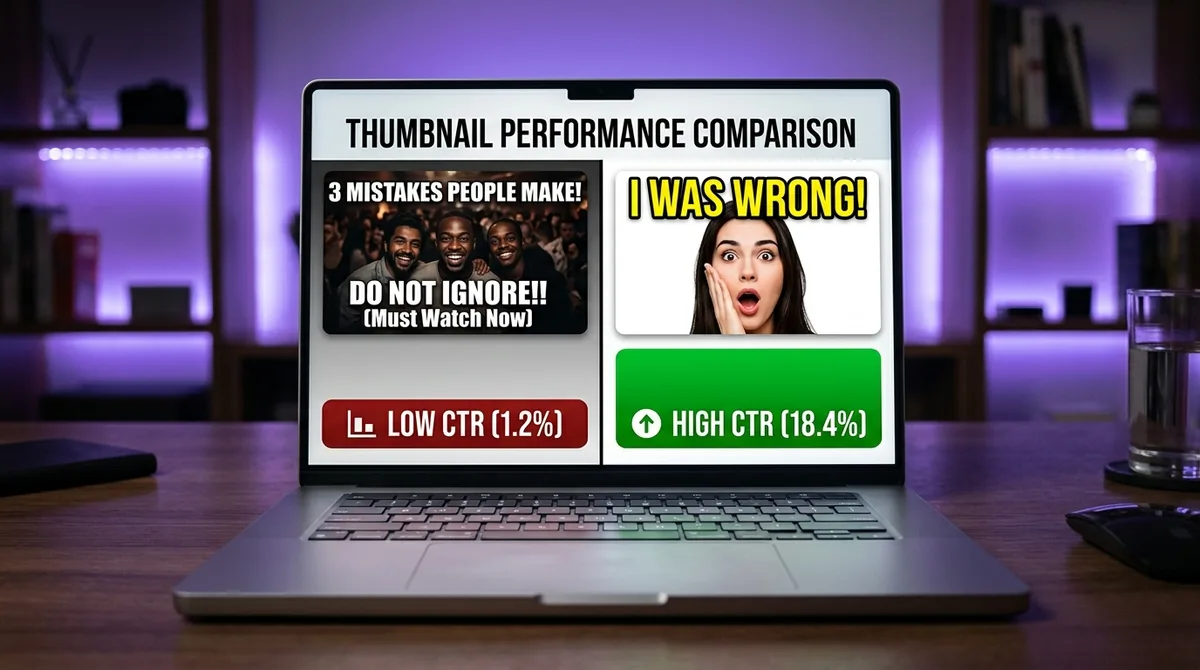
To understand how click-through rate (CTR — the percentage of people who see your thumbnail and title and actually click) drives long-form performance, read What is YouTube CTR and why does it control your channel's growth?
The Goal-First Decision Framework
Match your format to your primary channel objective. Here is how that breaks down:
If Your Goal Is Monetization
Long-form wins, and it's not close. YouTube's Partner Program pays out based on watch time and ad impressions. Shorts have a separate monetization pool (the Shorts ad revenue share) that pays significantly less per view than standard in-stream ads on long-form content. If revenue is your priority, your energy belongs in long-form production.
If Your Goal Is Fast Discovery on a New Channel
Shorts give you a realistic path to early views without an existing audience. A new channel posting long-form content relies heavily on search traffic — a slow build. Shorts can surface your content to thousands of people within days. The critical trap here is treating discovery as the finish line. Discovery without conversion (getting Short viewers to subscribe and watch your long-form content) produces vanity metrics, not channel growth.
If Your Goal Is Building Authority in a Niche
Long-form is the only format that allows the depth required to establish expertise. A 30-second Short cannot demonstrate the reasoning, context, and nuance that builds genuine trust with an audience. If you are in a knowledge-heavy niche — finance, health, technology, education, real estate — long-form is not optional. For how browse and search traffic patterns affect discoverability in these niches, see Browse vs Search Traffic on YouTube: What's the Difference and Which Matters More?
What the Data Reveals About Format Performance
Based on AskLibra data from 4 connected channels and 511 videos analyzed, long-form videos show an average engagement rate of 0.0226 compared to 0.0109 for Shorts. That means long-form content in this dataset generates roughly twice the engagement per video. This matters because engagement — comments, shares, likes relative to views — is a signal of genuine audience investment, not passive scrolling.
This data point aligns with a straightforward behavioral reality: a viewer who chose to watch a 12-minute video and stayed through it has a fundamentally different relationship with your content than someone who watched a Short autoplay in a feed. The engaged long-form viewer is more likely to subscribe, comment, share, and return.
Audience Retention: The Metric That Separates the Formats
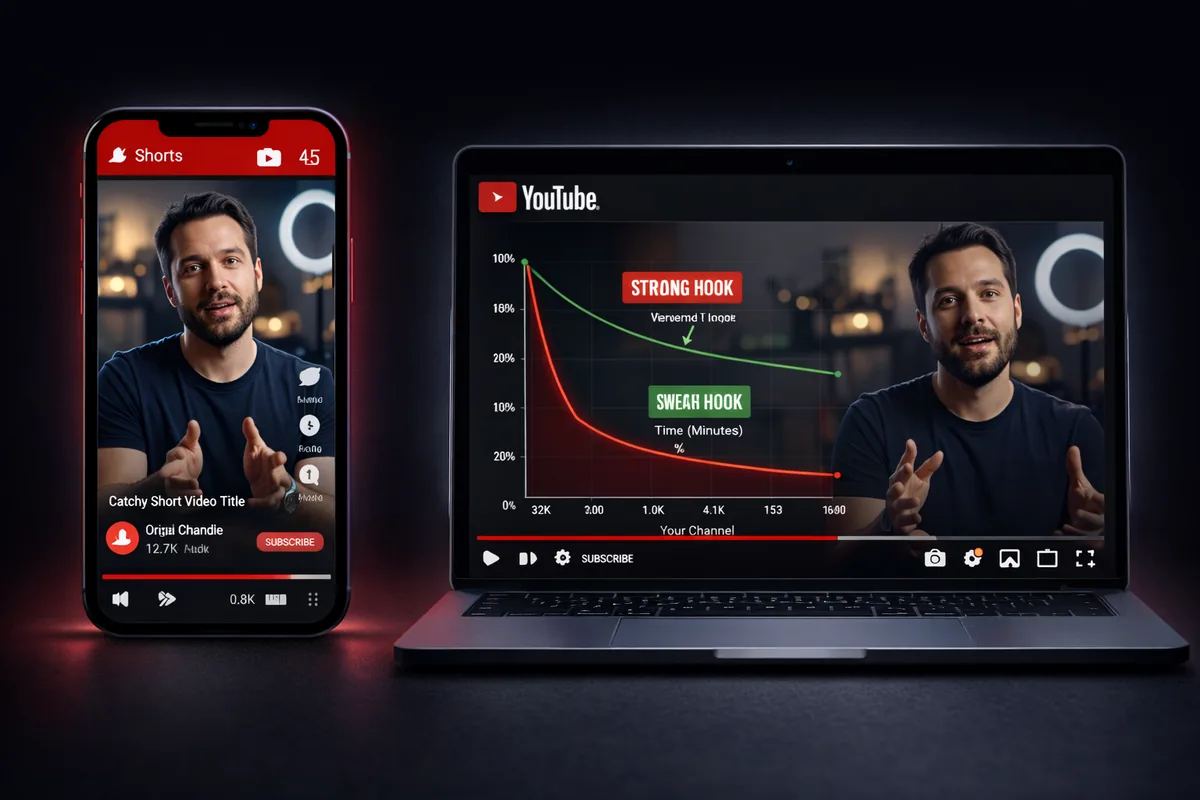
Audience retention — the percentage of your video that viewers watch on average — is tracked very differently between Shorts and long-form. For long-form, YouTube's Studio shows you a full retention curve: a graph that displays exactly where viewers drop off, where they rewatch, and what moments hold attention. This curve is one of the most actionable pieces of data a creator has access to.
For Shorts, retention data is far less granular. Because Shorts often loop automatically, the numbers can appear inflated and are harder to interpret accurately. For a full breakdown of what retention numbers mean in practice, read YouTube Audience Retention: What the Numbers Actually Mean.
The practical implication: if you want to learn what makes your specific audience stay or leave, long-form gives you better diagnostic data to work with.
The Funnel Model: Using Shorts to Feed Long-Form
The most effective format strategy isn't either/or — it's sequential. Use Shorts as the top of a funnel that leads to your long-form library. Here is what that looks like in practice:
Step 1: Create a Short that delivers one punchy insight, surprising fact, or compelling question from a topic you've covered in a long-form video.
Step 2: End the Short with a clear verbal or on-screen call to action pointing to the full video — "Watch the full breakdown on my channel."
Step 3: Use YouTube's linking features to connect the Short directly to the related long-form video in the description.
This model treats Shorts as trailers, not standalone products. The Short earns the viewer's attention; the long-form video earns their trust. The hook that opens your Short matters enormously in this model — for a complete guide on structuring it, see What is a YouTube Hook and How Long Should It Be?
The Niche Factor: Some Topics Don't Work in 60 Seconds
Format choice is also constrained by topic type. Some content categories compress well into Shorts; others collapse under the constraint.
Shorts-friendly topics: quick tips, single-fact explainers, reaction clips, before/after transformations, listicle teasers, motivational moments.
Long-form required topics: tutorials with multiple steps, product reviews requiring context, opinion pieces requiring argument development, case studies, anything requiring demonstration or nuance.
Trying to force a complex topic into a Short doesn't just underperform — it actively damages your authority in that niche because you appear to be oversimplifying. Creators who misread this lose credibility faster than they gain subscribers.
Posting Cadence: Don't Let Format Strategy Break Your Schedule
One trap creators fall into is choosing a format based on what they think they "should" post frequently, then burning out. Shorts feel faster to produce, but volume requirements in the Shorts feed are high — many creators post daily. One high-quality long-form video per week, with two or three Shorts clipped from it, is a more sustainable production model than running parallel format tracks with separate scripts and shoots.
For a data-backed perspective on why posting volume without strategy backfires, read Why 'Post Consistently' Is Bad Advice — And What to Do Instead. And for common scheduling mistakes that affect performance across both formats, see The Most Common Posting Mistakes YouTube Creators Make (Based on 90-Day Data).
How to Use Your Own Channel Data to Decide
Generic format advice has a ceiling. At some point, your specific audience behavior has to override general recommendations. Here is a simple audit you can run using YouTube Studio:
1. Compare your top 10 performing Shorts vs. your top 10 long-form videos — not by raw views, but by subscriber conversion rate (new subscribers per 1,000 views). Which format is actually building your audience?
2. Check your long-form retention curves — if your long-form videos are consistently dropping below 30% retention before the halfway point, the problem is scripting and hooks, not format. Switching to Shorts won't fix poor content structure.
3. Look at comment quality — Short comments tend to be emoji reactions. Long-form comments tend to be questions, personal stories, and debates. Which comment section reflects an audience you want?
For a systematic way to run this kind of analysis across your full channel history, see How AskLibra's 90-Day Analysis Works — And What It Finds in Your Channel.
The Decision Checklist
Use this before deciding on your next video's format:
Post a Short if: the topic fits in one clear insight under 60 seconds, you are clipping it from existing long-form content, you are specifically targeting discovery on a new or stalled channel, or you need to test whether a topic resonates before investing in a full video.
Post long-form if: the topic requires more than one idea to be useful, your primary goal is monetization or niche authority, you want data-rich feedback from retention curves, or your audience found you through search (not browse or Shorts feeds).
Frequently Asked Questions
Do Shorts hurt a channel's long-form performance?
Not directly, but mismatched audiences can create a problem. If your Shorts attract viewers with completely different interests than your long-form content, your long-form videos may show lower click-through rates because those Short-acquired subscribers won't engage with your main uploads. The fix is to make Shorts that are topically consistent with your long-form library, not viral content that has nothing to do with your niche.
Should beginners start with Shorts or long-form?
It depends on your goal. If you need early validation that your topic resonates, Shorts give you faster feedback. If you want to build a monetizable, authoritative channel, start with long-form and use Shorts as supplementary clips. Starting with Shorts-only often leads to channels with large view counts but low subscriber loyalty and near-zero revenue potential.
How long should a long-form YouTube video be?
Long enough to fully cover the topic, short enough to hold attention throughout. For most tutorial and educational content, 8–15 minutes hits the right balance. The goal is a flat or slowly declining retention curve — not a specific runtime. If your retention data shows a sharp drop at 6 minutes, your video is 6 minutes too long, regardless of what competitors are posting.
Can I post both Shorts and long-form on the same channel?
Yes, and for most channels this is the recommended approach — as long as the topics are connected. The funnel model (Shorts pointing to long-form) is the most effective dual-format strategy. What doesn't work is treating your channel as two separate shows with unrelated topics that happen to share a channel page.
What is the VSAT metric and does it apply to Shorts?
VSAT stands for View-to-Subscribe Average Time — a way of measuring how efficiently a format converts viewers into subscribers over time. It is more relevant to long-form than Shorts, because Shorts viewers subscribe at much lower rates. For long-form, VSAT helps you understand which video types are growing your core audience rather than just delivering one-time views.
Ready to see what the data says about your channel?
Stop guessing. Use AskLibra to get a personalized 90-day growth gameplan and find your perfect posting window.
No credit card required • Join 2,000+ creators