

What Is a Citation in AI Search — And How Do You Earn One?
What Is an AI Citation — and Why Should Creators Care?
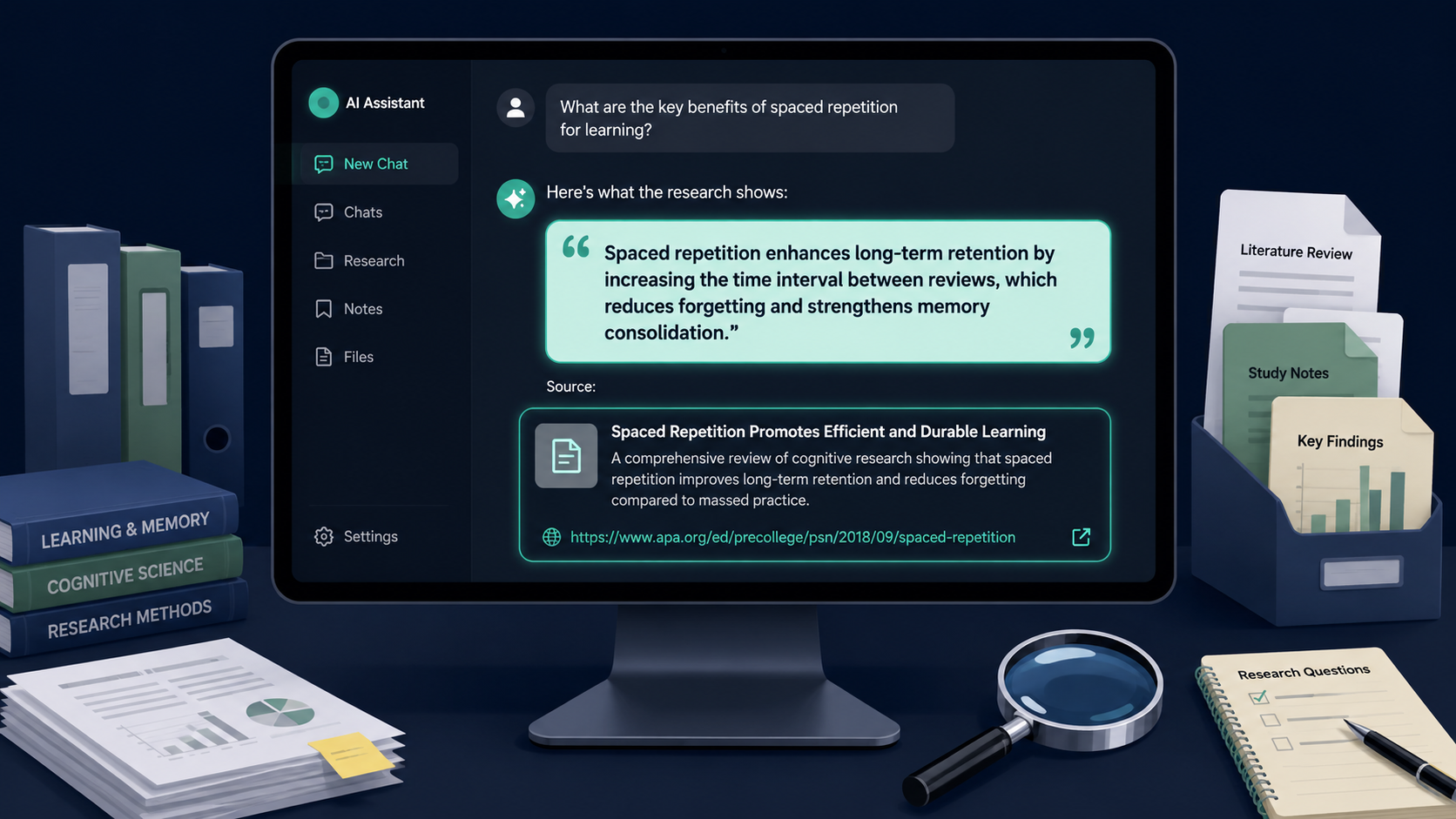
When you ask ChatGPT, Perplexity, Google's AI Overviews, or Microsoft Copilot a question, the tool often pulls its answer from specific sources and either quotes them directly, paraphrases them, or links back to the original page. That act — the model selecting your content as a trusted reference — is an AI citation.
Unlike a traditional Google ranking, where your page competes for a position on a list, an AI citation means your content was chosen as the answer itself. The model is, in effect, putting your words in front of the user as authoritative. That distinction is significant: a cited source is not just visible, it is trusted.
For YouTube creators and content marketers, this is a rapidly growing traffic source that most people are not yet optimizing for. If you want to understand the full landscape, start with What is GEO (Generative Engine Optimization) and How is it Different from SEO? — the discipline that governs how you earn these citations systematically.
How AI Models Decide What to Cite
Large language models do not browse the web in real time in the same way Google does (though some tools like Perplexity do use live retrieval). What they share is a preference for content that is unambiguous, structured, and demonstrably authoritative. Here is what signals that to them:
1. Direct, Definition-First Answers
AI models are trained on patterns of helpful writing. The single strongest pattern is a clear definition near the top of the page. If someone asks "what is a hook rate," a page that opens with "Hook rate is the percentage of viewers who watch past the first 30 seconds of a video" is dramatically more likely to be cited than a page that buries the definition in paragraph five after a long introduction.
This is sometimes called the inverted pyramid structure — lead with the answer, then support it with detail. Every section of your content should follow this pattern, not just the introduction.
2. Structured Formatting That Machines Can Parse
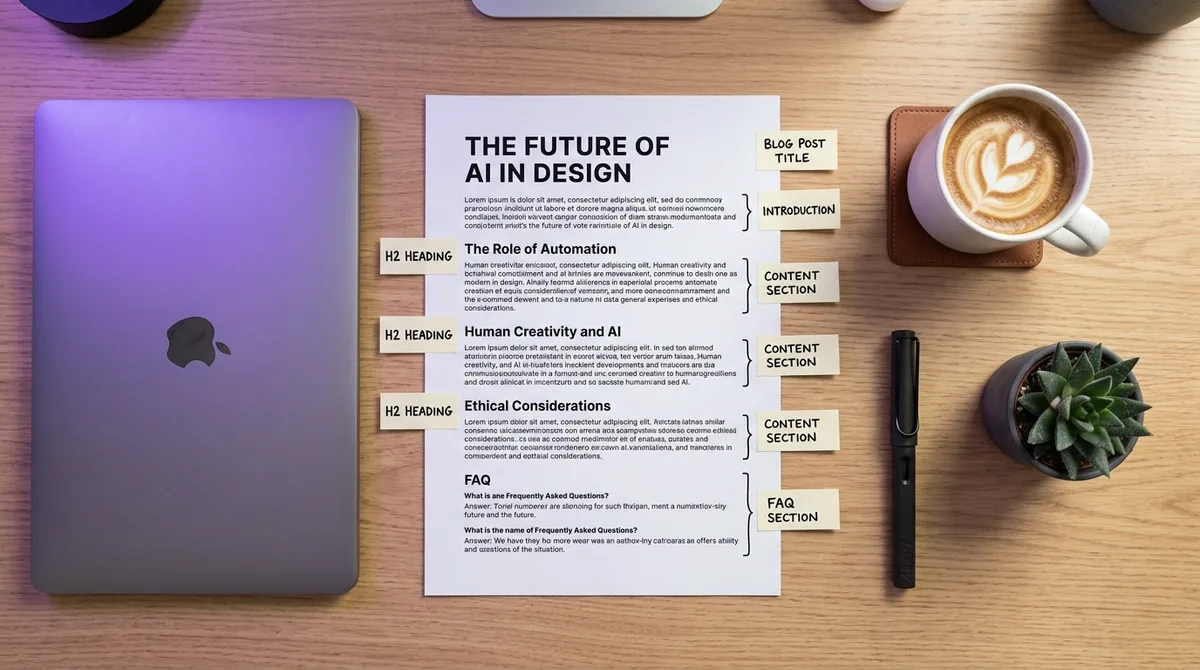
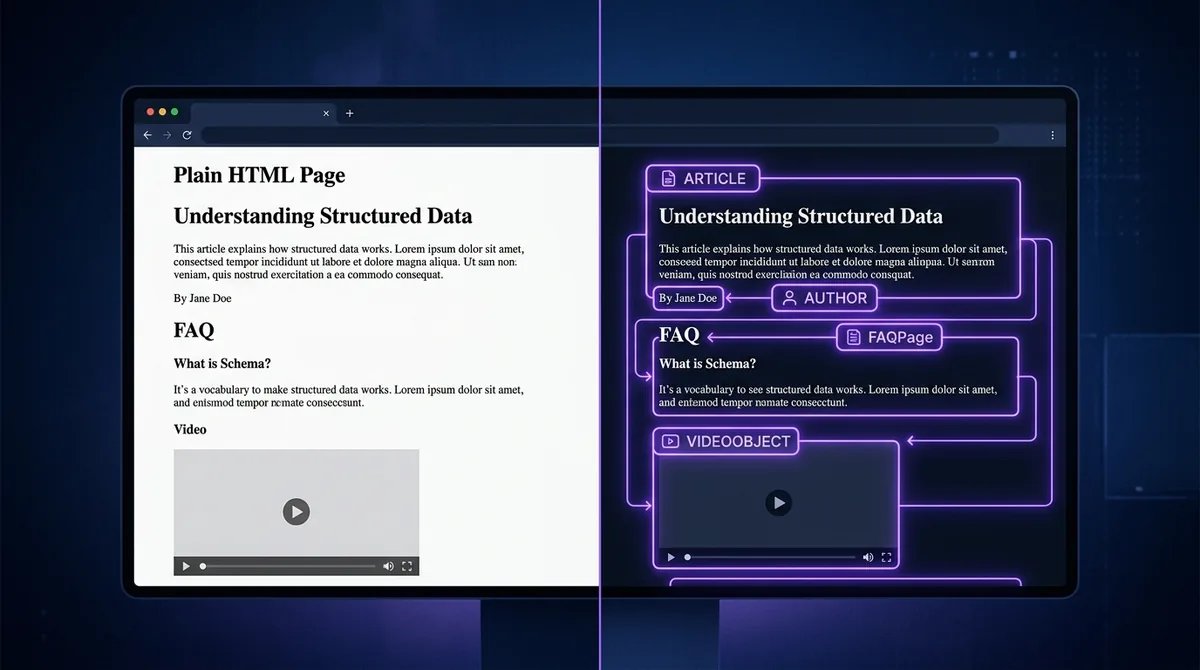
Headers (H2, H3), numbered lists, bullet points, and definition-style sentences all make content easier for a retrieval model to extract a clean, quotable passage from. A wall of prose may be beautifully written, but an AI model looking for a citable fact or step-by-step process will skip it in favor of a page with clear hierarchy.
This is explored in practical depth in How to Structure a Blog Article So AI Engines Cite It as a Source — a useful companion read if you publish written content alongside your videos.
3. Topical Depth Over Breadth
AI models weight topical authority heavily. A website or channel that publishes 20 in-depth articles on YouTube analytics is more likely to be cited on a YouTube analytics question than a general marketing blog that covers the topic once. This mirrors how human experts are cited — we trust the specialist, not the generalist.
This is exactly why a What Is a Content Pillar Strategy and How Do YouTube Creators Use It? approach is so powerful for citation building. Depth within a defined niche compounds over time.
4. First-Person Experience and Original Data
One of the fastest ways to earn a citation is to include something no other source has: your own data, your own results, or your direct experience. AI models are increasingly trained to prefer content that demonstrates real-world knowledge over content that simply aggregates what other sources already say.
Original statistics, case studies, and documented outcomes are citation magnets. They are unique, they are concrete, and they cannot be paraphrased away from their source without losing meaning. This connects directly to the E-E-A-T framework (Experience, Expertise, Authoritativeness, Trustworthiness) that governs how both Google and AI retrieval systems evaluate credibility — see What E-E-A-T Means for YouTube Creators Trying to Rank in AI Search for a full breakdown.
The GEO Mindset: Writing for AI Retrieval, Not Just Human Readers
Traditional SEO asks: "How do I rank on page one?" GEO — Generative Engine Optimization — asks a different question: "How do I get selected as the answer?" The strategies overlap, but they are not identical.
SEO rewards keyword density, backlinks, and page authority. GEO rewards clarity, specificity, and structural honesty. A page that answers one question extremely well will often outperform a longer, more comprehensive page that hedges its claims.
Some specific GEO techniques that increase citation probability:
Use the exact phrasing of the question as a header. If users ask "what is a citation in AI search," having that phrase as an H2 makes it easier for a model to match your content to that query.
Define every technical term on first use. Terms like CTR (click-through rate — the percentage of people who click your video after seeing its thumbnail), VSAT (Viewer Satisfaction score), and retention curve (a graph showing what percentage of viewers are still watching at each second of a video) should be defined inline, not assumed.
Include a FAQ section. Frequently asked questions are among the most-cited content formats because they mirror the exact structure of a user query followed by a direct answer.
Avoid hedging language. Phrases like "it might be useful to consider" or "some experts believe" reduce a model's confidence in your content. State what you know, and qualify only where necessary.
For a deeper look at the writing mechanics behind this, How to Write Content That AI Tools Actually Quote walks through sentence-level techniques that increase quotability.
YouTube Creators Have a Citation Advantage Most Ignore
Most creators think of citations as a text-content problem — something for bloggers and journalists. But YouTube creators who also publish structured written content (descriptions, companion articles, transcripts, or knowledge-base posts) are sitting on an underused citation asset.
The reason is niche specificity. A creator who has published hundreds of videos on a single topic has demonstrated topical depth in a way that most text-only publishers have not. That depth, when translated into well-structured written content, is exactly what AI models look for when selecting a source.
The challenge is visibility. Many creators are producing genuinely expert content but have not structured it in a way that AI retrieval systems can parse and cite. This is the core problem addressed in Why Most Creators Are Invisible to AI Search (And How to Fix It).
The format of your content also matters for citation probability. Based on AskLibra data from 4 connected channels and 511 videos analyzed, long-form content formats show a meaningfully different engagement pattern than short-form — a signal that depth and completion matter to audiences and, by extension, to the retrieval systems that learn from those signals.
How to Build a Citation-Earning Content System
Earning a single AI citation is useful. Building a system that earns citations repeatedly across multiple queries is what drives compounding discovery. Here is a repeatable framework:
Step 1 — Identify the Exact Questions Your Audience Asks
Use your YouTube comment section, community posts, and search queries from your analytics to find the literal phrasing your audience uses. These are your target citation queries. Tools like How to Use AI to Generate YouTube Video Ideas That Actually Match Your Audience can accelerate this discovery process.
Step 2 — Create One Definitive Page Per Question
Do not try to answer five questions in one article. Write one focused, deeply structured page per question. Use the question as your title. Open with a direct definition. Support it with steps, examples, or data. Close with a FAQ.
Step 3 — Link Your Content Together Internally
AI retrieval systems evaluate topical authority partly by understanding which pages on your site relate to each other. Internal links between related pieces signal that you have depth on a subject, not just a single article. This also improves how How AI Search Engines Rank Content — And Why It's Not the Same as Google evaluates your overall domain.
Step 4 — Include Original, Citable Data Points
Even a small dataset from your own channel — a posting time test, an engagement comparison between formats, a retention rate benchmark — is more citable than restating industry averages everyone else has already published. If you want to build this capability systematically, How to Create a Content Strategy Using Only Your YouTube Analytics Data is a practical starting point.
Step 5 — Audit and Update Regularly
AI models are periodically retrained or updated with fresher retrieval indexes. Content that was accurate twelve months ago but has since been superseded by new data will lose citation priority. Treat your citation-optimized pages like living documents, not published-and-forgotten posts.
Frequently Asked Questions
What does it mean to be cited by an AI tool?
An AI citation occurs when a tool like ChatGPT, Perplexity, or Google AI Overviews selects your content as a source when generating an answer — either quoting it directly, paraphrasing it, or linking to it. It means the model treated your content as authoritative enough to represent its answer to a user's question.
Is GEO the same as SEO?
No. SEO (Search Engine Optimization) focuses on ranking in a list of search results, primarily through keyword targeting and backlinks. GEO (Generative Engine Optimization) focuses on being selected as the answer inside an AI-generated response. The strategies overlap in some areas — both reward clear, well-structured content — but GEO prioritizes definition-first writing, topical depth, and original data in ways traditional SEO does not.
Do YouTube videos get cited by AI tools?
Occasionally, but rarely as a primary citation. AI retrieval systems currently favor text-based content they can extract quotable passages from. However, creators who pair their videos with structured written content — transcripts, companion articles, or knowledge-base posts — significantly increase their citation probability. The video builds authority and audience trust; the written content earns the citation.
How long does it take to earn an AI citation?
There is no fixed timeline. A single, well-structured page on a low-competition question can earn a citation within weeks of being indexed. Building consistent citation presence across multiple queries typically takes several months of publishing focused, definition-first content within a defined niche. The more original data you include, the faster the process tends to move.
What is the most common reason content does not get cited by AI tools?
The most common reason is structural — the content buries its answer in prose rather than leading with a clear, direct definition or step. AI retrieval systems are looking for clean, extractable passages that directly answer a specific question. Content that is well-written but poorly structured for extraction will consistently lose citations to more simply formatted competitors.
Ready to see what the data says about your channel?
Stop guessing. Use AskLibra to get a personalized 90-day growth gameplan and find your perfect posting window.
No credit card required • Join 2,000+ creators