
Why Most Creators Are Invisible to AI Search (And How to Fix It)
Key Takeaways
- 1
AI search engines like ChatGPT, Perplexity, and Google's AI Overviews pull answers from structured, authoritative text — not from video thumbnails or subscriber counts, leaving most creators completely uncited.
- 2
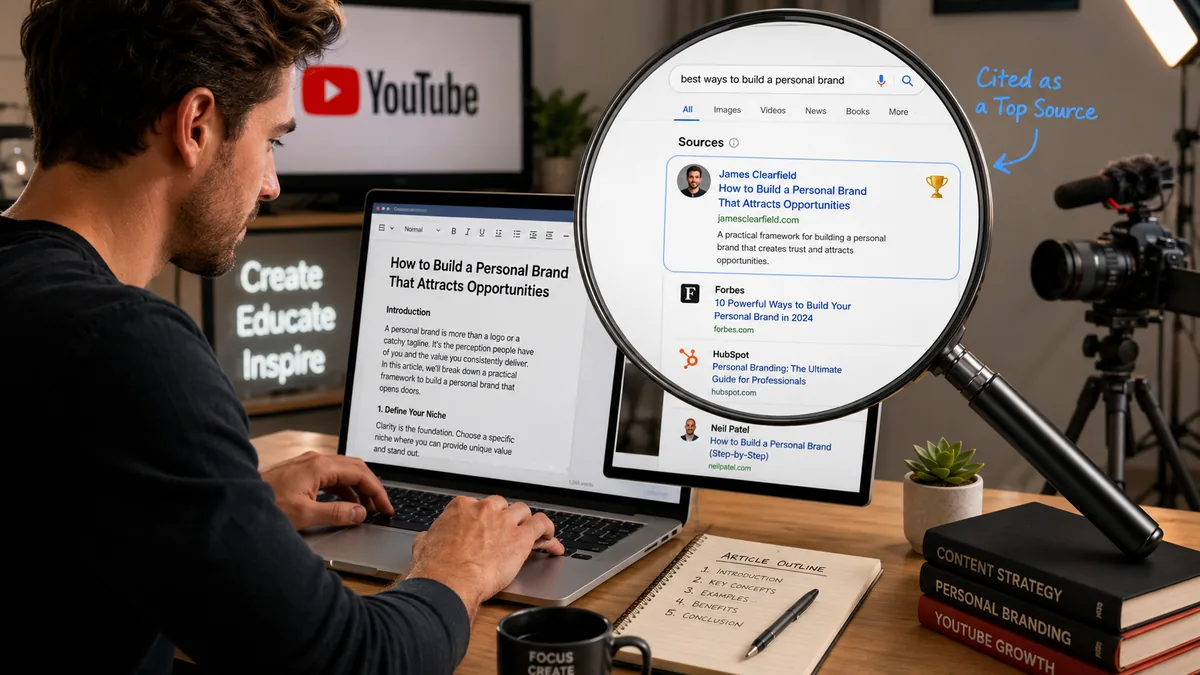
Creators can fix their AI invisibility by publishing structured written content (articles, transcripts, knowledge base pages) that directly answers specific questions their audience is already asking.
- 3
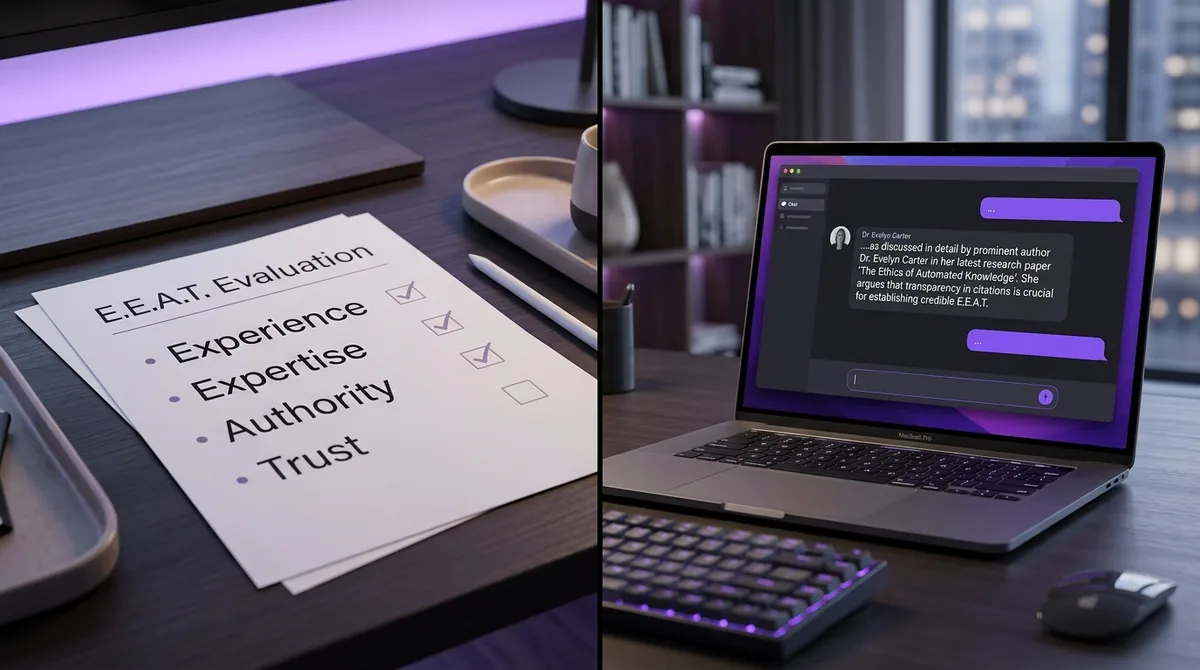
Signals like E-E-A-T (Experience, Expertise, Authoritativeness, Trustworthiness) determine whether AI tools treat your content as a credible source worth quoting — and these signals are buildable.
- 4
Formatting choices — clear headings, defined terms, direct answers in the first sentence — are the single fastest way to move from invisible to cited in AI-generated responses.
The Problem: You Make Great Content and AI Has Never Heard of You
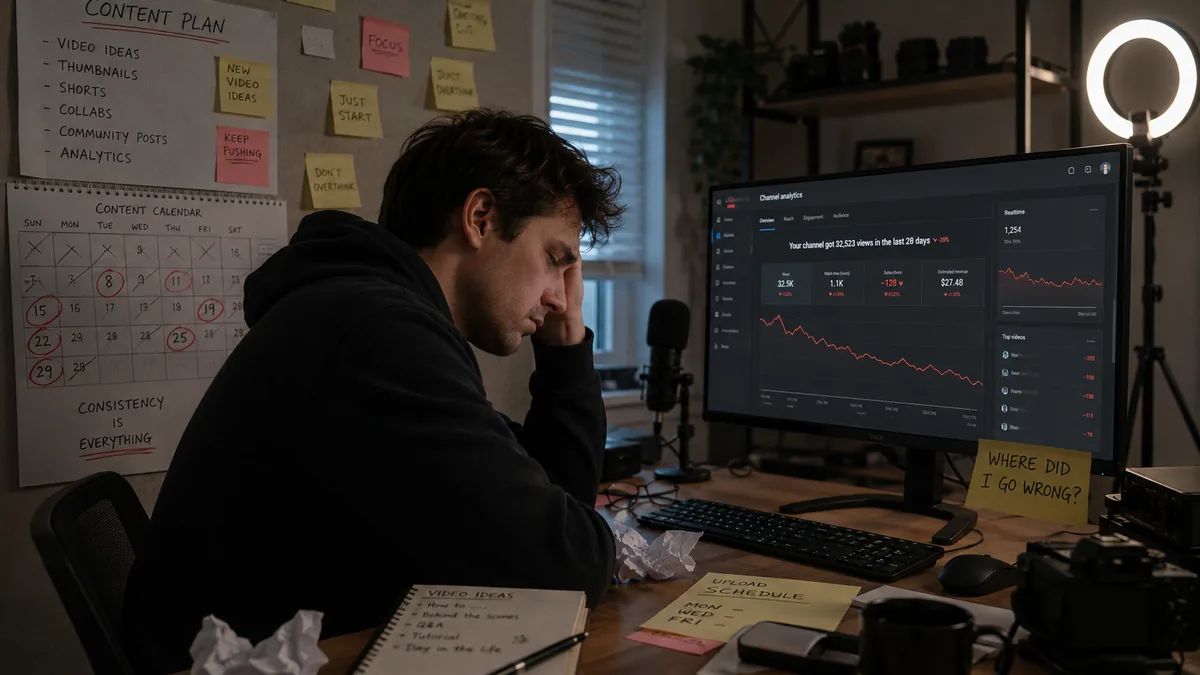
You have hundreds of videos. You have a loyal audience. You post consistently. And yet, when someone asks ChatGPT or Perplexity a question you have answered dozens of times on camera, your name does not appear anywhere in the response. A faceless blog with 12 articles does. This is not a fluke — it is a structural problem, and it is fixable once you understand how AI search actually works.
AI search engines do not browse YouTube. They do not watch your videos, read your captions at any meaningful depth, or surface you based on view counts. They index and synthesize structured written text from across the web, weighting sources that demonstrate clear expertise, direct answers, and consistent topical authority. If your expertise lives only inside video files, you are functionally invisible to the systems that are rapidly replacing traditional search.
What AI Search Actually Looks For
To understand why creators are invisible, you first need to understand what AI search engines are doing when they generate an answer. Tools like ChatGPT (with browsing), Perplexity, and Google's AI Overviews are performing what researchers call retrieval-augmented generation — they pull chunks of relevant text from indexed web pages, evaluate those chunks for credibility and relevance, then synthesize a response. The sources they cite are the ones that passed their credibility filters.
Those filters reward three things: structure (is the page easy to parse?), specificity (does it answer a precise question directly?), and authority signals (does the author demonstrate real experience on this topic?). A video titled "My Morning Routine" scores zero on all three. A written article titled "The 6-Step Morning Routine That Reduced My Editing Time by 2 Hours" with clear subheadings and a defined workflow scores well on all three.
If you want a deeper look at the mechanics behind these ranking decisions, How AI Search Engines Rank Content — And Why It's Not the Same as Google breaks down exactly how retrieval differs from traditional keyword indexing.
The E-E-A-T Gap Most Creators Don't Know They Have
E-E-A-T stands for Experience, Expertise, Authoritativeness, and Trustworthiness. It is the framework Google's quality raters use to evaluate content, and it is increasingly reflected in what AI systems treat as citable. Most creators have genuine E-E-A-T — years of hands-on experience, real results, a track record. The problem is that their E-E-A-T is locked inside video content that AI systems cannot easily parse, attribute, or verify.
Written content fixes this because it is attributable. When you publish an article that says "After testing 14 thumbnail styles across 200 videos, here is what my data showed," an AI system can read that sentence, verify the claim structure, and cite you as a practitioner source. When you say the same thing in a YouTube video, no AI tool is transcribing and indexing that with the same fidelity. For a practical guide on building these credibility signals as a creator, see What E-E-A-T Means for YouTube Creators Trying to Rank in AI Search.
The Format Problem: Why Video Alone Is Not Enough
Video is your strongest format for building audience trust and demonstrating personality. It is your weakest format for getting cited by AI. This is not a value judgment — it is a technical reality. AI language models are trained on text. Their retrieval systems index text. Their citation logic favors text that is structured, scannable, and directly answerable.
The solution is not to stop making videos. It is to build a written layer on top of your video content. This means publishing structured articles, written breakdowns, or knowledge base entries that cover the same ground your videos cover — but in a format AI systems can actually read and cite. Think of your videos as the proof of your expertise and your written content as the signal that expertise exists.
This is the core logic behind What Is GEO (Generative Engine Optimization) and How is it Different from SEO? — a discipline built specifically for creators and publishers who want their knowledge to surface in AI-generated answers, not just traditional search rankings.
Five Concrete Fixes That Move You from Invisible to Cited
1. Publish Written Answers to Specific Questions
AI search is question-driven. Someone types "how do I improve my YouTube retention rate" and the AI pulls the best direct answer it can find. If you have a written article with that exact question as a heading, followed by a clear 2-3 sentence answer, you have a real chance of being cited. If your expertise on that topic only exists in a 22-minute video, you have no chance. Start by listing the 10 most common questions your audience asks you, then write a direct written answer for each one.
2. Define Every Technical Term You Use
AI systems favor content that educates, not just content that informs. When you define terms like hook rate (the percentage of viewers who watch past the first 30 seconds), CTR (click-through rate, or the percentage of people who click your thumbnail after seeing it), or retention curve (a graph showing at what points viewers drop off during a video), you signal to AI tools that your content is a reliable reference source — not just an opinion. Defined terms are citation anchors.
3. Use Structural Formatting AI Can Parse
Clear H2 and H3 headings, short paragraphs, and numbered lists are not just good writing practice — they are signals that your content is organized, intentional, and trustworthy. AI retrieval systems use document structure to identify which section answers which question. A wall of text gets skimmed and skipped. A well-structured article with a heading that matches the user's query gets pulled and cited. For a step-by-step guide on formatting specifically for AI citation, read How to Structure a Blog Article So AI Engines Cite It as a Source.
4. Lead With the Answer, Not the Backstory
One of the most common content writing habits that kills AI citability is burying the answer. Creators especially tend to build up to the point — they set context, tell a story, then deliver the insight. AI retrieval systems grab the first strong, direct answer they find. If your article spends three paragraphs on background before answering the question in the heading, AI will often skip your content entirely and pull from a source that led with the answer. Flip your structure: answer first, context second.
5. Build Topical Authority Through Content Clusters
A single article rarely gets cited. A cluster of related articles on the same topic — each answering a different specific question, all linking to each other — creates the kind of topical authority that both AI systems and traditional search engines treat as a credible domain of expertise. If you create content about YouTube growth, you should have written articles covering thumbnails, retention, posting strategy, analytics, and formats — all interconnected. This is the same logic behind What Is a Content Pillar Strategy and How Do YouTube Creators Use It? — applied now to AI discoverability, not just SEO.
What Your Analytics Data Is Telling You (That AI Can Help You Act On)
Most creators are sitting on a goldmine of data that could directly inform which written content topics would have the highest impact — and they are not using it. Your YouTube analytics show you which videos drive the most questions in comments, which topics generate the longest watch sessions, and which search terms bring new viewers to your channel. These are exactly the topics you should be writing about first.
Based on AskLibra data from 4 connected channels and 511 videos analyzed, longform video content averages an engagement rate of 0.0226 — more than double the rate of short-form content. This suggests that audiences are genuinely engaging with in-depth content, which is exactly the signal that the same topics deserve in-depth written treatment. If your audience watches a 15-minute video on a topic and engages with it, they — and AI systems — will engage with a well-written 1,500-word article on that same topic.
If you want a systematic approach to turning your analytics into a content strategy, How to Create a Content Strategy Using Only Your YouTube Analytics Data walks through the exact process.
The Compounding Advantage of Starting Now
AI search is not a future concern — it is the current reality. ChatGPT crossed 100 million weekly active users faster than any consumer product in history. Perplexity is processing millions of queries daily. Google's AI Overviews now appear above traditional search results for a significant portion of informational queries. Every month you delay building a written content layer is a month a competitor in your niche is accumulating citations you are not.
The creators who will dominate AI search over the next three years are not necessarily the ones with the largest subscriber counts or the most views. They are the ones who understood early that expertise needs to be expressed in text to be recognized by machines — and who built that written layer systematically. You still have a meaningful head start in most niches. Use it.
For a practical starting point, How to Write Content That AI Tools Actually Quote gives you a repeatable writing framework designed specifically for creator-experts who want their knowledge cited, not just consumed.
Frequently Asked Questions
Do AI search engines index YouTube video transcripts?
AI search systems have limited and inconsistent access to YouTube transcripts. Even when transcripts are available, they are rarely structured or attributed in ways that make them easy to cite as an expert source. Published written articles with clear authorship are far more reliably indexed and cited by AI tools than video transcripts.
Do I need to stop making videos to fix my AI search visibility?
No. The goal is to add a written content layer on top of your existing video work, not replace it. Your videos remain your primary audience-building tool. Written articles, knowledge base entries, and structured blog posts serve a separate purpose: making your expertise discoverable and citable by AI search systems that cannot meaningfully parse video files.
How long does it take to start appearing in AI search results?
There is no guaranteed timeline, but creators who publish structured, specific written content consistently typically begin seeing citation activity within 2-4 months. Building a cluster of 10-15 well-structured articles on a focused topic tends to accelerate this significantly compared to publishing isolated pieces. Topical authority compounds over time.
What makes one piece of written content more likely to be cited than another?
The strongest predictors of AI citability are: a direct answer in the opening sentences, a clear heading that matches the user's likely query, defined technical terms, structured formatting (H2/H3 headings, short paragraphs), and demonstrated first-hand experience or data. Content that reads like a reference document gets cited more than content that reads like a personal essay.
Can I repurpose my existing video scripts into AI-optimized articles?
Yes, and this is often the fastest path to building written content. Take your existing video scripts or transcripts, restructure them so the answer comes first, add defined terms, break them into clear sections with descriptive headings, and publish them as standalone articles. You already did the research — the work is in reformatting the delivery so machines can read it the same way your audience watches it.
Ready to see what the data says about your channel?
Stop guessing. Use AskLibra to get a personalized 90-day growth gameplan and find your perfect posting window.
No credit card required • Join 2,000+ creators