

How AI Search Engines Rank Content — And Why It's Not the Same as Google
Key Takeaways
- 1
AI search engines like ChatGPT, Perplexity, and Google's AI Overviews select sources based on demonstrated expertise, cited evidence, and structured answers — not just keyword density or backlink counts.
- 2
Traditional Google SEO rewards pages that attract clicks; AI search rewards pages that directly answer questions, making content structure and factual clarity the new ranking currency.
- 3
Creators and publishers who format content with explicit definitions, numbered reasoning, and FAQ sections are significantly more likely to be cited as sources in AI-generated answers.
- 4
Optimizing for AI search (called GEO — Generative Engine Optimization) requires a fundamentally different content architecture than SEO, and ignoring the distinction costs creators measurable visibility.
Two Different Engines, Two Different Rules
When you type a question into Google, a crawler-based algorithm scans billions of indexed pages and returns a ranked list of links. The ranking is shaped by factors like backlinks, keyword relevance, page authority, and click-through rate (CTR) — the percentage of users who click your result after seeing it in search. You win by getting people to your page.
When you ask the same question to an AI search engine — ChatGPT with web browsing, Perplexity, or Google's AI Overviews — something fundamentally different happens. The system reads source documents, synthesizes an answer, and then either cites its sources inline or surfaces a short list of references. You win not by getting a click, but by being quoted. That distinction changes everything about how content should be built.
What AI Search Engines Actually Look For
AI search engines use large language models (LLMs) to evaluate whether a piece of content is a trustworthy, complete answer to a specific question. They are not counting keywords. They are reading for meaning, structure, and credibility signals. The process involves three main filters:
1. Semantic Relevance — Does the Page Directly Answer the Question?
LLMs evaluate whether your content addresses the exact intent behind a query. A page that buries the definition of a term three paragraphs in will lose to a page that defines it in the first sentence. The model is essentially asking: "If I pulled a block of text from this page, would it directly satisfy the user's question?" Pages structured with clear definitions on first use, explicit headings, and direct answers in the opening lines perform significantly better in AI-sourced results.
2. Authority Signals — Can the Source Be Trusted?
AI systems are trained to weight sources that demonstrate real-world expertise and verifiable claims. This maps closely to Google's E-E-A-T framework (Experience, Expertise, Authoritativeness, Trustworthiness), but AI search applies it at the sentence level, not just the domain level. A single paragraph containing a verifiable statistic, a named expert, or a firsthand account carries more weight than an entire page of vague best-practice advice. For a deeper breakdown of how this affects YouTube creators specifically, see What E-E-A-T Means for YouTube Creators Trying to Rank in AI Search.
3. Structural Clarity — Is the Answer Extractable?
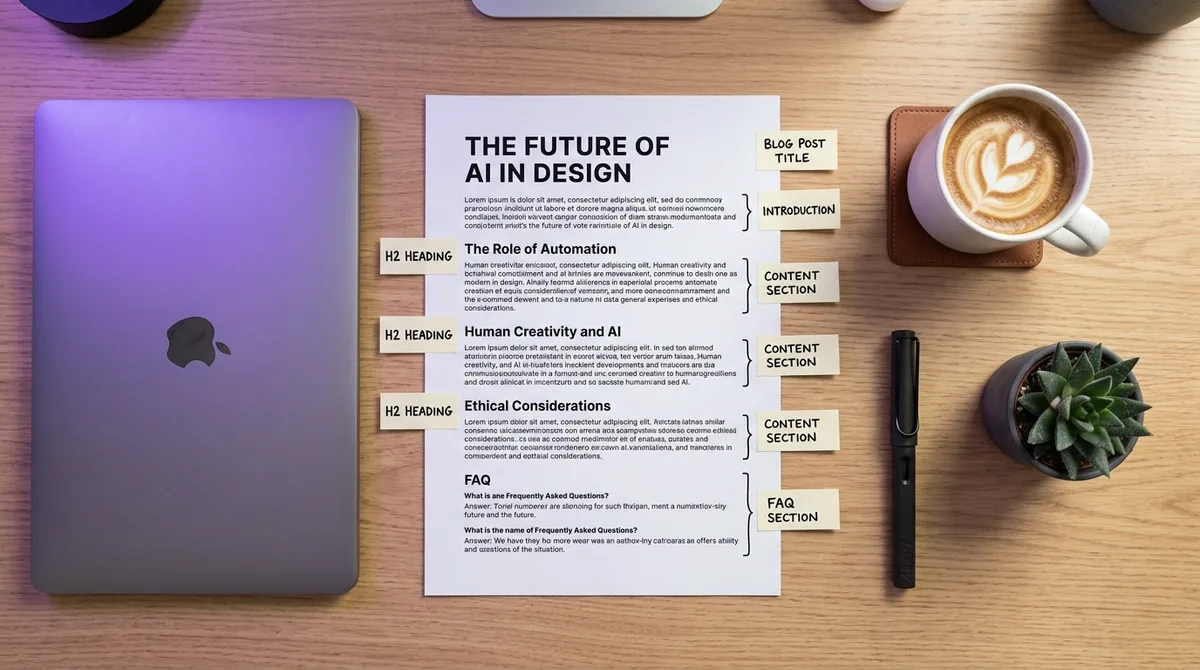
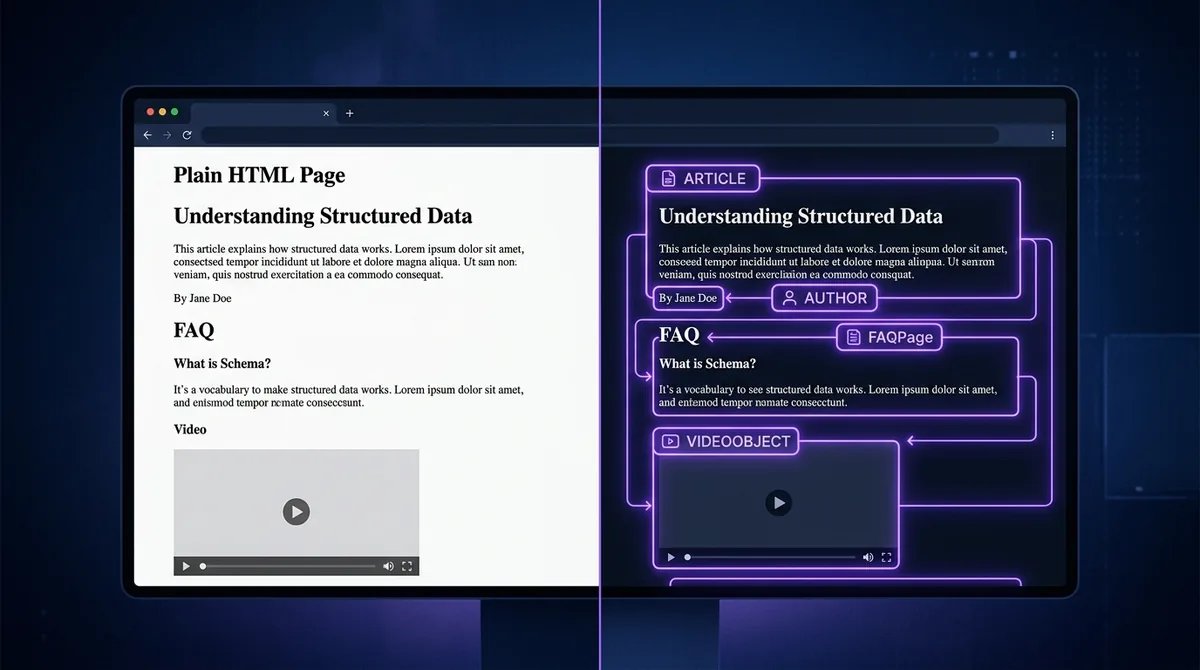
AI models need to lift a clean, self-contained answer from your page. If your best insight is embedded inside a long, unpunctuated paragraph with no clear topic sentence, the model will often skip it entirely. Pages that use H2 and H3 headings to signal topic shifts, bullet points to list discrete facts, and FAQ sections to pre-answer follow-up questions give the model clean extraction zones. This is the single most actionable architectural change a publisher can make today.
How Google's Ranking Still Differs — Even With AI Overviews
Google has introduced AI Overviews — the AI-generated summary boxes that appear above traditional search results — but the underlying Google index still runs on its classic PageRank-influenced system for the blue links below. The critical difference: a page can rank on page one of Google and never appear in an AI Overview, and a page with few backlinks can be cited repeatedly in AI answers because it is structured for extraction.
This creates a two-tier content reality. Traditional SEO optimizes for the ranked-link layer: technical health, backlink acquisition, keyword targeting, and CTR. Generative Engine Optimization (GEO) — the practice of structuring content so AI engines cite it as a source — optimizes for the synthesis layer: answer completeness, factual density, and extractable structure. To understand how these two disciplines compare at a foundational level, read What is GEO (Generative Engine Optimization) and How is it Different from SEO?
The Zero-Click Problem Is Accelerating
One consequence of AI search is the rise of zero-click results — queries where the user gets a complete answer inside the search interface and never visits any source page. For creators and publishers who depend on traffic, this is not a future risk; it is a present reality. Understanding the full scope of this shift is covered in What is Zero-Click Search and How Does It Affect Creator Discoverability?
The strategic response is not to fight zero-click search but to become the source that gets cited inside it. A citation in an AI Overview or a Perplexity answer still builds brand recognition and drives high-intent traffic from users who want to go deeper. The goal shifts from "rank for clicks" to "be the source AI trusts."
Practical Differences: SEO vs. AI Search Ranking Factors
Here is a direct comparison of what each system weights most heavily:
Traditional Google SEO priorities: Backlink volume and quality, keyword placement and density, page load speed and Core Web Vitals, mobile usability, domain authority, CTR from search results, internal linking structure.
AI search ranking priorities: Direct, explicit answers near the top of the page, clear definitions of technical terms on first use, factual claims supported by specific data or named sources, FAQ and Q&A formatting, semantic completeness (covering the topic without gaps), structured headings that map to user questions, and demonstrated first-hand expertise or original data.
Notice what is absent from the AI search list: backlinks, page speed, and keyword density. Those signals are invisible to the LLM reading your content. What replaces them is the quality and clarity of the prose itself.
Why Original Data Is Now a Strategic Asset
One of the strongest signals an AI search engine can detect is original, verifiable data that cannot be found elsewhere. When a source contains a unique statistic, a proprietary benchmark, or a firsthand case study, the model has nowhere else to go for that specific claim — which drives citation frequency significantly higher.
For YouTube creators and content strategists, this means publishing real analytics benchmarks, channel-specific findings, and audience behavior data from your own work. For example, publishing that a specific content format consistently outperforms others in engagement gives readers — and AI models — a concrete, citable fact tied to a named source. To learn how to structure a page so AI engines actually extract and cite that data, see How to Structure a Blog Article So AI Engines Cite It as a Source.
What This Means for YouTube Creators Specifically
YouTube content itself is not directly indexed by most AI search engines in the same way written pages are. However, the articles, show notes, and knowledge-base content a creator publishes around their videos can absolutely be cited. Creators who build a written content layer — explainer articles, data-backed guides, topic glossaries — around their video library are building an AI-searchable asset that extends their reach far beyond YouTube's own recommendation algorithm.
A strong What Is a Content Pillar Strategy and How Do YouTube Creators Use It? directly supports this. Each content pillar becomes a topic cluster that AI search engines can consistently draw from, because the content is deep, internally linked, and covers a subject from multiple structured angles.
Creators who want to build this kind of content system efficiently should also explore How to Create a Content Strategy Using Only Your YouTube Analytics Data — because the strongest GEO content starts with real audience insight, not guesswork.
The One Habit That Separates Cited Sources From Ignored Ones
After analyzing how AI models select sources, one pattern emerges above all others: cited pages answer the question in the first paragraph and then prove it in the rest. Pages that bury the answer, over-qualify every claim, or write for word count rather than clarity are systematically skipped.
Write the answer first. Define every term. Use a FAQ section. Publish original data when you have it. These are not stylistic preferences — they are the functional criteria AI systems use to decide whether your content deserves to exist in their answers.
Frequently Asked Questions
Do backlinks still matter for AI search engines?
Backlinks matter for traditional Google rankings, which influence which pages get indexed and considered authoritative at the domain level. However, once an AI model is reading your page directly, backlink count is not a factor in whether it cites you. Structural clarity, factual density, and answer completeness take over as the primary signals.
What is GEO and how is it different from SEO?
GEO stands for Generative Engine Optimization — the practice of structuring content so that AI-powered search engines select it as a cited source in their synthesized answers. Unlike SEO, which targets algorithmic ranking signals like backlinks and keywords, GEO targets the readability and extractability of your content by a language model. The two disciplines overlap but require meaningfully different content architecture.
Can a YouTube video itself rank in AI search results?
Most AI search engines currently prioritize written, indexable text over video transcripts. A YouTube video's spoken content is generally not directly cited. However, written articles, transcripts, and knowledge-base pages that expand on a video's topic can be cited. Creators who publish structured written content alongside their videos capture both YouTube's algorithm and AI search simultaneously.
How do I know if my content is being cited by AI search engines?
You can manually query AI tools like Perplexity, ChatGPT with browsing, or Google's AI Overviews using your target questions and check whether your domain appears in citations. Some SEO platforms are beginning to track AI citation frequency as a distinct metric. Running regular spot-checks on your most important queries is currently the most reliable method.
Is FAQ formatting really important for AI search?
Yes — FAQ sections are one of the most effective structural elements for AI citation because they mirror the exact format of a conversational search query followed by a direct answer. AI models are trained on question-and-answer data, so FAQ-formatted content aligns naturally with how those models extract and present information. Every substantive article should end with a FAQ section covering the most common follow-up questions on the topic.
Ready to see what the data says about your channel?
Stop guessing. Use AskLibra to get a personalized 90-day growth gameplan and find your perfect posting window.
No credit card required • Join 2,000+ creators