
How ChatGPT & Perplexity Pick Trusted Sources
Key Takeaways
- 1
AI engines like ChatGPT, Perplexity, and Gemini evaluate trust through signals like authorial credibility, structured clarity, and citation history — not just backlinks or domain authority.
- 2
Creators and publishers who write in clear, declarative sentences with well-defined claims are significantly more likely to be quoted or cited by generative AI tools.
- 3
Structured content formats — including FAQ sections, numbered lists, and explicit definitions — are among the strongest on-page signals that AI models use when selecting sources to surface.
The Question Every Creator Should Be Asking Right Now
When someone types a question into ChatGPT, Perplexity, or Gemini, they get a confident, synthesized answer — often without clicking a single link. Behind that answer is a decision: whose content gets quoted, and whose gets ignored. Understanding that decision is the most important visibility challenge creators and publishers face today.
This isn't the same game as Google SEO. The rules have shifted. To understand why, it helps to first understand what these AI systems are actually doing when they "read" your content. For a broader frame on the difference, see How AI Search Engines Rank Content — And Why It's Not the Same as Google.
What "Trusting a Source" Actually Means to an AI
Traditional search engines like Google assign trust largely through PageRank — a measure of how many other authoritative pages link to yours. AI language models work differently. They were trained on massive datasets of text, and during that training, patterns of credibility were absorbed implicitly: academic papers cite each other; reputable news outlets are cited widely; expert authors are quoted consistently across multiple domains.
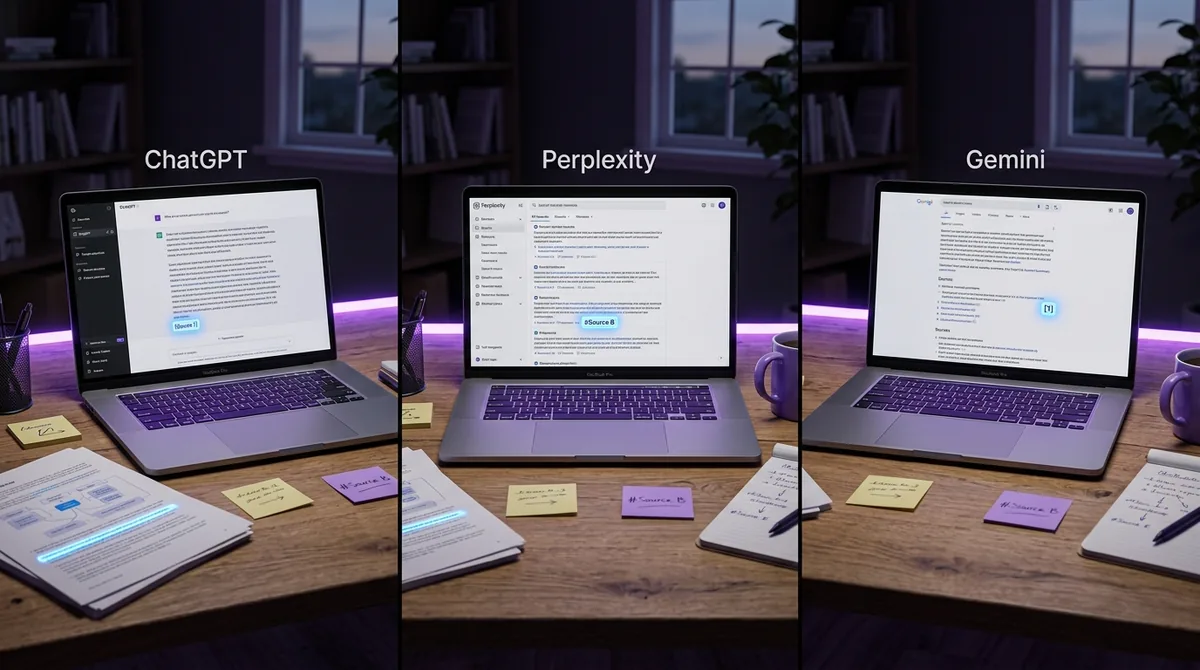
When ChatGPT, Perplexity, or Gemini generate a response, they are drawing on those learned patterns plus real-time signals (in the case of Perplexity and Gemini, which actively retrieve live web content). Trust, for an AI, is a composite score that combines:
Linguistic confidence: Does the content make clear, verifiable claims — or is it hedged, vague, and generic?
Structural legibility: Is the content organized so that a machine can parse the question being answered and the answer being given?
Topical consistency: Does the source speak about this subject repeatedly and authoritatively, or is this a one-off post on an unrelated site?
Citation and mention history: Has this content been referenced, quoted, or linked to by other sources the model already trusts?
Author identity signals: Is there a named, credentialed human behind the content — one whose expertise in this domain is established elsewhere on the web?
How Each Platform Applies These Signals Differently
ChatGPT (OpenAI)
ChatGPT's base models were trained on a large corpus of internet text up to a knowledge cutoff date. When operating without browsing enabled, it draws on what was absorbed during training. This means older, widely-cited, consistently structured content has an inherent advantage — it was more likely to appear frequently in training data. When the browsing plugin or GPT-4o's live search is active, ChatGPT behaves more like Perplexity: it retrieves pages, reads them, and synthesizes. In both modes, content that makes direct, well-supported claims in plain language is far more likely to be surfaced than content built around keyword stuffing or vague thought leadership prose.
Perplexity
Perplexity is the most retrieval-heavy of the three. It actively crawls the web in real time for every query, selects sources, and then generates an answer with inline citations. This makes it the most "SEO-adjacent" of the AI engines — but the selection criteria still differ from Google. Perplexity appears to weight page load speed, schema markup, clear headings, and topical specificity very heavily. Pages that answer a precise question in their first 200 words, without burying the answer under preamble, consistently earn citation slots. What Is a Citation in AI Search — And How Do You Earn One? breaks down the mechanics in detail.
Gemini (Google)
Gemini benefits from Google's existing web index, which means traditional authority signals do carry more weight here than in the other two platforms. However, Gemini also applies a layer of "generative judgment" — it doesn't just retrieve the top-ranked page; it selects the page most likely to produce a clear, accurate, quotable answer. E-E-A-T (Experience, Expertise, Authoritativeness, and Trustworthiness) — Google's framework for evaluating content quality — is directly relevant to how Gemini evaluates sources. For a deep dive into this, see What E-E-A-T Means for YouTube Creators Trying to Rank in AI Search.
The 5 Concrete Trust Signals You Can Actually Control
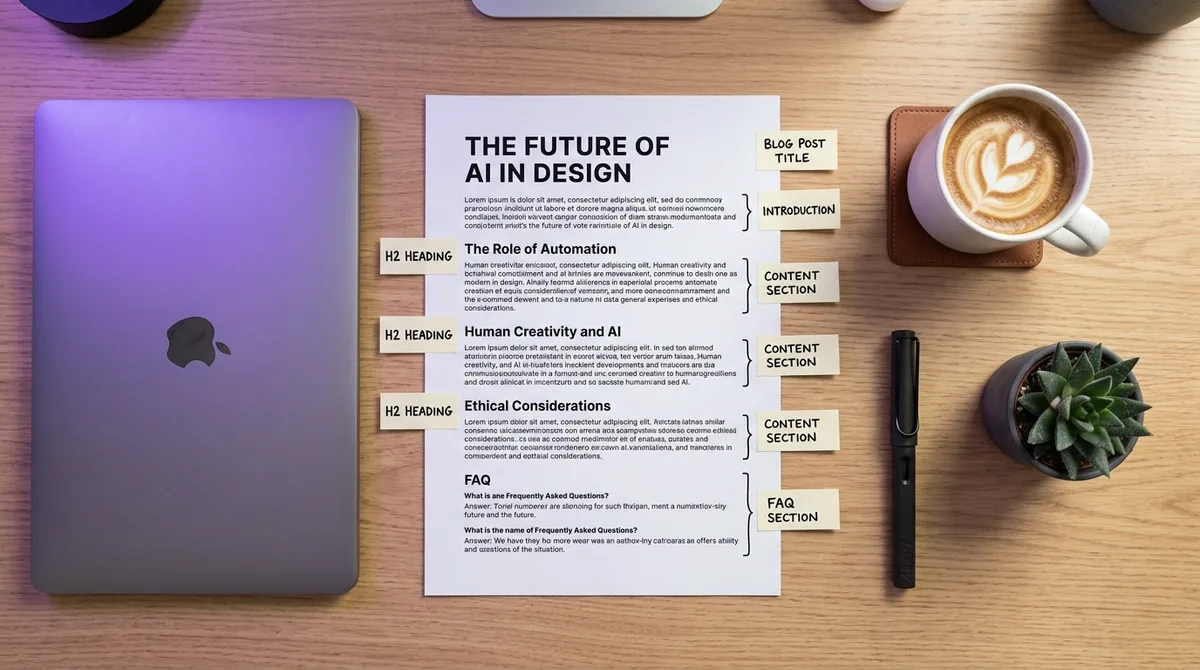
1. Write in Declarative Sentences With Measurable Claims
AI models favor content that states facts clearly. "Video content earns higher engagement than static posts" is weaker than "In a comparison of format performance, video averaged 42% higher engagement than static image posts in the same niche." Specificity signals that a human with real knowledge wrote this — not a content farm optimizing for word count.
2. Structure Your Content So the Answer Comes First
Both Perplexity and Gemini's retrieval systems scan for the most direct answer to the query. If your article takes 400 words to reach its core point, a competitor who leads with the answer will be cited instead. Use your H2s as direct answers, not topic labels. "How ChatGPT Picks Sources" as a heading is stronger than "Source Selection Methodology."
3. Build Topical Authority Through Consistent Coverage
A single well-written article on a subject is less likely to be trusted than a site with ten interconnected pieces covering the topic from multiple angles. This is the argument for What Is a Content Pillar Strategy and How Do YouTube Creators Use It? — depth signals expertise in a way that breadth never can.
4. Make Your Author Identity Explicit and Verifiable
Name the author. Link to their other work. Include a short bio that establishes domain-specific experience. AI models trained on web content have implicitly learned that authoritative content has a named, traceable author. Anonymous or brand-only bylines are a trust gap. This connects directly to the principle explored in What is GEO (Generative Engine Optimization) and How is it Different from SEO? — GEO is fundamentally about establishing the kind of credibility that machines can parse.
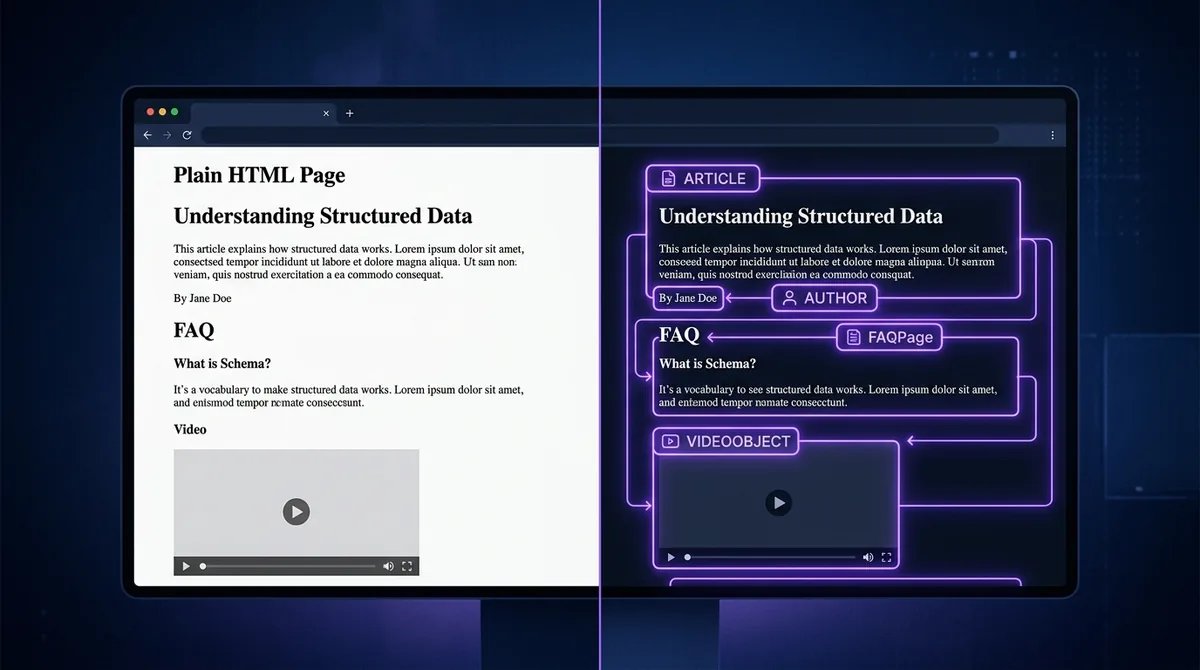
5. Use Schema Markup and Semantic HTML
Perplexity and Gemini both process the underlying HTML of a page, not just the rendered text. FAQ schema, Article schema, and HowTo schema all help AI systems understand the structure and intent of your content before they even read it. A page with proper semantic markup sends immediate legibility signals that unstructured pages cannot replicate. To understand how this applies at the article level, see How to Structure a Blog Article So AI Engines Cite It as a Source.
Why Most Content Gets Skipped Entirely
The uncomfortable reality is that most published content — including content from well-known creators — is effectively invisible to AI engines. The reasons are predictable: generic claims without supporting evidence, no named author with verifiable credentials, poor structural hierarchy, and no topical depth beyond a single post. Why Most Creators Are Invisible to AI Search (And How to Fix It) documents this problem in detail and offers a diagnostic checklist.
The solution is not to game the system. It is to write content that a knowledgeable human would find genuinely useful, structured in a way that a machine can parse efficiently, attributed to a real expert with a traceable identity. That combination — useful, structured, attributed — is what all three platforms are trying to reward, each in their own way.
How to Write Content That Gets Quoted
If you want to understand the full writing framework for earning AI citations, How to Write Content That AI Tools Actually Quote is the most practical place to start. The principles align across ChatGPT, Perplexity, and Gemini: be specific, be structured, be credible, and be consistent.
Frequently Asked Questions
Do backlinks still matter for being cited by AI engines?
Backlinks matter indirectly — they contribute to the domain authority signals that Gemini, in particular, still weighs alongside its generative judgment layer. However, for Perplexity and ChatGPT's browsing mode, content structure, topical specificity, and linguistic clarity often outweigh raw link counts. A well-structured page on a mid-authority domain can outperform a poorly structured page on a high-authority domain.
Is there a difference between being ranked by Google and being cited by AI?
Yes, significantly. Google ranks pages by relevance and authority for a query, then shows a list of results. AI engines synthesize an answer and select specific passages or sources to credit. You can rank on page one of Google and never be cited by Perplexity if your content doesn't contain a clear, quotable answer to the specific query asked.
How often do ChatGPT, Perplexity, and Gemini update which sources they trust?
Perplexity and Gemini retrieve content in real time, so any page that improves its structure, clarity, or authority signals can start appearing in citations relatively quickly. ChatGPT without browsing is limited to its training data cutoff, so updates there require waiting for the next model training cycle. With browsing enabled, ChatGPT behaves similarly to Perplexity in its recency.
Can a YouTube creator's channel be cited directly by AI engines?
Yes, though it requires deliberate effort. A YouTube channel's About page, linked website, and associated articles can all be retrieved and cited. Video transcripts that are indexed can also surface in AI search results. Creators who publish written content alongside their videos — especially content with clear structure and author attribution — are substantially more likely to earn citations than those relying on video alone.
What is the fastest way to make my existing content more AI-visible?
Start by adding a FAQ section to your highest-traffic pages using proper FAQ schema markup — this is one of the highest-leverage structural changes you can make. Next, ensure every page has a named author with a short bio, and that your most important claims are stated in the first 150 words of the article rather than buried mid-page. These two changes alone address the majority of reasons content gets skipped by AI retrieval systems.
Ready to see what the data says about your channel?
Stop guessing. Use AskLibra to get a personalized 90-day growth gameplan and find your perfect posting window.
No credit card required • Join 2,000+ creators