
Structure About & FAQ Pages for AI Search
Key Takeaways
- 1
AI tools like ChatGPT and Perplexity pull answers from pages with clear structure — your About and FAQ pages are among the highest-value targets for earning citations.
- 2
Specific formatting choices (H2/H3 hierarchy, direct answers in the first sentence, schema markup) dramatically increase the chance an AI quotes your content verbatim.
- 3
Most creators ignore their About page entirely — rewriting it with authority signals and factual claims makes it one of the fastest wins for AI discoverability.
- 4
FAQ pages structured as genuine question-and-answer pairs — not keyword stuffing — are the single format most consistently extracted by generative AI engines.
Why Your About and FAQ Pages Are AI Goldmines
Most creators treat their About page as an afterthought — a short bio written once and never touched again. Their FAQ page, if it exists at all, is a wall of vague answers buried at the bottom of the site. This is a significant missed opportunity, because AI search engines like ChatGPT, Perplexity, and Google's AI Overviews actively crawl and extract content from exactly these pages when answering user queries about people, brands, and topics.
Generative Engine Optimization (GEO) — the practice of structuring content so AI tools cite it as a trusted source — starts with the pages AI is most likely to visit when forming an opinion about who you are. To understand the full picture of how this differs from traditional SEO, read What is GEO (Generative Engine Optimization) and How is it Different from SEO?
The good news: the structural changes that make these pages AI-readable are not complicated. They just require intentionality.
How AI Engines Actually Read Your About Page
When an AI model retrieves information about a creator or brand, it is looking for a few specific signals: clear factual claims, demonstrated expertise, and consistent identity across the page. It does not skim — it parses. A dense paragraph of flowery self-description scores poorly. A structured page with named credentials, specific outcomes, and direct statements scores high.
Think of your About page as a witness statement, not a sales pitch. Every sentence should answer a question the AI might be asked: Who is this person? What do they do specifically? What evidence exists that they are credible? This aligns directly with the E-E-A-T framework (Experience, Expertise, Authoritativeness, Trustworthiness) that AI models use to evaluate source quality. For a deeper breakdown, see What E-E-A-T Means for YouTube Creators Trying to Rank in AI Search.
The 5-Section About Page Structure That AI Can Parse
1. Lead With a One-Sentence Identity Statement
The very first sentence of your About page should state exactly who you are and what you do. No clever hooks. No rhetorical questions. AI engines extract the opening lines of a page most frequently when forming a summary. Example: "[Your Name] is a YouTube creator and real estate educator who has helped over 12,000 first-time buyers navigate the home purchase process since 2019." That sentence answers who, what, audience, and timeframe — four signals in one.
2. List Specific Credentials and Milestones
Use a brief unordered list to surface verifiable claims. Subscriber counts, years active, publication features, certifications, and notable collaborations all function as trust anchors. AI tools weight specificity heavily — "over 500 videos published" outperforms "lots of content" every single time. Keep the list to five to seven items maximum so it reads as curated, not padded.
3. Describe Your Audience Explicitly
A sentence like "This channel is built for first-generation homebuyers in the United States who feel overwhelmed by the mortgage process" does two things: it makes your content easier to match to relevant queries, and it signals audience specificity, which correlates with authority. Vague audiences feel like low-effort content to AI models.
4. Include a Mission or Method Statement
One short paragraph explaining your approach or philosophy gives AI something quotable when a user asks "how does [creator] teach [topic]?" Keep it factual and direct. Avoid adjectives that cannot be verified — words like "passionate" or "dedicated" carry zero signal weight. Words like "data-driven," "case-study-based," or "practitioner-led" are concrete and indexable.
5. Close With a Clear Content or Contact CTA
End with a direct next step that reinforces what you do. Linking to your most authoritative content piece from your About page also passes topical relevance signals to crawlers. If you have a content pillar strategy, this is the right place to surface it — see What Is a Content Pillar Strategy and How Do YouTube Creators Use It? for how to structure that.
How to Structure an FAQ Page That AI Tools Actually Quote
FAQ pages are the single highest-leverage format for AI citation. Why? Because generative AI is fundamentally in the business of answering questions. A page that already contains a clean question paired with a direct, factual answer is essentially pre-formatted for extraction. If you want to understand the mechanics behind this, What Is a Citation in AI Search — And How Do You Earn One? explains exactly what triggers a citation event.
Rule 1: Use Real Questions Your Audience Actually Asks
Do not manufacture FAQ questions based on keywords you want to rank for. Pull questions from your YouTube comments, DMs, community posts, and search console queries. AI engines cross-reference FAQ content against real user query patterns — a question that mirrors how people actually speak will match more retrieval events than one optimized for a keyword tool.
Rule 2: Answer in the First Sentence
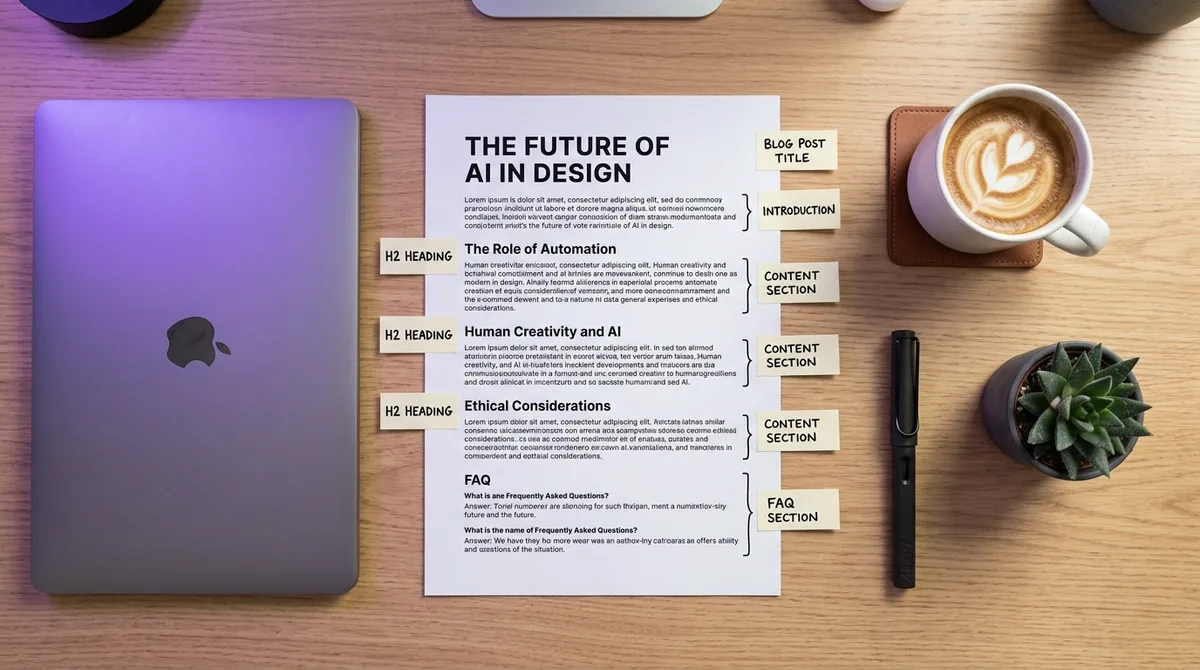
Every FAQ answer must begin with the direct answer. No preamble. No "Great question!" No restating the question. If someone asks "How often should I post on YouTube?" your answer should begin with a specific claim: "Most channels see the best results posting two to three times per week, with consistency mattering more than frequency." Supporting context follows in sentence two and three. This mirrors the structure AI models use when generating their own responses — and makes your content easy to lift as a source. For more on structuring content this way at the article level, see How to Structure a Blog Article So AI Engines Cite It as a Source.
Rule 3: Use H3 Tags for Every Question
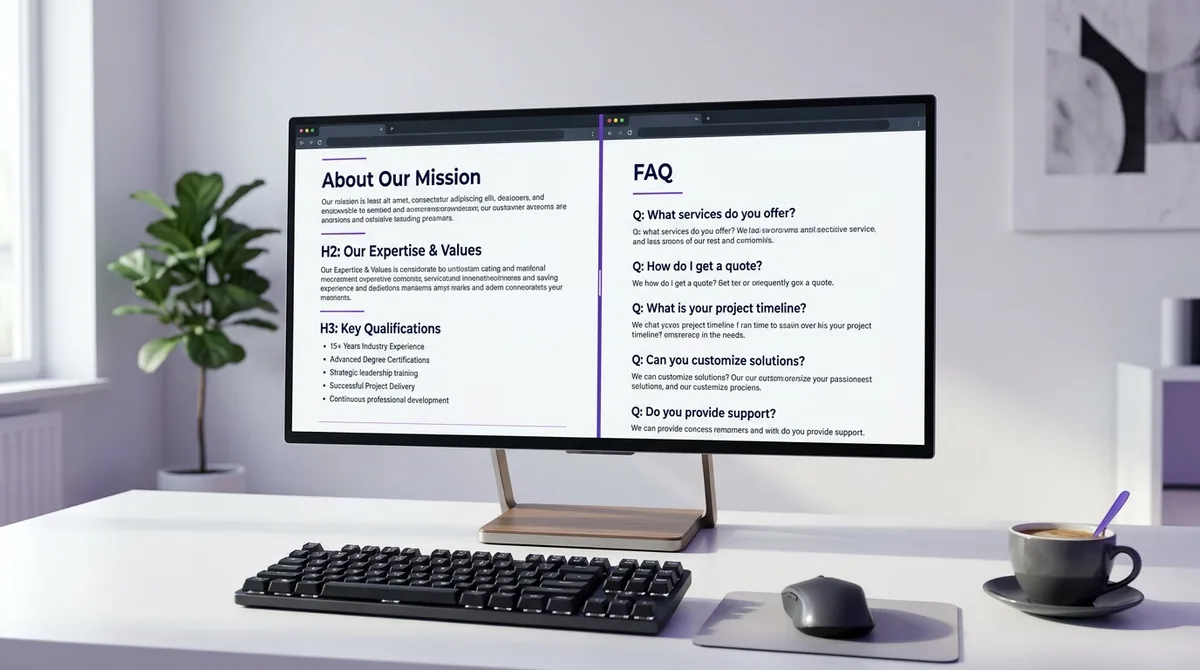
Each question on your FAQ page should be wrapped in an H3 tag, with the answer in a P tag immediately beneath it. This HTML structure maps directly to how search engines and AI crawlers parse Q&A relationships. A question buried in a paragraph will not be recognized as a question. A question in an H3 will be. This is not optional — it is the structural foundation of AI-readable FAQ content.
Rule 4: Add FAQ Schema Markup
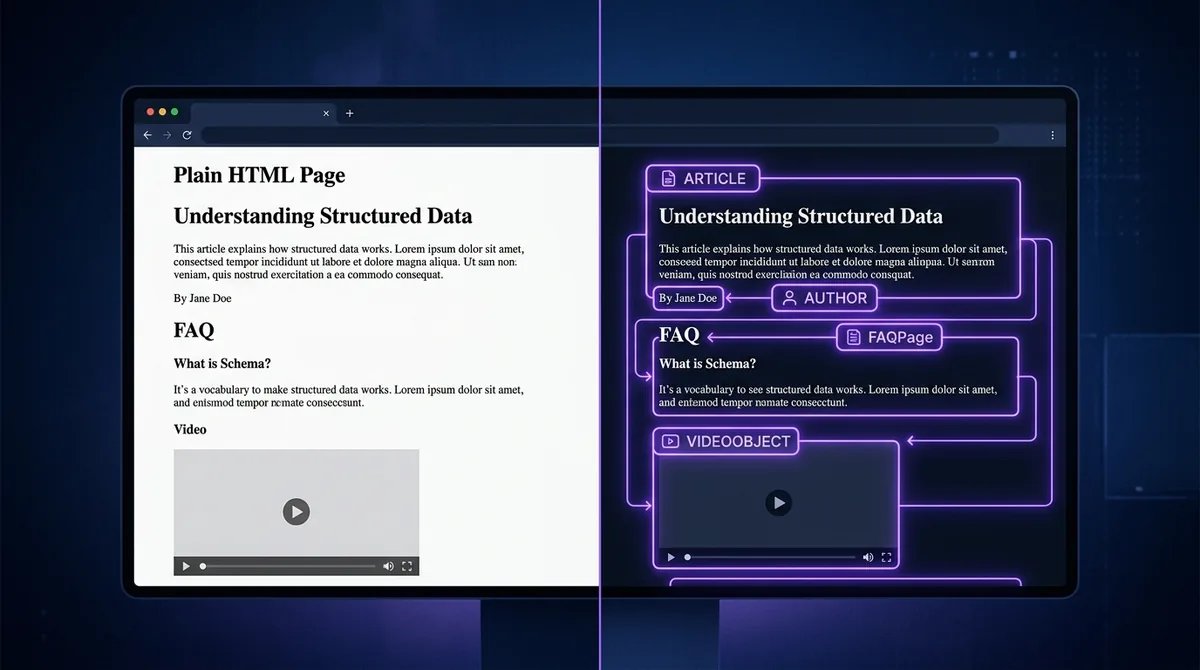
FAQ Schema is a JSON-LD code block you add to your page's HTML that explicitly tells search engines and AI crawlers "this content is structured as questions and answers." Most CMS platforms (WordPress, Webflow, Squarespace) have plugins or built-in fields that generate this automatically. Adding FAQ Schema to a properly structured page does not guarantee AI citation, but it removes ambiguity entirely — the machine no longer has to infer the structure, it is declared.
Rule 5: Keep Answers Between 40 and 120 Words
AI models favor answer lengths that are long enough to be useful but short enough to extract cleanly. Answers under 40 words often lack enough context to be citable. Answers over 150 words risk being paraphrased rather than quoted. The 40–120 word range is the sweet spot. If a question requires a genuinely long answer, break it into a separate article and link to it from the FAQ — this also creates internal linking equity and signals topical depth.
The Structural Mistake That Buries Both Pages
The most common error is writing About and FAQ content in a way that sounds good to humans but is structurally invisible to machines. Long flowing paragraphs with no subheadings, answers that bury the main point in sentence four, credentials listed in prose rather than scannable format — these patterns look polished but perform poorly in AI retrieval. If you want to understand why so many creators face this problem at a deeper level, Why Most Creators Are Invisible to AI Search (And How to Fix It) is essential reading.
The fix is not a full rewrite. In most cases, it is restructuring existing content: adding H3s to existing questions, moving the answer to sentence one, converting a paragraph of credentials into a bulleted list, and adding a concise identity statement at the top. These are one-to-two hour edits that compound over time as AI engines index the improved structure. For creators who want to move faster, What is AskLibra Copy? The AI Copywriting Tool Built for Creators and Marketers can accelerate this process significantly.
Frequently Asked Questions (FAQ)
How long should my About page be for AI discoverability?
Aim for 300 to 500 words with clear structural sections rather than a longer page with no hierarchy. AI tools extract dense, well-labeled sections more reliably than long unbroken text. Quality and clarity of claims matter far more than word count.
Should my FAQ page be a separate page or part of another page?
A dedicated FAQ page is strongly preferred because it signals topical focus and allows you to apply FAQ Schema cleanly at the page level. Embedding FAQ content inside blog posts has value, but a standalone page with its own URL creates a more reliable citation target for AI engines.
How many FAQ questions should I include?
Eight to fifteen well-answered questions outperform thirty thin ones every time. Each question should address something your audience genuinely asks, and each answer should meet the 40–120 word guideline. Prioritize depth over volume.
Does FAQ Schema actually make a difference?
Yes — FAQ Schema removes the interpretive work for crawlers and AI systems by explicitly declaring the question-answer relationship in machine-readable code. Pages with FAQ Schema are indexed as Q&A content directly, which increases the probability that your answer surfaces when a matching query is processed by a generative AI engine.
How often should I update my About and FAQ pages?
Review your About page every six months to update credentials, milestones, and audience descriptions. Update your FAQ page whenever you notice a new recurring question in your comments or DMs — this keeps the content fresh and signals active maintenance, which both search engines and AI models factor into source reliability scores.
Ready to see what the data says about your channel?
Stop guessing. Use AskLibra to get a personalized 90-day growth gameplan and find your perfect posting window.
No credit card required • Join 2,000+ creators