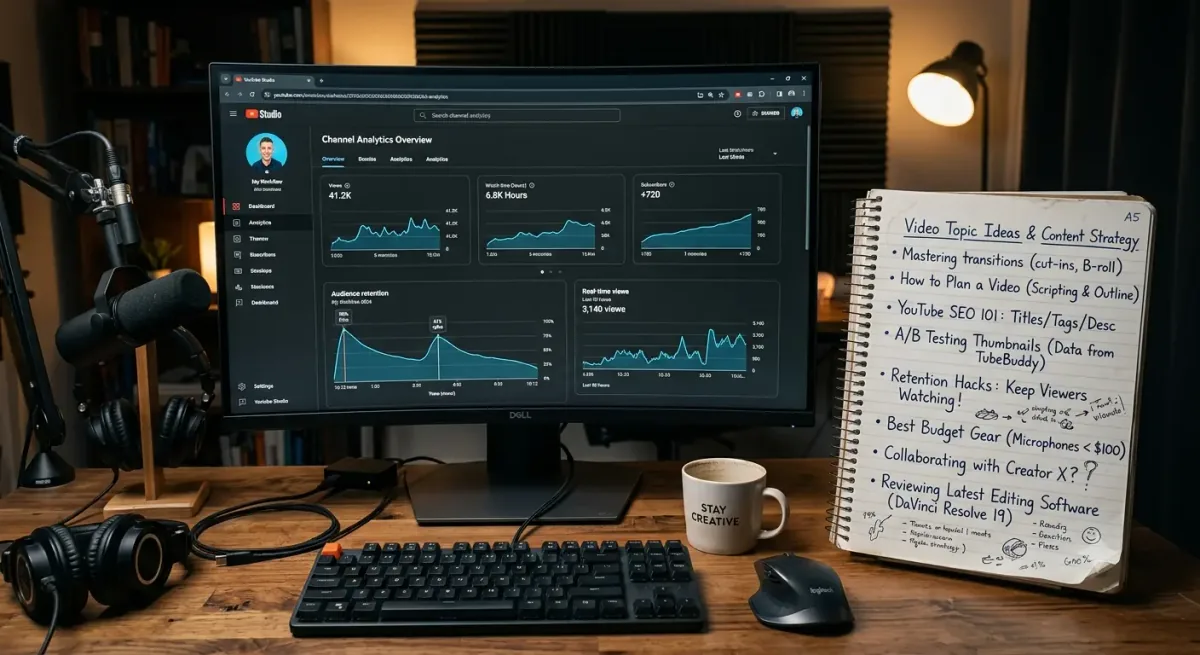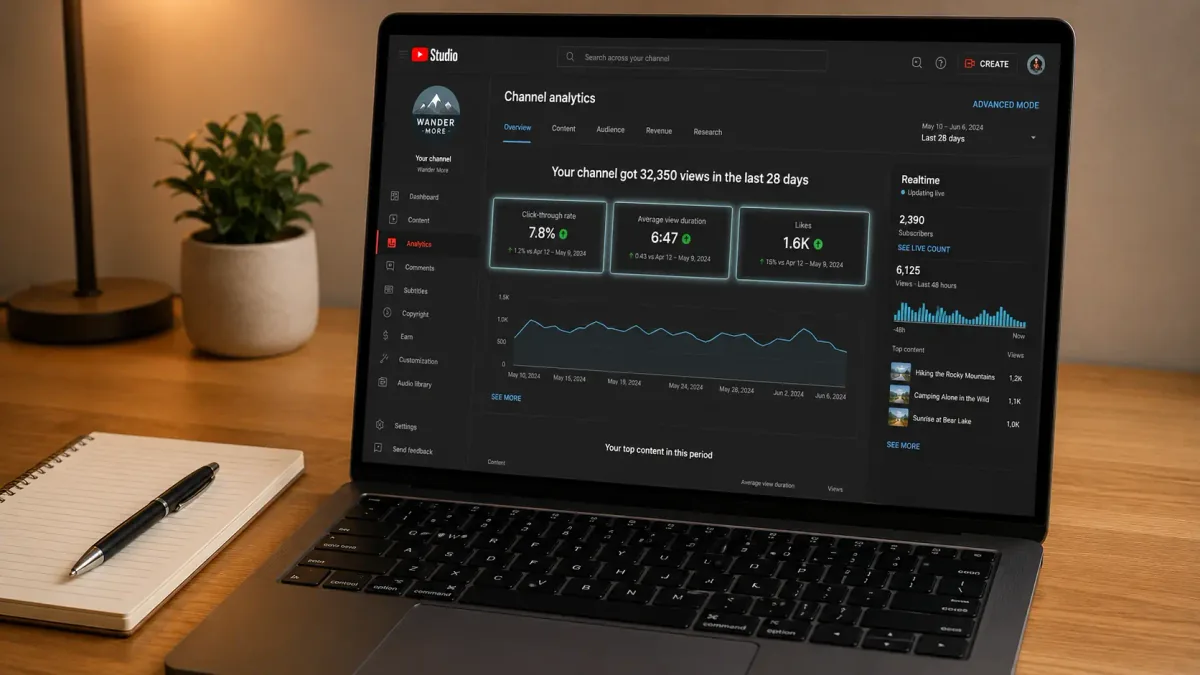


Good Retention but Low CTR? Do This
Key Takeaways
- 1
High retention with low CTR means the content works but the packaging fails to attract clicks.
- 2
The fastest fixes are thumbnail redesign, title rewriting, and impression source analysis.
- 3
CTR benchmarks vary by channel size and traffic source, so context matters before making changes.
What Low CTR with High Retention Actually Tells You
Click-Through Rate (CTR) measures how often someone clicks your video after seeing its thumbnail in a feed, search result, or suggested section. Audience Retention measures how much of the video viewers watch once they click. When retention is strong but CTR is low, those two signals are telling you something very specific: people who find the video enjoy it — but not enough people are choosing to click it.
This is actually a favorable problem to have. It means your content, pacing, and delivery are working. You are not failing at YouTube — you are failing at the storefront. The thumbnail and title are the storefront. Almost nothing else controls the click.
Why Does This Happen?
Low CTR despite good retention usually comes from one or more of these root causes:
Thumbnail has no visual hook. It blends into surrounding content, uses small text, or shows a face without a clear emotional cue or contrast.
Title does not create curiosity or urgency. Descriptive titles that explain what happens in the video rarely perform as well as titles that make the viewer feel they need to know the answer.
Impression sources are mismatched. A video getting most impressions from Browse or Home has a different audience expectation than one served in Search. A title optimized for search may underperform in Browse, and vice versa.
The niche or topic has inherently low browse CTR. Some topics attract very specific searchers who convert at low rates on impressions but high rates on clicks. That is normal.
How to Diagnose Before You Fix Anything
Before changing your thumbnail or title, run this quick check in YouTube Studio:
Open Analytics for the video, then go to Reach.
Filter impressions by traffic source. Check CTR separately for Browse Features, Suggested Videos, and YouTube Search.
If Search CTR is acceptable but Browse CTR is dragging the average down, your title may be search-optimized but your thumbnail is failing in a feed context.
If all sources show low CTR, the packaging problem is consistent and broader.
Check if the video has enough impressions to make CTR data statistically meaningful. Under 500 impressions, CTR fluctuates too much to act on.
This step prevents you from fixing the wrong thing. Many creators redesign a thumbnail when the real problem is a weak title, or rewrite a title when the thumbnail is the actual bottleneck.
The CTR Fix Checklist
Once you have confirmed packaging is the issue, work through these in order:
1. Redesign the thumbnail first. Use high contrast, a single focal point, and a face with a clear expression if your niche supports it. Remove text if it is small or decorative. Every element should earn its place.
2. Rewrite the title for pattern interruption. Ask: does this title make someone stop scrolling? If you can describe the video in a neutral sentence, that sentence is probably your current title — and it is not working. Add specificity, tension, or a result.
3. A/B test using YouTube's built-in test-and-compare feature (available to channels with sufficient traffic). Run thumbnail variants for at least 1-2 weeks before deciding.
4. Check the title-thumbnail pairing. They should work together to tell one story, not repeat the same information twice. The thumbnail teases, the title completes.
5. Revisit the topic framing. Sometimes low CTR means the framing of the topic is too niche, too insider, or assumes prior knowledge. Reframe the title around the outcome or problem the viewer cares about.
What a Good CTR Looks Like (In Context)
YouTube's own data suggests that most channels see CTR between 2% and 10%, with the majority landing between 4% and 6% on Browse and Suggested. Search CTR tends to be lower because impressions are broader. A channel under 10,000 subscribers often sees higher CTR swings due to small sample sizes.
If your retention is above 40-50% and your CTR is below 3% on Browse, that gap is worth addressing. If your CTR is 6% but retention drops before the 30% mark, you have the opposite problem — see Good CTR but Low Retention? Here's Why for that scenario.
Strong retention with weak CTR is also a signal worth understanding in the context of your hook. If viewers stay once they click, your opening is probably working. To sharpen that further, read What is a YouTube Hook and How Long Should It Be?
Does High Retention Protect You If CTR Is Low?
Partially. YouTube's algorithm uses both signals. Strong retention tells the algorithm that the content satisfies viewers. But without enough clicks, the algorithm has limited data to act on. It cannot push a video to more people if impressions are not converting — the distribution engine stalls.
High retention with low CTR often means a video is quietly performing well among the small audience that finds it, but it never reaches escape velocity. The algorithm needs CTR to justify showing it to a wider audience. That is the ceiling you are hitting.
To understand what your retention numbers are actually signaling beyond a surface read, YouTube Audience Retention: What the Numbers Actually Mean breaks down how to interpret the curve, not just the percentage.
What to Do Next
If you have confirmed high retention and low CTR on a video you care about, here is the priority sequence:
Pull the traffic source breakdown in YouTube Studio.
Identify whether the CTR problem is Browse, Search, or both.
Redesign the thumbnail with one clear focal point and strong contrast.
Rewrite the title to lead with curiosity, outcome, or conflict — not description.
If you are planning future videos on similar topics, build the packaging before you script. Read What Should I Post Next on YouTube? to connect topic selection with packaging strategy from the start.
Finally, track your engagement rate alongside CTR to get a fuller picture of how your audience is responding. What Is Engagement Rate on YouTube and What's a Good Benchmark? gives you the context to interpret that number correctly.
Frequently Asked Questions
Is a low CTR always a problem if retention is high?
Not always. Some traffic sources like YouTube Search naturally produce lower CTR because impressions are served to a broader audience. If your CTR is low but comes primarily from Search, and retention is strong, the video may still be performing well in its niche. Compare CTR by source before drawing conclusions.
How many impressions do I need before acting on CTR data?
Wait for at least 500 impressions — ideally 1,000 or more — before making packaging changes. Below that threshold, CTR fluctuates too much to be actionable. Small channels should wait longer, especially for videos that rely on Browse traffic to build momentum.
Can I update a thumbnail on an old video and improve CTR?
Yes. YouTube allows you to change thumbnails at any time. Updating the thumbnail on a high-retention video with low CTR is one of the highest-leverage optimizations available. It can restart distribution if the algorithm detects improved click performance on new impressions.
Should I also rewrite the title when I change the thumbnail?
Usually yes, but test one variable at a time if possible. If you change both simultaneously and CTR improves, you will not know which change drove the result. If you must change both at once, lean on the thumbnail as the primary lever since it has more surface area in the feed.
What if I improve CTR but retention drops after the change?
That means your new packaging is attracting a different audience or creating an expectation the video does not deliver on. The goal is to attract the right viewers, not just more viewers. If retention falls below 35-40% after a packaging change, revisit whether the new title is accurately representing the video's content.