

Good CTR but Low Retention? Here's Why
Key Takeaways
- 1
High CTR proves your packaging works — low retention proves your content does not yet match viewer expectations.
- 2
The most common cause is a mismatch between the promise made in the title or thumbnail and what the video actually delivers in the first 60 seconds.
- 3
Fixing low retention requires auditing your hook, your intro structure, and the implicit contract you set with every thumbnail.
Your Click Got Them In — Your Content Lost Them
If your click-through rate (CTR) — the percentage of people who saw your thumbnail and clicked — is strong, but your audience retention — the percentage of the video viewers actually watch — is low, you have a very specific problem: a broken promise. Viewers trusted your packaging enough to click. Then the video failed to justify that trust quickly enough, and they left.
This is one of the most diagnosable problems in YouTube analytics because the data tells you exactly where the failure lives. And the good news is it is almost always fixable without changing your niche, your upload schedule, or your channel structure.
What Does "Good CTR" and "Low Retention" Actually Mean?
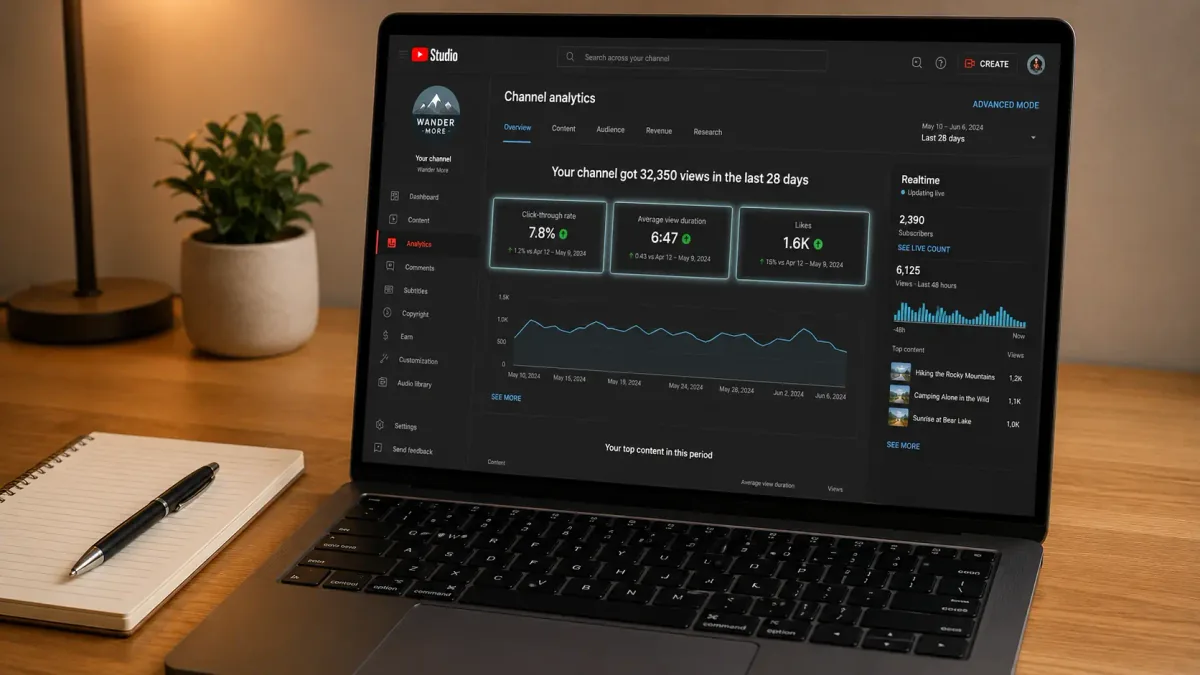
CTR benchmarks vary by channel size and niche, but a CTR between 4% and 8% is generally considered healthy for established channels. Anything above 8% on a broad audience is strong. What Is Engagement Rate on YouTube and What's a Good Benchmark? covers how to read these numbers in context.
Low retention is typically defined as average view duration below 30% for videos longer than 10 minutes, or viewers leaving in the first 30 seconds at a rate significantly higher than your channel average. YouTube Studio shows you a retention graph — if it drops sharply in the first 30 to 60 seconds and then flattens, that is your clearest signal of a hook failure rather than a content failure.
The 3 Most Common Causes
1. Thumbnail-to-Content Mismatch
Your thumbnail makes an implicit promise. A shocked face and bold text that says "This Changed Everything" sets an expectation for a dramatic reveal or a high-stakes story. If the video opens with a slow intro, a lengthy self-introduction, or background context before the payoff, viewers feel misled — even if the content is genuinely good. The emotional expectation set by the thumbnail was not met fast enough.
2. A Weak or Delayed Hook
The hook — the first 15 to 30 seconds of your video — is where retention is won or lost. What is a YouTube Hook and How Long Should It Be? breaks down exactly how to structure this. A common mistake is burying the hook behind a logo animation, a "welcome back" greeting, or a lengthy setup. Viewers on YouTube make their stay-or-leave decision within seconds. If you have not given them a reason to stay by the 20-second mark, most will not.
3. Pacing That Does Not Match the Thumbnail's Energy
A fast-cut, high-energy thumbnail attracts a fast-cut, high-energy audience expectation. If your video then opens at a slow, conversational pace, there is a tonal mismatch that triggers disengagement. This is not about editing style — it is about calibrating the emotional register of your content to the emotional register your packaging creates.
How the Algorithm Reads This Signal
YouTube's algorithm treats low retention as a distribution penalty. When viewers click but leave quickly, the platform interprets your content as low-quality relative to the promise it made — regardless of how high your CTR is. A high CTR with low retention can actually hurt your channel's reach over time because YouTube will stop pushing the video to new audiences. YouTube Audience Retention: What the Numbers Actually Mean explains how the platform weights these signals in detail.
How Viewer Emotion Shapes What YouTube Promotes also shows why the emotional payoff in your opening moments is one of the most underrated distribution factors on the platform.
Retention Diagnostic Checklist
Use this checklist before re-editing or re-uploading any video with the CTR-good, retention-low pattern:
Watch your own video cold. Open it as if you just clicked a thumbnail. Does the first 20 seconds make you want to stay?
Compare your thumbnail promise to your opening line. Does the first sentence of your video directly connect to what the thumbnail implied?
Check the retention graph drop point. If viewers leave at 0:22, that is a hook problem. If they leave at 3:40, that is a pacing or structure problem.
Time your first payoff. When does the viewer first receive something they came for — a revelation, a demonstration, a strong opinion? If it is after 90 seconds, it is likely too late for a hook-failure audience.
Review your intro length. Any intro longer than 10 to 15 seconds that does not directly serve the hook is dead weight.
Check for false hooks. Did you use a dramatic thumbnail or title to bait a click, then fail to deliver the implied content? If yes, either retool the content or retool the packaging — but align them.
What to Do Next
If you have diagnosed the problem, here is the order of operations to fix it:
Step 1 — Rewrite your hook first. Do not re-edit the full video until you have a stronger opening 30-second script. Test the new hook structure on your next upload before recutting old content. How to Improve Your YouTube Hook Rate gives a direct framework for this.
Step 2 — Audit your thumbnail promise. Look at the last five videos where retention dropped early. Write down the implied promise of each thumbnail in one sentence. Then write down what the video actually delivered in the first 30 seconds. If those two sentences do not match, you have found your core problem.
Step 3 — Use pattern interrupts in your opening. A pattern interrupt is a visual or audio change that resets viewer attention. Cut to a different shot, use a bold text overlay, or open mid-action rather than at the beginning of a setup. These micro-signals tell the viewer the content is worth staying for.
Step 4 — Plan future content with retention in mind from the idea stage. The retention problem often starts before filming. What Should I Post Next on YouTube? covers how to choose topics and frame ideas in ways that naturally hold attention — not just earn clicks.
Step 5 — Track hook rate alongside retention. Hook rate — the percentage of viewers who watch past the first 30 seconds — is the leading indicator for retention. Mastering YouTube: What Will Be a Good Hook Rate in 2026? covers the benchmarks you should be targeting as the platform evolves.
Frequently Asked Questions
Does high CTR cancel out low retention on YouTube?
No. YouTube's algorithm weighs both signals together. High CTR earns your video an initial push, but low retention signals that the content did not satisfy viewers — which causes the algorithm to reduce distribution. You need both CTR and retention to be healthy for sustained reach.
What is a healthy retention rate for YouTube videos?
For videos over 10 minutes, average view duration above 40% is considered strong. For shorter videos, aim for above 50 to 60%. The more important signal is the shape of the retention curve — a slow, gradual decline is far healthier than a sharp drop in the first 30 seconds followed by a flat line.
Should I delete a video with good CTR but bad retention?
Generally no. Deleting removes any historical search equity the video has built. A better approach is to use the video's retention data to diagnose what went wrong, then apply those lessons to your next upload rather than losing the data by deleting the video entirely.
Can my thumbnail be too good — drawing the wrong audience?
Yes. A highly clickable thumbnail that appeals to a broad or casual audience can attract viewers who were never going to watch more than a few seconds. This is especially common when thumbnail tactics borrow from viral or entertainment content for an educational or niche channel. Aligning your thumbnail's emotional register to your actual audience reduces this mismatch.
How quickly should my hook deliver on the thumbnail's promise?
Within the first 20 to 30 seconds. If your video requires more than 30 seconds of setup before delivering the core value or payoff implied by your thumbnail, a significant portion of your audience will already have left. Front-load your strongest moment or statement — you can fill in context afterward.
Ready to see what the data says about your channel?
Stop guessing. Use AskLibra to get a personalized 90-day growth gameplan and find your perfect posting window.